What Wine Is Aix-en-Provence Known For?
Aix-en-Provence is the capital of the Coteaux d'Aix-en-Provence AOC: a rosé-led appellation of more than 4,100 hectares in 2009, with Sainte-Victoire on its doorstep. Here is what is in the glass and how to taste it.
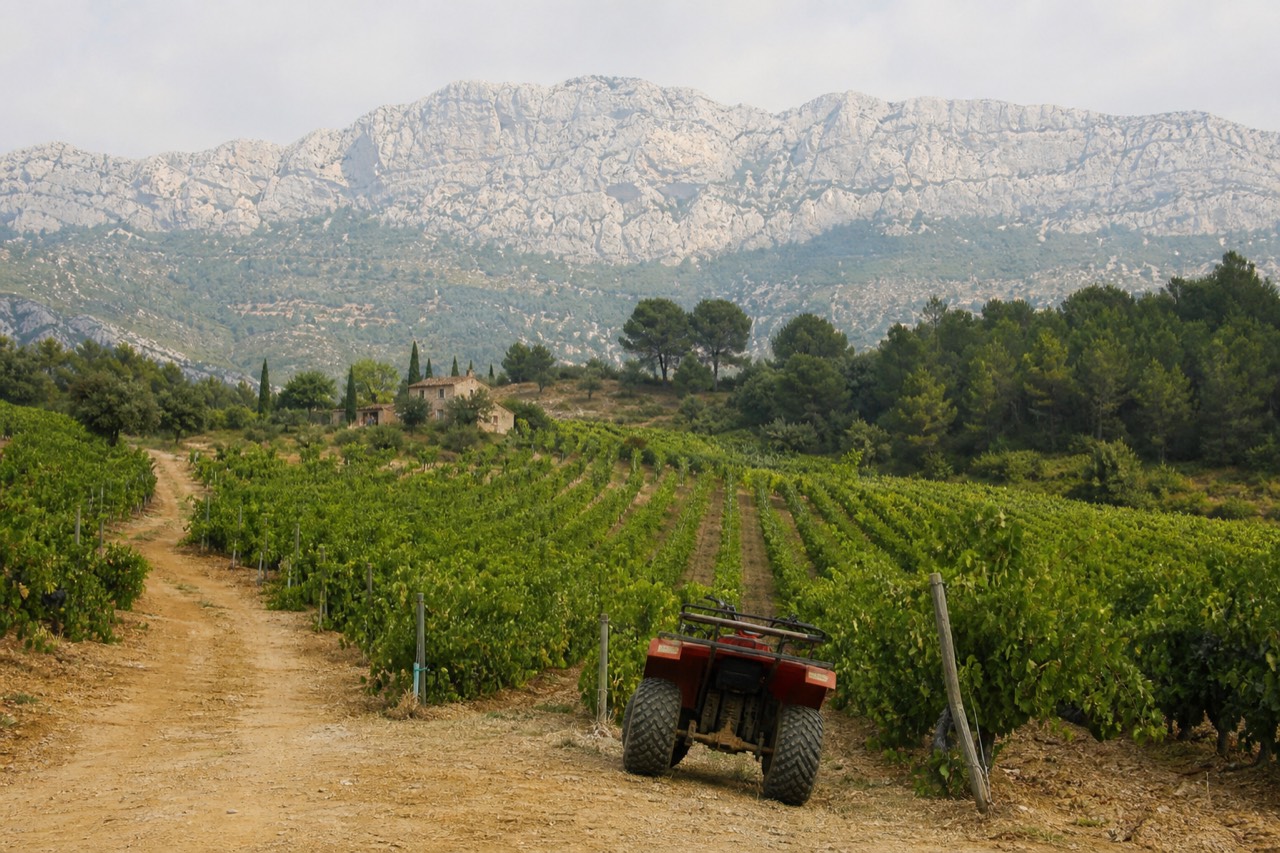
What Wine Is Aix-en-Provence Known For?
Aix-en-Provence is known for Coteaux d'Aix-en-Provence, an AOC recognised by the decree of 24 December 1985, covering more than 4,100 hectares in 2009 and about 195,000 hectolitres a year, shared between 12 cooperative cellars and 70 private estates. Like the rest of the Vins de Provence, it is rosé country, with white and red alongside, and its most distinctive sub-region is Sainte-Victoire.
Those 2009 snapshot figures come from the appellation's own INAO specification, and they describe a genuinely large region: Coteaux d'Aix-en-Provence is the second-biggest of the three CIVP Provence AOPs, holding an 18% share of the 2024 Vins de Provence harvest, behind Côtes de Provence's 71%. If you order a local bottle at a café table on the Cours Mirabeau, that is almost always what arrives.
The name trips people up, so it is worth being precise. "Aix-en-Provence" on a label means the appellation that surrounds the city, not the city itself: the vines grow in the country around it, and the AOC stretches across a wide arc of the Bouches-du-Rhône and beyond. The city's role is to be the elegant base camp, the place with the hotels, the markets and the walks, from which you go out to the cellars.
There is also a historical footnote that explains the appellation's youth. Unlike Cassis and Châteauneuf-du-Pape, which were among France's first six wine AOCs under the decree of 15 May 1936, Coteaux d'Aix-en-Provence arrived half a century later, in 1985, and its neighbour Les Baux-de-Provence only split away from it in 1995. Provence's southern appellations were recognised late precisely because the region's commercial story, the pale rosé boom that now defines it, was still being written.
For visitors who want to taste the answer rather than read it, three formats cover most trips: a half-day into the Coteaux d'Aix, a short Côtes de Provence tasting under the Sainte-Victoire mountain, or a private full day that strings several estates together. All three include tastings in the price and all three offer free cancellation.
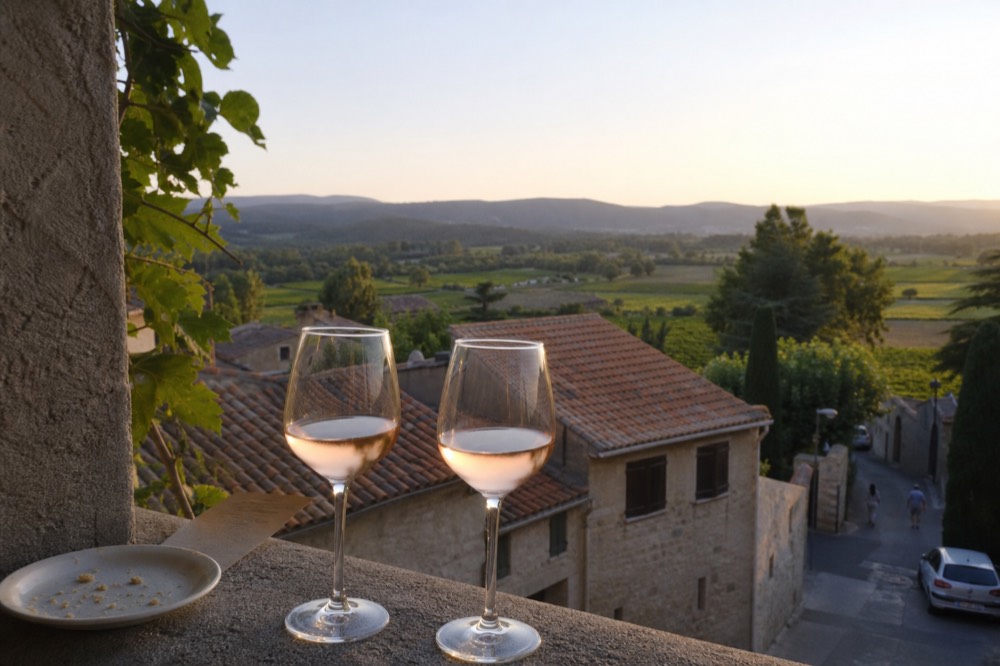
Coteaux d'Aix-en-Provence: The Appellation That Surrounds The City
Coteaux d'Aix-en-Provence is an AOC in all three colours, white, red and rosé, whose reds and rosés are led by cinsault, counoise, grenache, mourvèdre and syrah, and whose whites are led by vermentino. One unusual detail: cabernet-sauvignon is a permitted accessory variety, which is rare for Provence and real here. The AOC was decreed on 24 December 1985.
The grape list matters more than visitors expect, because it explains the taste. Grenache and cinsault give the rosé its pale colour and its red-fruit softness; syrah and mourvèdre add structure, so the reds age better than Provence's reputation suggests; and counoise, a variety most wine drinkers have never heard of, sits on the principal list, quietly marking the appellation out from more international blends.
The whites are a story of their own. Vermentino, locally called rolle, is the principal variety, backed by clairette, grenache blanc, sauvignon, bourboulenc, sémillon and ugni blanc. In a region where the 2024 Vins de Provence harvest was 89% rosé, 6% white and 5% red, white is genuinely a minority pursuit, and the Coteaux d'Aix versions, driven by vermentino, are among the ones worth seeking out.
| Coteaux d'Aix-en-Provence | The detail |
|---|---|
| AOC decree | 24 December 1985 |
| Colours | White, red, rosé |
| Red and rosé principals | Cinsault, counoise, grenache, mourvèdre, syrah |
| White principal | Vermentino (rolle) |
| Unusual permitted variety | Cabernet-sauvignon (accessory) |
| Snapshot from the INAO spec | More than 4,100 ha, 195,000 hl, 12 cooperatives, 70 estates (2009) |
| Share of 2024 Vins de Provence harvest | 18% |
One scope note that honest writing requires: "Vins de Provence" in the CIVP statistics means exactly three AOPs, Côtes de Provence, Coteaux d'Aix-en-Provence and Coteaux Varois en Provence. It does not include Bandol, Cassis or Les Baux-de-Provence, which sit in the wider Provence geography but outside the interprofession's numbers. When you read that Provence makes 40 to 45% of French AOP rosé and about 5% of world rosé, that is the three-AOP scope, and Coteaux d'Aix is one of the three.
If tasting the appellation in person is the plan, the shortest structured option from the city itself is a 4.5-hour half-day into the Coteaux d'Aix, at $121.94 per person with tastings included, rated 4.7 across 25 reviews, with free cancellation. It suits a morning or an afternoon slot and leaves the rest of the day for Aix itself.
The same tour also makes a sensible first stop for a longer stay. Because it runs only 4.5 hours, you can use it to learn the appellation's basic vocabulary, what vermentino smells like, how the local rosé's colour compares with the Côtes de Provence bottles next to it, and then decide whether a full day deeper into the region is worth it. Many visitors do exactly that sequencing, and it costs less than a single dinner in the old town.
What Does Aix Rosé Actually Taste Like?
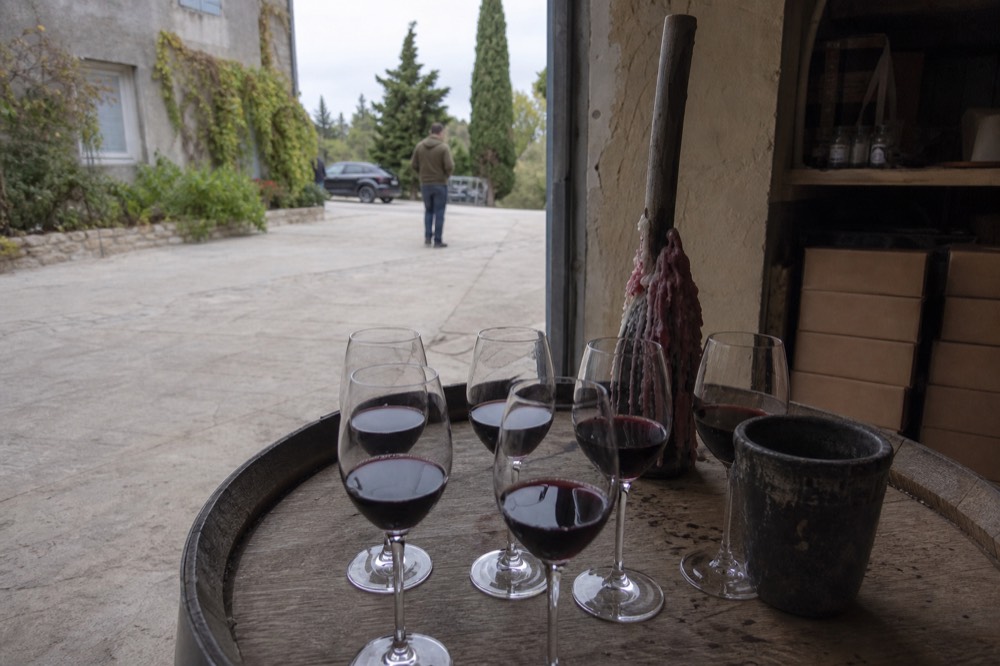
Aix's rosé follows the Provence style: pale, dry, and built on red fruit with herbal edges, led by grenache and cinsault with syrah and mourvèdre for spine. What marks out the local bottles is the Sainte-Victoire side of the appellation, where the mountain's limestone and cooler air give rosé and red more structure and grip than the coastal plain.
Provence rosé as a category is made by direct pressing or short maceration, which keeps the colour faint and the aromatics lifted. Around Aix the style sits a notch more serious than the glitzy coastal bottles: the fruit leans strawberry and white peach rather than candy, and the finish has a stony, savoury edge that food rewards. That is the honest tasting note to hold in your head before a cellar visit.
The reds deserve a second look too. With mourvèdre and syrah on the principal list and the appellation's inland climate, Coteaux d'Aix reds are structured enough to age a few years, and the INAO spec treats them as wines "of character" rather than afterthoughts. Visitors who arrive expecting only rosé are often the ones buying a bottle of red at the cellar door.
Sainte-Victoire: The Sub-Denomination On Aix's Doorstep
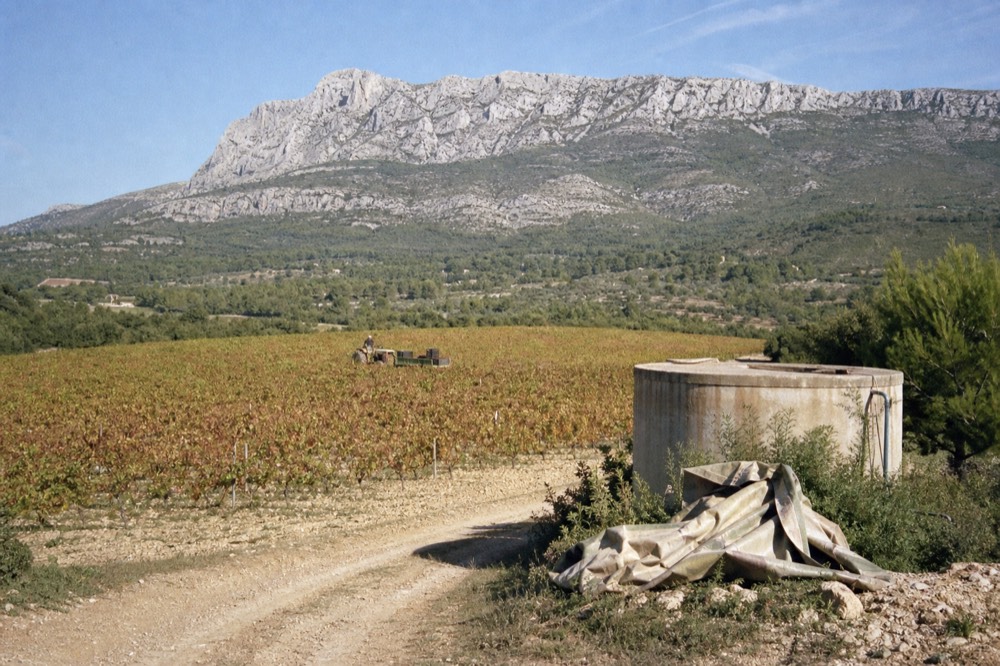
Sainte-Victoire is one of the five Côtes de Provence sub-denominations, and the famous mountain is not in Coteaux d'Aix at all, it is Côtes de Provence Sainte-Victoire, reserved for red and rosé only. It was approved by the INAO national committee on 27 and 28 May 2004, and its yield cap is 8,500 kg/ha against 9,500 for the plain appellation.
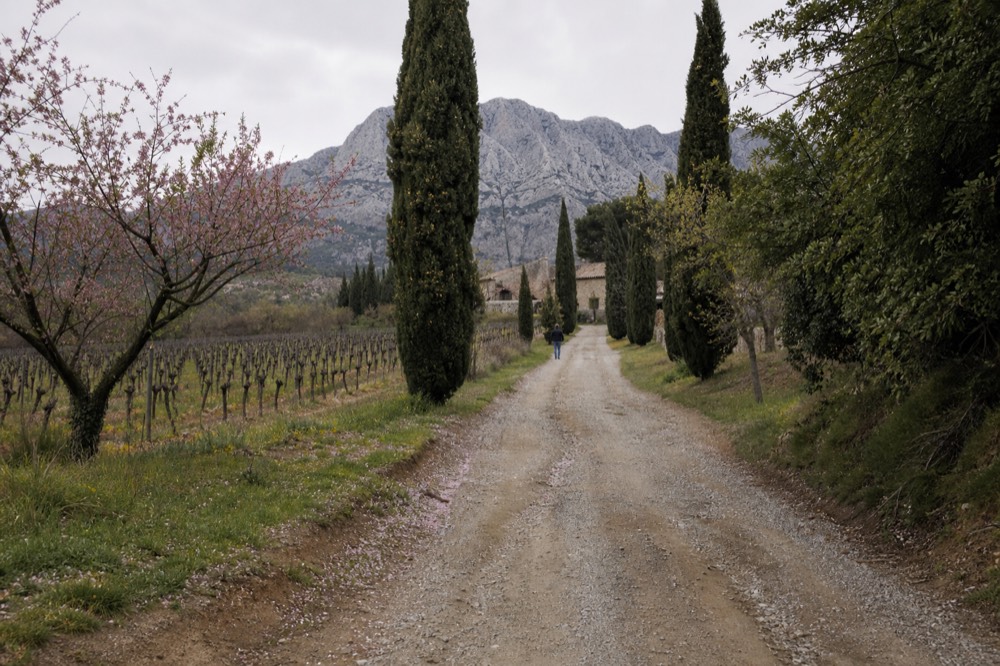
It also starts 24.5 km and about 31 minutes' drive from Aix, which is the fact that matters most to a visitor. This is the geographic detail most people get backwards, and it is worth straightening out. The mountain Cézanne painted, the one that towers over the eastern side of Aix, anchors the Sainte-Victoire sub-denomination of Côtes de Provence, a different AOC from the Coteaux d'Aix-en-Provence that wraps around the city's other side. The communes include Puyloubier, Rousset, Le Tholonet and Trets, all a short drive out of town.
The lower yield cap is the concrete reason a Sainte-Victoire bottle is not just a label variant: at 8,500 kg/ha against the plain appellation's 9,500, the vines carry less fruit, and the spec limits the sub-denomination to red and rosé, the two colours that benefit most from that restraint. La Londe, by contrast, is the only one of the five sub-denominations that also covers white.
The short drive makes this the most practical tasting ground for anyone staying in Aix. Twenty-four and a half kilometres, about thirty-one minutes of free-flow road, and you are below the limestone wall of the mountain with cellars around you. A tour that pairs Aix departure with the Sainte-Victoire route, like the 3-hour Côtes de Provence tasting at $114.97 per person, rated 4.8 across 273 reviews, is doing exactly this geography, and there is a reason its review count is one of the region's largest.
Where Else Can You Taste Wine From A Base In Aix?
Aix works as a base for three wine worlds: its own Coteaux d'Aix, the Sainte-Victoire side of Côtes de Provence, and, at a stretch, the Rhône. Châteauneuf-du-Pape is 89.3 km and about 67 minutes' free-flow driving from Aix, against only 17.4 km and 23 minutes from Avignon, so Aix-based Châteauneuf tours are real but long. The Luberon villages sit closer, around 40 to 50 km.
The honest-broker arithmetic is the thing to hold onto. A "Châteauneuf-du-Pape from Aix" tour is a genuine product, but it is nearly a ninety-kilometre drive each way before anyone tastes anything, while the same villages from Avignon are twenty minutes from the cellars. If Châteauneuf is the priority of your trip, base yourself in Avignon; if rosé and Sainte-Victoire are the priority, Aix wins.
The Luberon sits between the two. Lourmarin is 40.1 km and about 39 minutes from Aix, Bonnieux 50 km and about 52 minutes, and the Luberon AOC itself, first recognised as Côtes du Luberon in 1988 and renamed Luberon in 2009, is administratively a Rhône valley appellation rather than one of the three CIVP Provence AOPs. It is still sold, fairly, as a Provence day out from Aix.
| Destination from Aix-en-Provence | Road distance | Free-flow time | Which AOC |
|---|---|---|---|
| Puyloubier (Sainte-Victoire) | 24.5 km | 31 min | Côtes de Provence Sainte-Victoire |
| Lourmarin (Luberon) | 40.1 km | 39 min | Luberon |
| Bonnieux (Luberon) | 50.0 km | 52 min | Luberon |
| Les Baux-de-Provence | 71.6 km | 64 min | Les Baux-de-Provence |
| Châteauneuf-du-Pape | 89.3 km | 67 min | Châteauneuf-du-Pape |
Those times are road distances without August coastal traffic or the A8 on a Saturday, so treat them as a floor rather than a promise. For anyone mapping the region more widely, the Provence wine map puts the appellations side by side, and a wider introduction lives in the Provence wine region guide.
Can You Visit Aix Wineries Without A Car?
Yes, and there is a legal reason it matters: France's drink-driving limit is 0.5 g/L of blood generally, but 0.2 g/L on a probationary licence, which covers anyone who passed their test within the last three years, or two with accompanied driving. At 0.2 g/L, effectively zero glasses, a hired car and a tasting day do not mix, so a small-group or private tour is the honest answer for many visitors.
The probationary limit is the statute, not a scare line. Service-Public states it plainly, and the road-safety authority has run campaigns on the line that 0.2 g/L means zero glasses. Even for experienced drivers at the standard 0.5 g/L limit, a three-estate tasting day adds up faster than people expect, and spittoons, whatever a cellar provides, do not fully solve it.
The roster of departures from Aix answers this well. Ten tours leave from the city, from a 3-hour tasting to a 10-hour Luberon villages-and-wine day, nearly all small-group with tastings included and free cancellation, and one private full day at $562.33 per person rated 5 across 33 reviews. At the top end, a private chauffeured day removes the driving question entirely, as Provence Wine Tours exists to point out.
One practical note on self-driving: cellar opening patterns are set estate by estate, and no primary source states region-wide hours, closing days or a winter shutdown. A booked tour arrives at a cellar the operator has arranged, which is the actual reason booking beats turning up. For more on the scene, see the Aix-en-Provence wine tasting guide.
If you are weighing a shorter trip against a full day, the three most-booked formats from Aix tell their own story: the half-day Coteaux d'Aix at 4.5 hours, the Sainte-Victoire 3-hour tasting, and the private full day. Whichever you pick, the tastings are included in the listed price, and free cancellation is standard across them.
Aix-en-Provence is known for Coteaux d'Aix-en-Provence, a rosé-led AOC covering more than 4,100 hectares in 2009 and decreed in 1985, with vermentino leading its whites and grenache, cinsault, mourvèdre, syrah and counoise leading its reds and rosés. The questions below cover the details visitors ask most: colour, grapes, Sainte-Victoire, driving distances and the drink-driving law.
Common Questions About Wine From Aix-en-Provence
What Wine Is Aix-en-Provence Known For?
Coteaux d'Aix-en-Provence, an AOC decreed on 24 December 1985, covering more than 4,100 hectares in 2009 and around 195,000 hectolitres a year. It makes all three colours but is rosé-led, with vermentino as the principal white grape and cinsault, counoise, grenache, mourvèdre and syrah leading the reds and rosés.
Is Aix-en-Provence Rosé Or Red Country?
Rosé country, like the rest of the Vins de Provence: the 2024 three-AOP harvest was 89% rosé, 6% white and 5% red. Coteaux d'Aix produced 168,949 hl of rosé in 2024 against 12,708 hl of red. That said, the appellation's structured reds are better than their reputation.
What Grapes Are In Coteaux d'Aix-en-Provence?
For reds and rosés the principal varieties are cinsault, counoise, grenache, mourvèdre and syrah, with cabernet-sauvignon, carignan and caladoc as accessories. Cabernet-sauvignon being permitted is unusual for Provence. For whites, vermentino (rolle) is the principal variety, with clairette, grenache blanc, sauvignon, bourboulenc, sémillon and ugni blanc alongside.
What Is The Sainte-Victoire Wine Area?
It is a sub-denomination of Côtes de Provence, approved by the INAO national committee on 27 and 28 May 2004, reserved for red and rosé only, with a yield cap of 8,500 kg/ha. Its communes, including Puyloubier, Rousset and Le Tholonet, sit about 24.5 km and 31 minutes' drive from Aix.
How Far Is Châteauneuf-du-Pape From Aix-en-Provence?
89.3 km by road, about 67 minutes of free-flow driving, against 17.4 km and 23 minutes from Avignon. Châteauneuf-du-Pape tours from Aix are real products, but the drive is nearly 90 km each way before any tasting, so Avignon is the better base for that appellation.
Can You Drink And Drive To Wineries Around Aix?
Not safely within the law for most tasters. France's general limit is 0.5 g/L of blood, and the probationary-licence limit is 0.2 g/L, which applies for three years after passing a test, or two with accompanied driving. A small-group or private tour from Aix solves this, and the roster includes ten departures from the city.