The Provence Wine Region: Appellations, Grapes And How To Visit
Provence is France's rosé engine, but it is also a patchwork of nine-plus appellations with very different rules, grapes and personalities. Here is what each one actually is, on primary-source numbers, and how the geography shapes your day out.
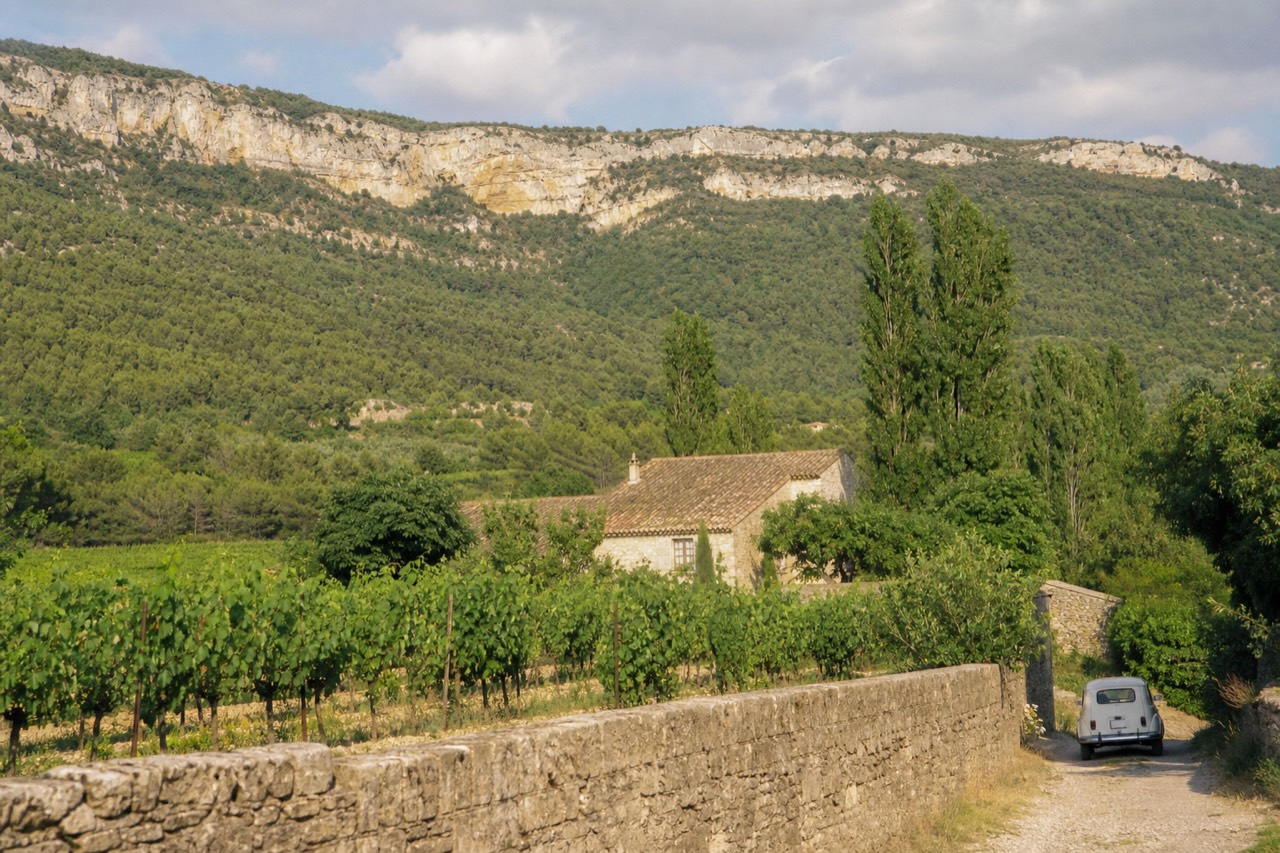
Short answer
The Provence wine region covers the three core AOPs of Côtes de Provence, Coteaux d'Aix-en-Provence and Coteaux Varois en Provence, plus Bandol, Cassis, Les Baux-de-Provence, Palette, Bellet and, on the Rhône side, Châteauneuf-du-Pape, Gigondas and Vacqueyras. The 2024 harvest was 89% rosé across 1,130,139 hl.
Provence made 1,130,139 hectolitres of wine in the 2024 vintage, and 89% of it was rosé. That single number explains most of what a visitor sees: the pale bottles, the cellar doors geared to summer, the tasting rooms perched above the sea between Bandol and Cassis. But the region is far more varied than the rosé stereotype suggests, and the appellations that make it up follow rules written decades apart, in different valleys, for different grapes.
This guide walks through the Provence wine region appellation by appellation, using figures from the INAO's official specifications and the CIVP's key-figures data rather than folklore. It also covers the practical geography: which towns sit inside which vineyards, how far the drives actually are, and which departure city makes sense for which tasting day.
What Is The Provence Wine Region?
The Provence wine region is the vineyard belt running from the Rhône valley in the west to Nice in the east, anchored by three core rosé AOPs, Côtes de Provence, Coteaux d'Aix-en-Provence and Coteaux Varois en Provence, and ringed by smaller appellations including Bandol, Cassis, Les Baux-de-Provence, Palette and Bellet, with the Rhône crus of Châteauneuf-du-Pape, Gigondas and Vacqueyras on its western edge.
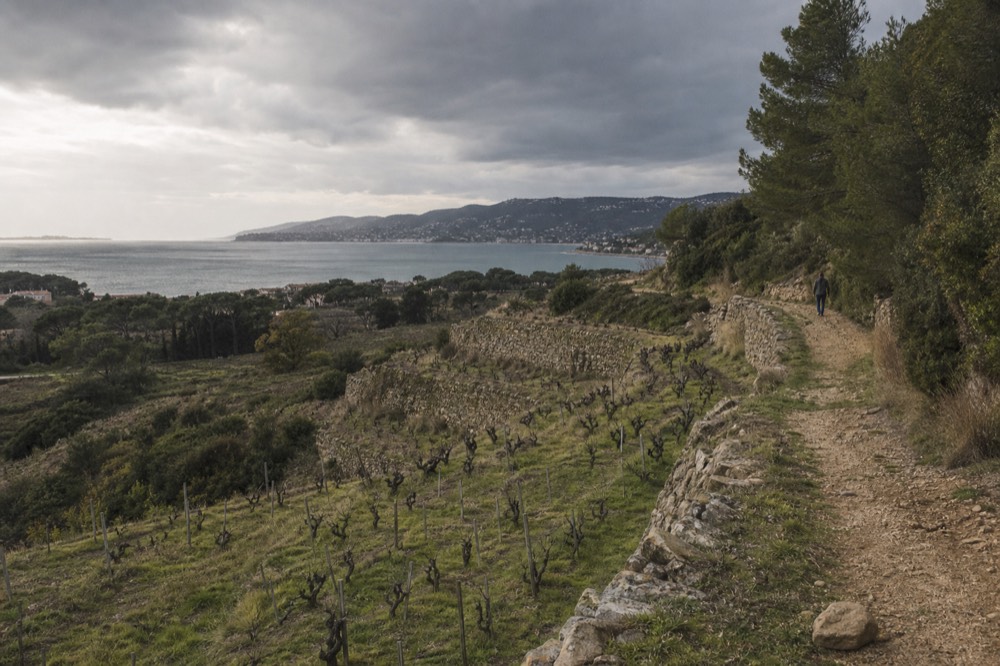
The word "Provence" does double duty, and that causes real confusion for visitors. Administratively it is a region of France. As a wine label, "Vins de Provence" means only the three AOPs the CIVP, the official interprofession, represents: Côtes de Provence, Coteaux d'Aix-en-Provence and Coteaux Varois en Provence. Bandol, Cassis, Les Baux-de-Provence, Palette and Bellet are Provence geographically but sit outside that statistical family.
The scope matters because the headline numbers everyone quotes are CIVP numbers. When you read that Provence produces 40% to 45% of French AOP rosé and about 5% of world rosé, that is the three-AOP figure, not a count that includes Bandol's Mourvèdre-heavy reds or Cassis's white-dominant production. Any article that blends the two is selling you a rounded-off story.
The region also stretches further than most maps suggest. Côtes de Provence alone spans 84 communes across three departments: 68 in the Var, 15 in the Bouches-du-Rhône, and one, Villars-sur-Var, in the Alpes-Maritimes. That single commune is why a Provence appellation technically reaches the hills behind Nice.
How Many Wine Appellations Are There In Provence?
Provence and its immediate edges hold roughly ten appellations: the three core rosé AOPs (Côtes de Provence, Coteaux d'Aix-en-Provence, Coteaux Varois en Provence), the coastal and inland AOCs of Bandol, Cassis, Les Baux-de-Provence, Palette and Bellet, and the Rhône-side crus of Châteauneuf-du-Pape, Gigondas and Vacqueyras, plus the Luberon, which is administratively a Rhône valley appellation but is sold to visitors as a Provence day out.
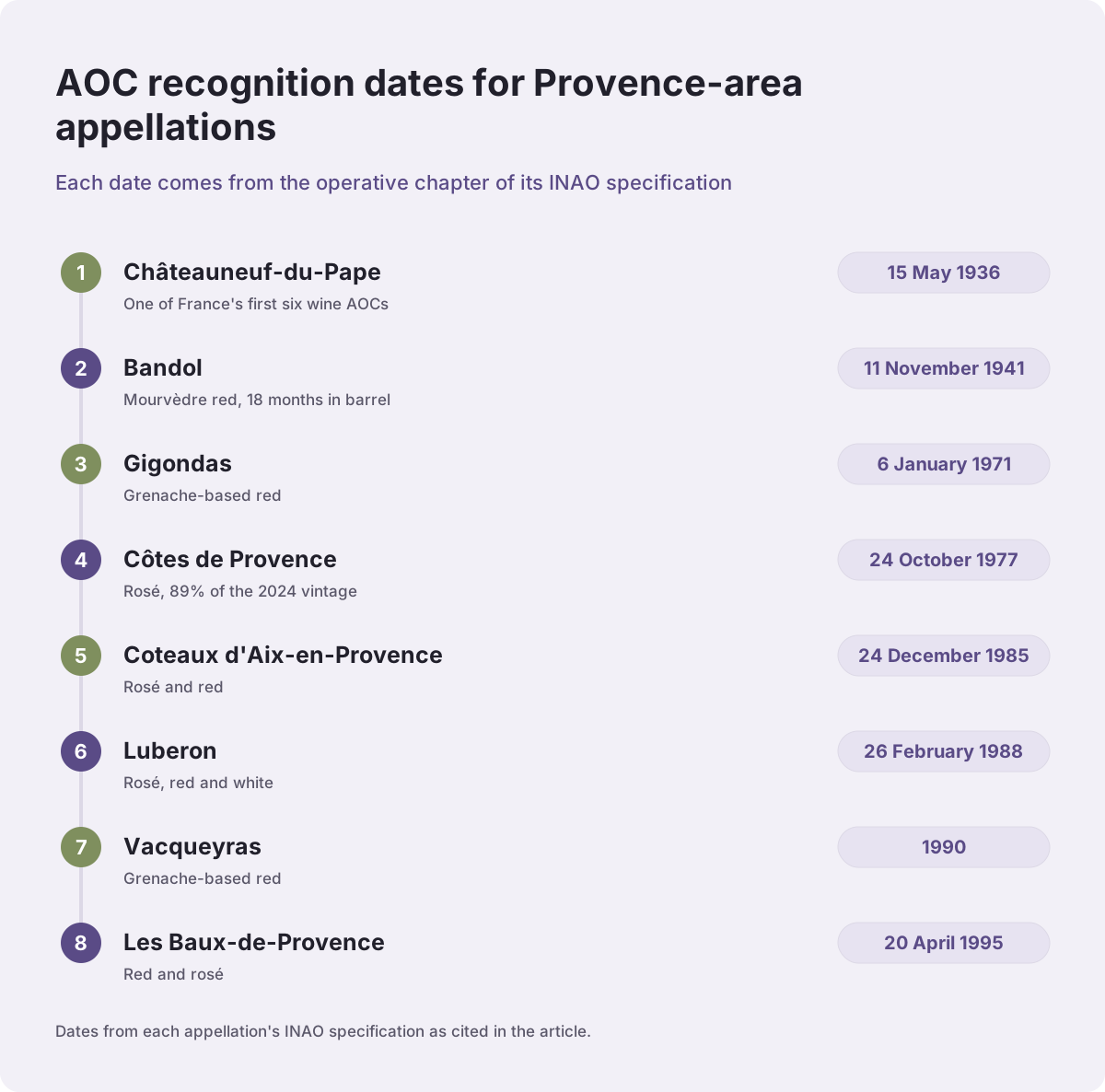
Each has its own recognition date, straight from the operative chapter of its INAO specification. Cassis and Châteauneuf-du-Pape are among France's first six wine AOCs, all decreed on 15 May 1936, alongside Arbois, Cognac, Monbazillac and Tavel. Bandol followed in 1941, Côtes de Provence in 1977, Gigondas in 1971, Vacqueyras in 1990, Coteaux d'Aix in 1985, the Luberon in 1988 and Les Baux-de-Provence, which began as a sub-denomination of Coteaux d'Aix, in 1995.
One legend needs killing here. Châteauneuf-du-Pape was not "the first AOC, in 1923". What actually happened in 1923 is that growers, with Baron Le Roy de Boiseaumarie, founded the first syndicate to defend the appellation, and the rules they wrote fed into the 1936 decree. The AOC system did not exist in 1923, and in 1936 Châteauneuf-du-Pape was one of six, not one of one.
| Appellation | AOC recognition | Signature wine | Where to taste it from |
|---|---|---|---|
| Cassis | 15 May 1936 | White (about 70% of production) | Marseille, 25.7 km |
| Châteauneuf-du-Pape | 15 May 1936 | Blended red, 13 grapes | Avignon, 17.4 km |
| Bandol | 11 November 1941 | Mourvèdre red, 18 months in barrel | Toulon, 18.7 km |
| Gigondas | 6 January 1971 | Grenache-based red | Avignon, 46.7 km |
| Côtes de Provence | 24 October 1977 | Rosé (89% of the 2024 vintage) | Aix, Nice, Cannes |
| Coteaux d'Aix-en-Provence | 24 December 1985 | Rosé and red | Aix-en-Provence |
| Luberon | 26 February 1988 | Rosé, red and white | Aix-en-Provence |
| Vacqueyras | 1990 | Grenache-based red | Avignon, 34.5 km |
| Les Baux-de-Provence | 20 April 1995 | Red and rosé | Aix or Avignon |
If you want to taste the region with a guide rather than drive it yourself, these three days cover the spread well: a half-day in Châteauneuf-du-Pape, a full three-estate version of the same appellation, and a short Côtes de Provence tasting from Aix.
What Is Côtes De Provence And Where Does It Grow?
Côtes de Provence is the region's largest appellation, 20,300 hectares across 84 communes in three departments, recognised by the decree of 24 October 1977, making rosé from cinsault, grenache, mourvèdre, syrah and the local tibouren, with five named sub-denominations, Sainte-Victoire, Fréjus, La Londe, Pierrefeu and Notre-Dame des Anges, that carry stricter yield limits than the base appellation.
The base appellation allows a maximum average parcel load of 9,500 kg per hectare. All five sub-denominations drop that to 8,500 kg/ha, which is the concrete, checkable reason a bottle labelled Sainte-Victoire or La Londe is not just a marketing variant. Four of the five are reserved for red and rosé only; La Londe is the one that also covers white.
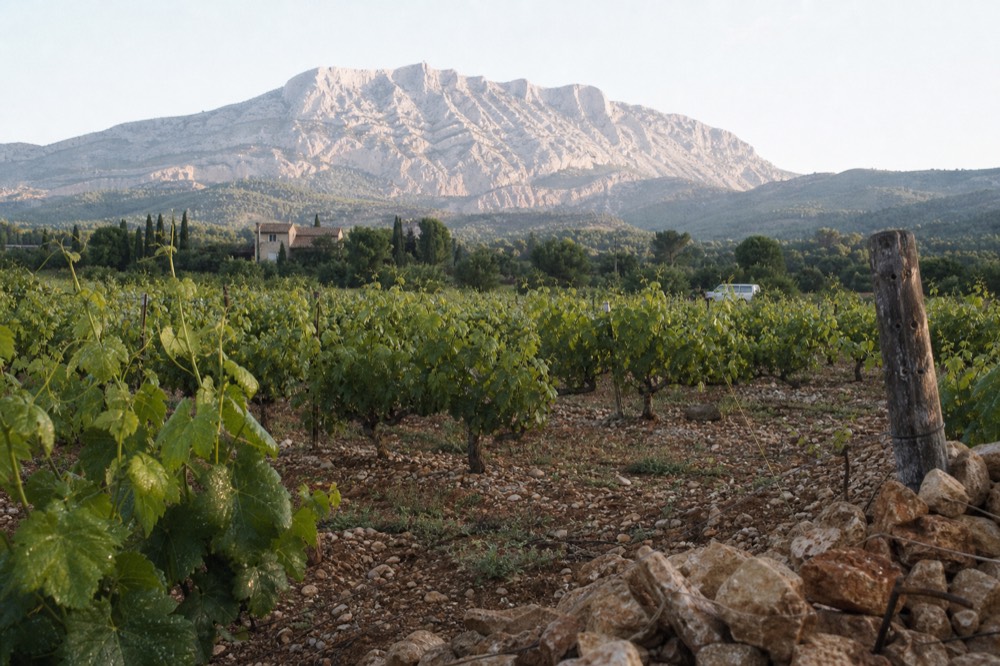
Sainte-Victoire, the sub-denomination under the mountain Cézanne painted, was approved by the INAO national committee in May 2004, Fréjus in June 2005, La Londe in November 2007. Its communes include Puyloubier, Le Tholonet, Rousset and Trets, all within about half an hour of Aix-en-Provence: the real road distance from Aix to Puyloubier is 24.5 km, roughly 31 minutes of free-flow driving.
Tibouren is the grape a visitor should ask about. It is local to Provence, it sits on the appellation's principal-variety list for reds and rosés, and it gives the rosés a wild herb edge you will not find in a generic pale blend. The CIVP records that 51% of the appellation's area is organic or HVE certified, a figure worth knowing if certification matters to you.
For a first taste of the appellation without giving up a whole day, the Sainte-Victoire Route tasting from Aix runs 3 hours at $114.97 per person, rated 4.8 across 273 reviews, with tastings included and free cancellation.
Why Is Châteauneuf-du-Pape Part Of A Provence Trip?
Châteauneuf-du-Pape is administratively a Rhône appellation, but it sits just 17.4 km, about 23 minutes, from Avignon, which makes it the most accessible famous vineyard in the south of France and the natural tasting day for anyone based in Avignon; its 1936 decree, 13 traditional grape varieties (18 named entries once colour mutations are counted separately) and galet-stone terroir make it unlike anything in the rosé belt.
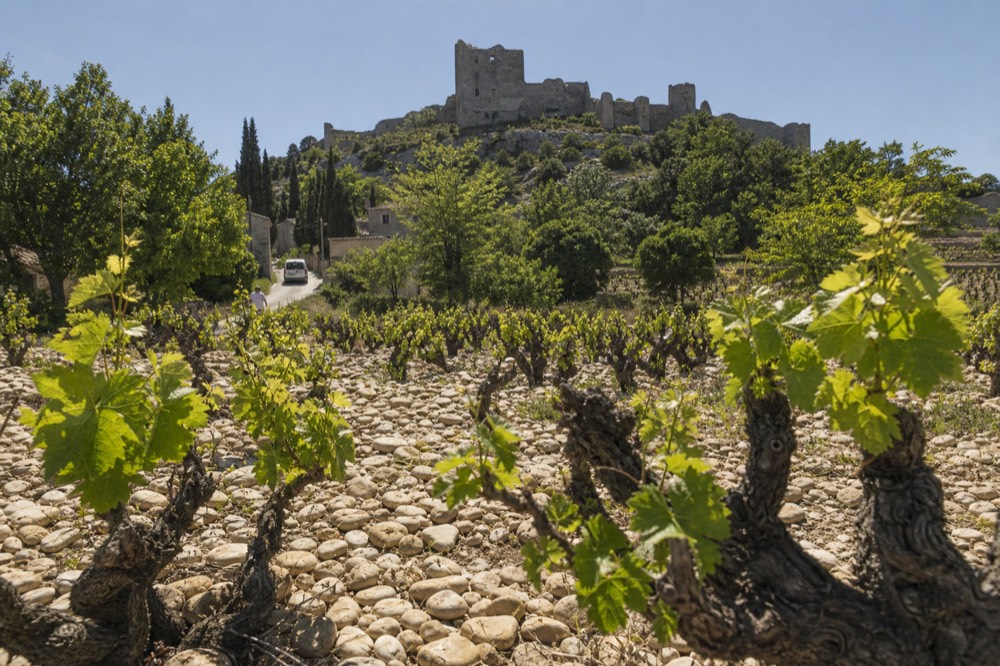
The grape count confuses people because both answers are right. The current specification names 18 entries for red and white: the traditional count of 13 collapses the colour mutations of clairette, grenache and piquepoul, which each count once. Grenache noir, grenache blanc and grenache gris are one grape in the traditional count and three entries in the spec. Publish one number without the other and you have told half the story.
The honest-broker point about distance: Châteauneuf-du-Pape is 17 km from Avignon and 89 km from Aix-en-Provence. A Châteauneuf day from Aix is a real product, but it is nearly a 90 km drive each way before anyone tastes anything, and buyers should be told that before booking. From Avignon, the arithmetic is entirely different.
The appellation records about 3,200 hectares farmed by 320 holdings as of 2010, and its 1936 decree makes it one of the first six AOCs in France, decreed the same day as Cassis. If the history of the place interests you, the story of the village itself is covered in our piece on whether it is worth staying in Châteauneuf-du-Pape.
The half-day tour from Avignon is the entry point: 4 hours, $103.36 per person, rated 4.8 across 456 reviews, tastings included, small group, free cancellation.
What Makes Bandol And Cassis Different?
Bandol and Cassis break the rosé mould in opposite directions: Cassis is officially white-dominant, with white wine at about 70% of production, built on clairette and marsanne, while Bandol is a red appellation at heart, its reds requiring 50% to 95% Mourvèdre in the plantings and a minimum of 18 months ageing in barrel or foudre, the hardest ageing rule in Provence.
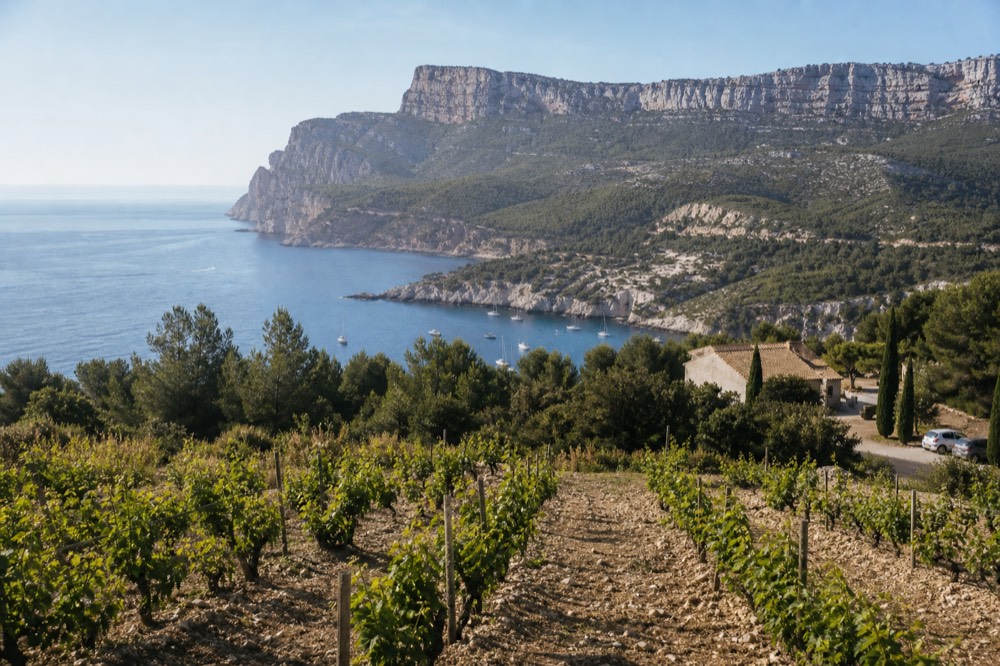
Cassis's white dominance is written into its INAO specification, and it is the documented answer to why Cassis is the white one in a region of rosé. Marsanne must be 30% to 80% of the white plantings and 20% to 80% of the blend. The appellation recorded 204 hectares in 2009, down from 240 hectares in 1959 and 200 in 1978, which is the honest version of the story that Cassis nearly disappeared under the town.
Bandol's Mourvèdre rule is what separates it from every other appellation here. The reds are "powerful, structured, tannic and long-keeping" in the spec's own words, and they cannot legally be sold without 18 months in wood. Even the rosés need a minimum of 20% Mourvèdre, often 30% to 40% in practice. The appellation spans eight communes in the Var, from Bandol itself to Saint-Cyr-sur-Mer.
Geographically both are coastal and both are close to Marseille: Cassis is 25.7 km, about 33 minutes, and Bandol 54.9 km, about 49 minutes. From Toulon, Bandol is a short 18.7 km hop. If you are planning around the calanques and the coast, our Bandol and Cassis wine tours guide goes deeper on the individual estates and the drive between the two.
The half-day Bandol and Cassis tour from Aix covers both appellations in 5 hours at $121.94 per person, rated 4.9 across 11 reviews, tastings included.
What About Coteaux d'Aix And The Luberon?
Coteaux d'Aix-en-Provence, recognised 24 December 1985, is the second-largest core AOP with more than 4,100 hectares recorded in 2009, unusual for permitting cabernet-sauvignon as an accessory variety, while the Luberon, first recognised as Côtes du Luberon in 1988 and renamed in 2009, makes all three colours from about 3,300 hectares in 2010 of hillside vineyards that are administratively Rhône valley, not Provence, in wine terms.
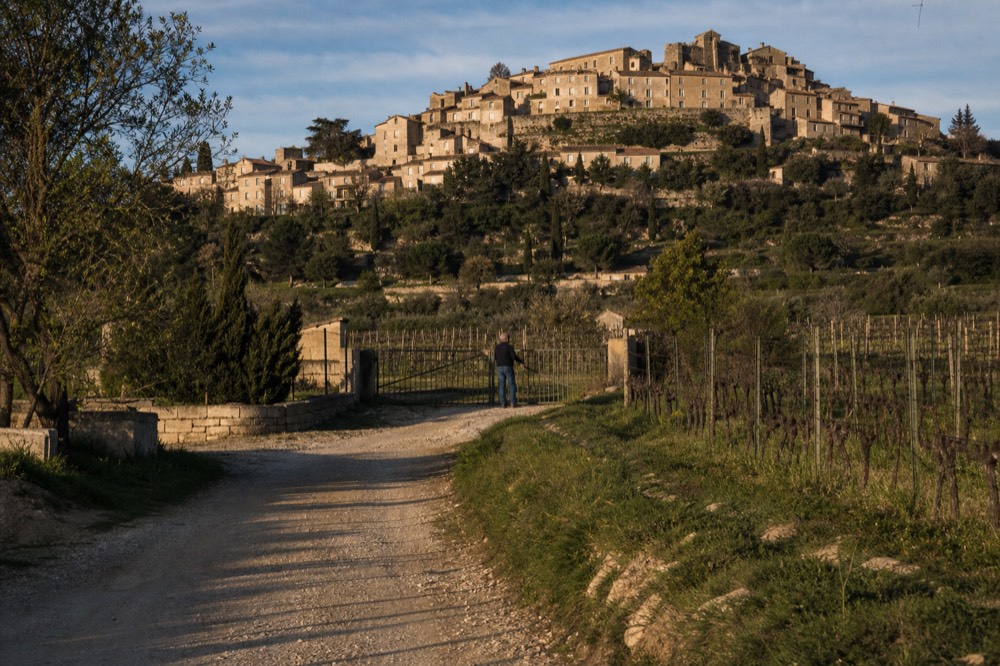
Coteaux d'Aix records 12 cooperative cellars and 70 private estates sharing 195,000 hectolitres of average annual production, on the 2009 snapshot in the spec. Its white plantings are led by vermentino, locally called rolle, with clairette, grenache blanc, sauvignon and bourboulenc alongside. The cabernet-sauvignon allowance is a quirk worth knowing: it is not permitted in the Côtes de Provence principal blend but it is real here as an accessory.
The Luberon deserves its own honesty note. It is sold to visitors as a Provence day out from Aix, and the drives are short, 40.1 km to Lourmarin, 50 km to Bonnieux, but its statistics belong to the Rhône valley family, so it never appears in the CIVP rosé numbers. Say so plainly rather than folding it in. Our Luberon wine tours guide covers the village-to-village routes.
Les Baux-de-Provence, squeezed between the two, began as a sub-denomination of Coteaux d'Aix before independence in 1995. Its spec caps yield at 50 hl/ha with a maximum parcel load of 8,500 kg/ha and a minimum density of 4,000 vines per hectare. No primary source publishes its planted hectares, so treat any number you see elsewhere with suspicion.
For a Coteaux d'Aix tasting with a guide, the half-day Coteaux d'Aix tour from Aix runs 4.5 hours at $121.94 per person, rated 4.7 across 25 reviews, tastings included.
How Much Of Provence Wine Is Rosé, Really?
In the 2024 vintage, 89% of the wine made under the three Provence AOPs was rosé, 6% white and 5% red, across a total harvest of 1,130,139 hectolitres, down from 1,215,065 hl in 2023; Côtes de Provence alone made 71% of that volume, and Provence as a whole accounts for 40% to 45% of French AOP rosé production and about 5% of world rosé.
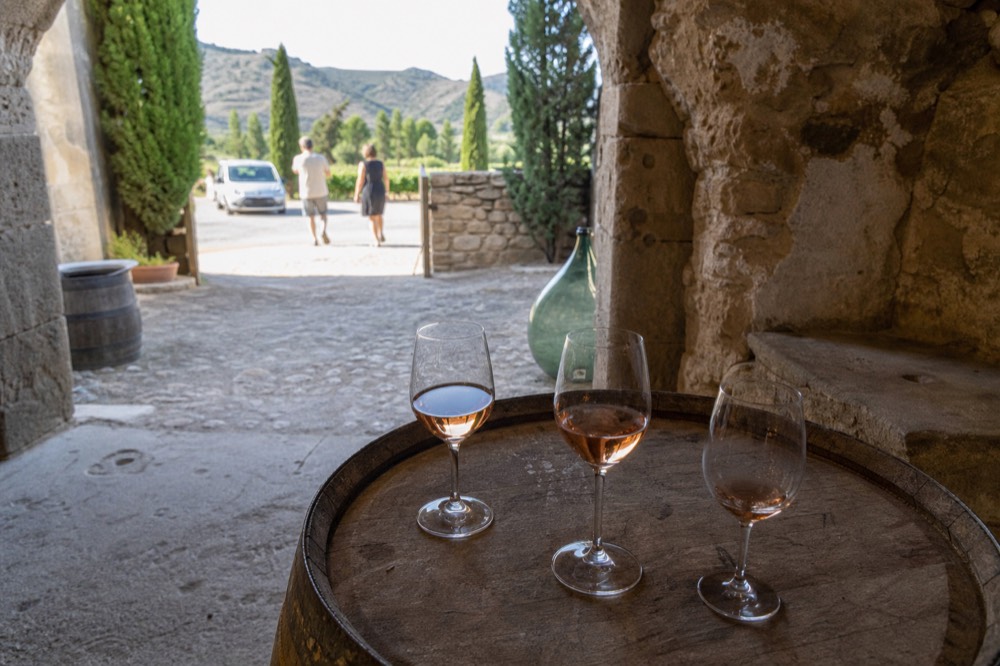
The scope warnings travel with these numbers. The 40% to 45% French share is of AOP rosé only, not all French rosé, which includes a large volume of IGP and vin de France. And the CIVP percentages cover only the three "Vins de Provence" AOPs, never Bandol, Cassis or Les Baux. A flat "Provence makes 40% of French rosé" is wrong on both counts.
The structure behind the volume is also documented: more than 550 producers make the three AOPs, split between 53 cooperative cellars on 12,867 hectares, 456 private estates on 11,807 hectares and 46 vinifying négociants on 2,798 hectares. Certification runs deep, with 31 cooperatives and 243 estates certified organic. Export in 2024 reached 434,445 hl worth 353,301,951 euros.
| Colour | Vins de Provence total | Côtes de Provence | Coteaux d'Aix | Coteaux Varois |
|---|---|---|---|---|
| Rosé (89%) | 1,001,589 hl | 721,686 hl | 168,949 hl | 110,954 hl |
| White (6%) | 70,180 hl | 44,434 hl | 20,327 hl | 5,419 hl |
| Red (5%) | 58,370 hl | 39,687 hl | 12,708 hl | 5,975 hl |
How Do You Plan A Visit To The Provence Wine Region?
Plan by base city, not by appellation list: Avignon puts you 17.4 km from Châteauneuf-du-Pape and 46.7 km from Gigondas, Marseille puts you 25.7 km from Cassis and 54.9 km from Bandol, and Aix-en-Provence is the hub for Sainte-Victoire, the Luberon and Coteaux d'Aix, with Nice and Cannes best reserved for full-day Côtes de Provence trips inland.
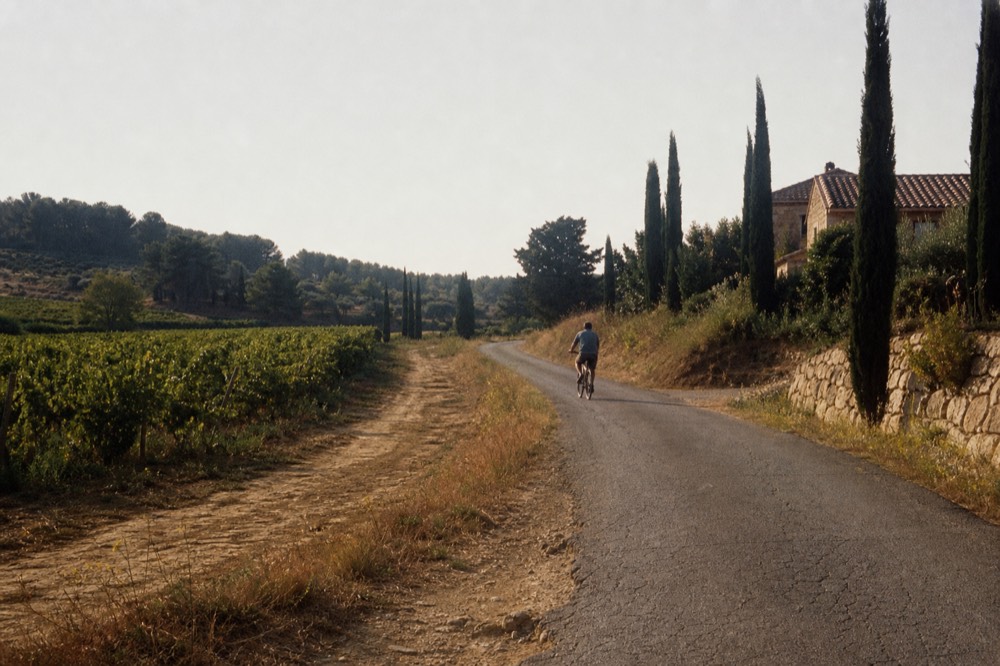
The driving distances below are real road routing over the OpenStreetMap network, city centre to village centre, as free-flow times. They exclude August coastal traffic, a busy Saturday on the A8, and the time a car actually spends parked at a cellar, so treat them as floors, not promises.
| Route | Road distance | Free-flow time |
|---|---|---|
| Avignon to Châteauneuf-du-Pape | 17.4 km | 23 min |
| Aix-en-Provence to Puyloubier (Sainte-Victoire) | 24.5 km | 31 min |
| Marseille to Cassis | 25.7 km | 33 min |
| Avignon to Les Baux-de-Provence | 30.7 km | 40 min |
| Aix-en-Provence to Lourmarin (Luberon) | 40.1 km | 39 min |
| Avignon to Gigondas | 46.7 km | 44 min |
| Aix-en-Provence to Châteauneuf-du-Pape | 89.3 km | 67 min |
| Nice to Saint-Tropez | 111.9 km | 98 min |
Two practical realities shape the season. The mistral, the region's dry north wind, averages around 50 km/h with gusts of 80 to 100 km/h, blows hardest in winter and spring, and hits the Avignon and Châteauneuf side hardest, which is exactly where the outdoor-terrace tastings are; pack a windproof layer for a spring Rhône day rather than expecting cancellation. And the harvest starts in the earliest parcels in the second half of August and runs into September, with later sectors picking through mid-September, so late summer visits share the roads with grape trailers.
There is also a legal reason a driven tour exists at all. France's drink-driving limit is 0.5 g/L of blood, but probationary licence holders, anyone who passed their test in the last three years, are held to 0.2 g/L, effectively zero glasses. The state's own campaign ran the line "0.2 g/l de sang c'est 0 verre d'alcool". A hired car and a tasting day simply do not mix for those drivers, and the statute, not marketing, is why. The official rule is on Service-Public.
No primary source publishes region-wide cellar opening hours or a standard closing day: opening patterns are set estate by estate. A booked tour arrives at a cellar the operator has arranged, which is the practical reason booking beats turning up. For deeper planning by departure city, see our guides to wine tours from Avignon and wine tours from Marseille, and the broader Provence wine tasting overview.
Whichever corner you start with, the spread of the region is the point: a pale Sainte-Victoire rosé, a white Cassis by the harbour and an 18-month Bandol red are all Provence, all within a long day's drive of each other, and all made under rules written decades apart. Provence Wine Tours exists to help you tell them apart before you book.
The questions below are the ones visitors ask most about the Provence wine region, and each answer sticks to the verified figures in this guide: the appellation list and recognition dates, the 2024 vintage split of 89% rosé across 1,130,139 hectolitres, the white-dominant character of Cassis, the Mourvèdre rules of Bandol, and the real driving distances that decide which base city suits which tasting day.
Common Questions About The Provence Wine Region
What Is The Provence Wine Region?
It is the vineyard belt from the Rhône valley to Nice, anchored by three core rosé AOPs (Côtes de Provence, Coteaux d'Aix-en-Provence, Coteaux Varois en Provence) and ringed by Bandol, Cassis, Les Baux-de-Provence, Palette and Bellet, with the Rhône crus of Châteauneuf-du-Pape, Gigondas and Vacqueyras on the western edge.
How Many Wine Appellations Are There In Provence?
Roughly ten: the three core rosé AOPs, plus Bandol, Cassis, Les Baux-de-Provence, Palette and Bellet, plus the Rhône-side Châteauneuf-du-Pape, Gigondas and Vacqueyras. The Luberon is administratively a Rhône valley appellation but is visited as part of Provence.
What Percentage Of Provence Wine Is Rosé?
In the 2024 vintage, 89% of the wine made under the three Provence AOPs was rosé, 6% white and 5% red, across 1,130,139 hectolitres. Provence accounts for 40% to 45% of French AOP rosé and about 5% of world rosé.
Was Châteauneuf-du-Pape The First AOC In 1923?
No. 1923 is when growers, with Baron Le Roy de Boiseaumarie, founded the first syndicate to defend the appellation. The AOC itself was decreed on 15 May 1936, and Châteauneuf-du-Pape was one of France's first six AOCs that day, alongside Cassis, Arbois, Cognac, Monbazillac and Tavel.
Which Provence Appellation Makes White Wine?
Cassis is the white one: about 70% of its production is white, built on clairette and marsanne. La Londe, a Côtes de Provence sub-denomination, is the only one of the five sub-denominations that also covers white.
What Is The Best Base City For Visiting The Provence Wine Region?
Avignon for Châteauneuf-du-Pape and the Rhône crus (17.4 km to Châteauneuf), Marseille for Cassis and Bandol (25.7 km and 54.9 km), and Aix-en-Provence for Sainte-Victoire, Coteaux d'Aix and the Luberon. Nice and Cannes suit full-day Côtes de Provence trips.