What Is The Best Market In Provence?
Discover the best market in Provence, from Aix-en-Provence's Saturday extravaganza to L'Isle-sur-la-Sorgue's antiques market, and how to pair a morning of shopping with a local wine tour.
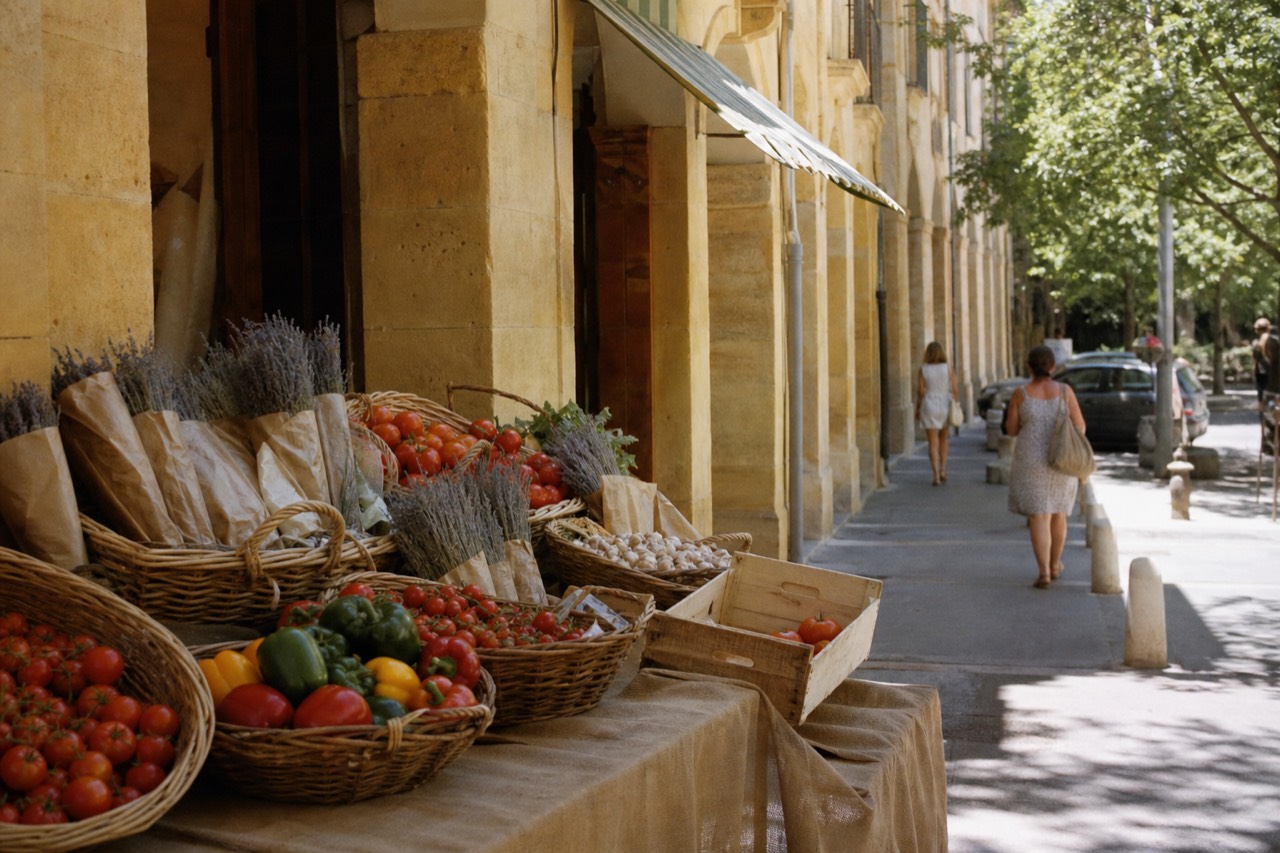
Provence’s markets are the region’s living room, where the week’s produce, antiques, and gossip all collide on the same cobblestones. But if you only have time for one, which is the best? Provence Wine Tours covers market-and-wine days across the region, and the answer is consistent.
What Is The Best Market In Provence?
The Aix-en-Provence market, especially its Saturday edition, is widely considered the best market in Provence. It stretches the length of the Cours Mirabeau and spills into the Place des Prêcheurs and Place de la Madeleine, offering fresh produce, cheeses, olives, antiques, and lavender products. Its scale, central location, and year-round reliability make it the top choice.
The market runs Tuesdays, Thursdays, and Saturdays, but Saturday is the largest and most vibrant. The Cours Mirabeau, lined with plane trees and cafés, becomes a pedestrian-only strip of stalls. You will find everything from socca (chickpea pancakes) to hand-embroidered linens. The market starts early, around 7 a.m. and winds down by 1 p.m. For the best experience, arrive before 10 a.m. to beat the crowds and the summer heat. Aix is also the perfect launchpad for wine tasting: the Coteaux d’Aix appellation begins just outside town. Pairing a morning at the market with an afternoon wine tour is a natural progression. Here are three top-rated tours from Aix-en-Provence that fit the rhythm.
What Other Markets Rival Aix-en-Provence?
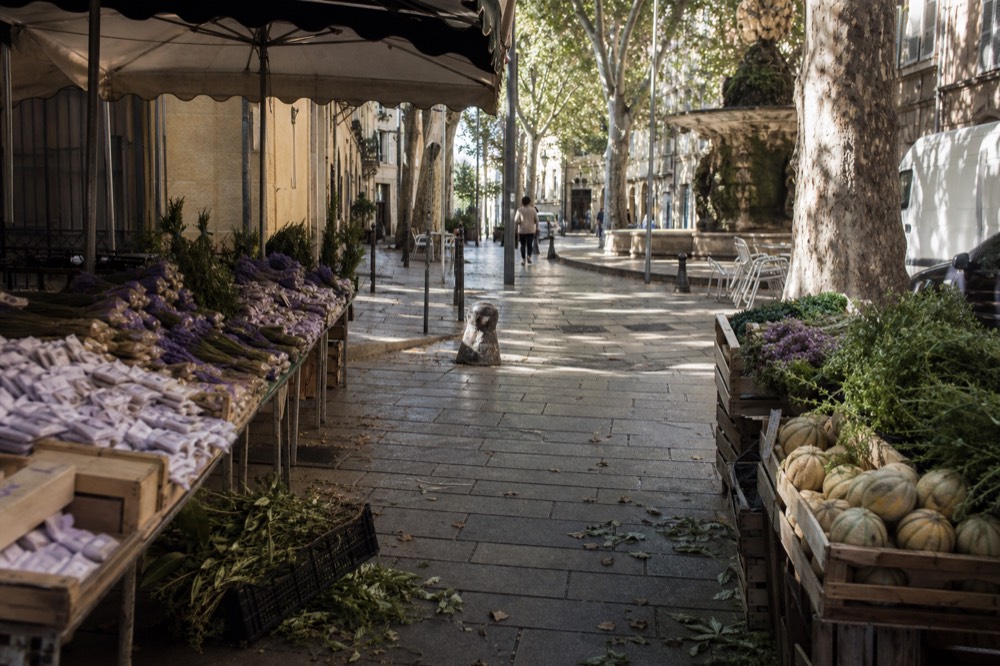
L’Isle-sur-la-Sorgue’s Sunday antiques market is the undisputed king of brocante, while Saint-Rémy-de-Provence’s Tuesday market draws a local, food-focused crowd. Each offers a different slice of Provencal life, and none requires a long drive from Aix.
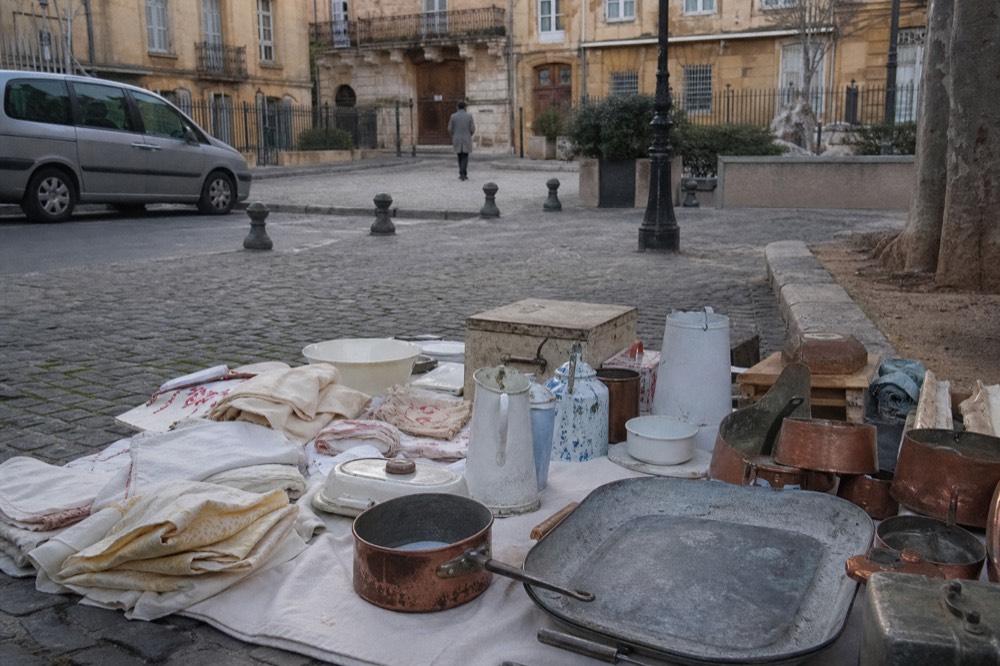
L’Isle-sur-la-Sorgue, often called the Venice of Provence for its canals, hosts a sprawling antiques market every Sunday with a large number of dealers. It is a destination for serious collectors and casual browsers alike. Saint-Rémy’s market is smaller but excels in seasonal produce, cheeses, and artisan goods, set in the town’s charming squares. Apt’s Saturday market is famous for truffles in winter, while Arles runs a large Wednesday and Saturday market that reflects the city’s size. The table below shows the key market days for easy planning.
| Town | Market Day(s) | Specialty |
|---|---|---|
| Aix-en-Provence | Tuesday, Thursday, Saturday | General, antiques, food |
| L’Isle-sur-la-Sorgue | Sunday | Antiques and brocante |
| Saint-Rémy-de-Provence | Tuesday | Fresh produce, local crafts |
| Apt | Saturday | Truffles (winter) and produce |
| Arles | Wednesday, Saturday | Large, diverse; Saturday is the main day |
Getting to these markets from Aix is straightforward. Marseille to Aix is only 31.8 km, a 34-minute drive, so visitors staying in Marseille can easily reach the Aix market. Avignon to Aix is farther, about 89 km, but the train connection is quick. For a deeper dive into the region’s wine scene, our guide to Aix-en-Provence wine tasting covers the best cellar doors and tours.
How To Visit The Best Market And A Wine Tour In One Day
A morning at the Aix market followed by an afternoon half-day wine tour is a classic Provence day. The small-group half-day tasting tour from Aix picks up in town and visits three wineries in the Coteaux d’Aix appellation, leaving the morning free for the market.
The half-day tour departs at 2 p.m. so you can spend the morning browsing stalls, have lunch at one of the market’s vendors or a nearby restaurant, and then join the tour. The small-group format keeps the experience personal, and tastings are included at each stop. Free cancellation adds flexibility if your market day runs long.
The tour covers three family-run estates, each pouring a range of Coteaux d’Aix reds, rosés, and whites. It is a relaxed introduction to the appellation, and the guide handles all the driving, so you do not have to worry about France’s strict drink-driving limits. For visitors who prefer a morning wine tour and a later market visit, the half-day Coteaux d’Aix tour departs in the morning and lasts 4.5 hours, visiting three estates with tastings included.
Alternatively, the half-day Coteaux d’Aix tour runs in the morning, so you could visit the market on a Saturday and take the wine tour on a different day. It explores the same appellation and includes tastings at three estates.
What Should You Buy At A Provence Market?
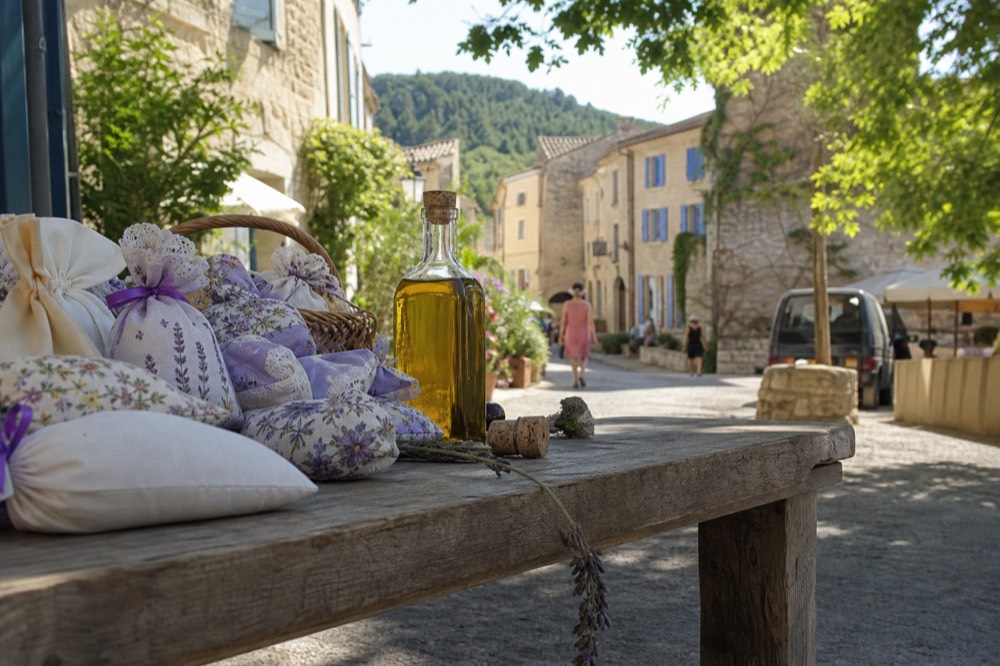
From fragrant lavender sachets and tapenade to seasonal truffles and hand-thrown pottery, a Provence market is a sensory overload. The best buys are edible souvenirs like olive oil, honey, and herbes de Provence, plus textiles and ceramics that are genuinely local.
Every stall tells a story, and the quality of artisan goods is high. Olive oil sold at the market often comes from nearby estates and carries the AOP Provence label. Honey varies by season: lavender honey in summer, chestnut honey in autumn. Tapenade, the olive spread, is a staple, and you can taste before you buy. Textiles with traditional Provençal prints (indiennes) and hand-painted ceramics from Vallauris or Moustiers make for durable souvenirs. The table below lists typical finds.
| Item | Typical Find |
|---|---|
| Lavender products | Sachets, essential oil, soap |
| Olive oil | AOP Provence or local estate oils |
| Tapenade | Black or green olive spread |
| Honey | Lavender, rosemary, or chestnut honey |
| Herbes de Provence | Dried herb blends |
| Textiles | Provençal-print tablecloths, napkins |
| Ceramics | Hand-painted pottery from Vallauris or Moustiers |
For a broader look at what makes the region special, read our guide to the Provence wine region, which explains how the landscape shapes both the markets and the wines.
How To Get To The Aix Market From Other Provencal Towns
Reaching Aix's market is straightforward by car or train from nearby Provencal towns. From Marseille, it's a 34-minute drive or a 45-minute train ride; from Avignon, the drive takes 67 minutes, and direct trains run in under an hour. Nice lies farther, but a 2-hour drive or TGV connection makes a day trip possible.
Real road distances, verified against OpenStreetMap routing, give a clear picture. Marseille to Aix is 31.8 km, a short hop on the A51. Avignon to Aix is 89.3 km, mostly on the A7 and A8, so a morning departure is wise. Nice to Aix is about 170 km, a two-hour drive, but the train from Nice to Aix TGV station takes roughly the same time. If you are staying in the Luberon, the drive from Lourmarin to Aix is 40.1 km, about 39 minutes. The table below lists key routes.
| Route | Road distance | Free-flow driving time |
|---|---|---|
| Marseille to Aix-en-Provence | 31.8 km | 34 min |
| Aix-en-Provence to Châteauneuf-du-Pape | 89.3 km | 67 min |
| Lourmarin (Luberon) to Aix | 40.1 km | 39 min |
| Aix to Les Baux-de-Provence | 71.6 km | 64 min |
These times assume free-flow traffic. On a summer Saturday, the A8 near Aix can slow considerably, so plan extra time. The market itself is a short walk from the Aix bus station and the old town parking garages.
Why Combine A Market Visit With A Wine Tour?
France’s drink-driving limit of 0.5 g/L blood, and just 0.2 g/L for drivers on a probationary licence, makes a guided wine tour the safest way to taste after a market morning. A tour handles all the driving, so you can enjoy the wines without worry.
The legal age to be served alcohol in France is 18, and the person pouring is required by law to ask for proof of age. For anyone who passed their driving test in the last three years, the limit is effectively zero glasses. That is the honest reason a driven wine tour exists. A half-day tour from Aix lets you taste three estates' wines while someone else drives the narrow roads. The Coteaux d’Aix wine guide explains the appellation’s key grapes and styles, so you can taste with context.
When Is The Best Time To Visit Provence Markets?
Spring and autumn offer the most comfortable market-strolling weather, with temperatures in the mid-60s to low 70s Fahrenheit. Summer markets are livelier but crowded and hot, while winter markets are quieter but still charming, especially around the holidays.
The mistral wind can make winter and spring markets chilly, particularly in the Rhône valley, so a windproof layer is wise. Summer sees the biggest crowds, and the Aix market can feel like a crush on Saturdays in July and August. Harvest season in late August and September adds a festive atmosphere, with wineries offering special events. The table below summarizes the seasonal trade-offs.
| Season | Typical Weather | Market Experience |
|---|---|---|
| Spring (Apr-May) | 60 to 70°F, occasional mistral | Lively, not yet peak crowds |
| Summer (Jun-Aug) | 80 to 90°F, sunny | Crowded, vibrant, early morning best |
| Autumn (Sep-Oct) | 65 to 75°F, golden light | Harvest energy, still busy |
| Winter (Nov-Mar) | 45 to 55°F, mistral episodes | Quieter, holiday markets in December |
The Aix market is a year-round fixture, though stall counts dip slightly in January and February. If you are planning a market-and-wine day, spring and autumn give you the best of both: comfortable temperatures for walking and uncrowded tasting rooms. A half-day wine tour from Aix is an easy add-on in any season, and the three tours below cover a range of budgets and styles.
In spring, market tables groan with the first tender artichauts violets, pencil-thin green asparagus, and fat white asparagus that locals steam and serve with vinaigrette. Gariguette strawberries appear in April, small and intensely perfumed, often sold alongside pots of herbes de Provence and lavender honey. The mistral can still bite, so a light scarf and a packable windbreaker let you linger over a slice of socca or a paper cone of olives without shivering. Because the crowds haven’t yet swelled to summer proportions, you can actually stop and chat with producers, ask a cheesemaker about the difference between a young Banon and an aged one, and you’ll likely walk away with a wedge wrapped in chestnut leaves and a story to go with it.
Summer mornings start early for good reason. By 8 a.m. the sun is already strong, and the best produce, Cavaillon melons, sun-warmed tomatoes, glossy aubergines, moves fast. Carry a collapsible basket and a reusable water bottle; many towns have public fountains where you can refill. In Aix, the Saturday market sprawls from the Place des Prêcheurs to the Place de l’Hôtel de Ville, and the narrow lanes can become shoulder-to-shoulder by late morning. A simple strategy: arrive before 9 a.m. do your food shopping first, then circle back for the fabric and pottery stalls once the crush eases. If you’re combining a market visit with a wine tour, summer heat makes an air-conditioned tour vehicle feel like a luxury, and many half-day tours from Aix start around 9 or 10 a.m. to beat the midday glare.
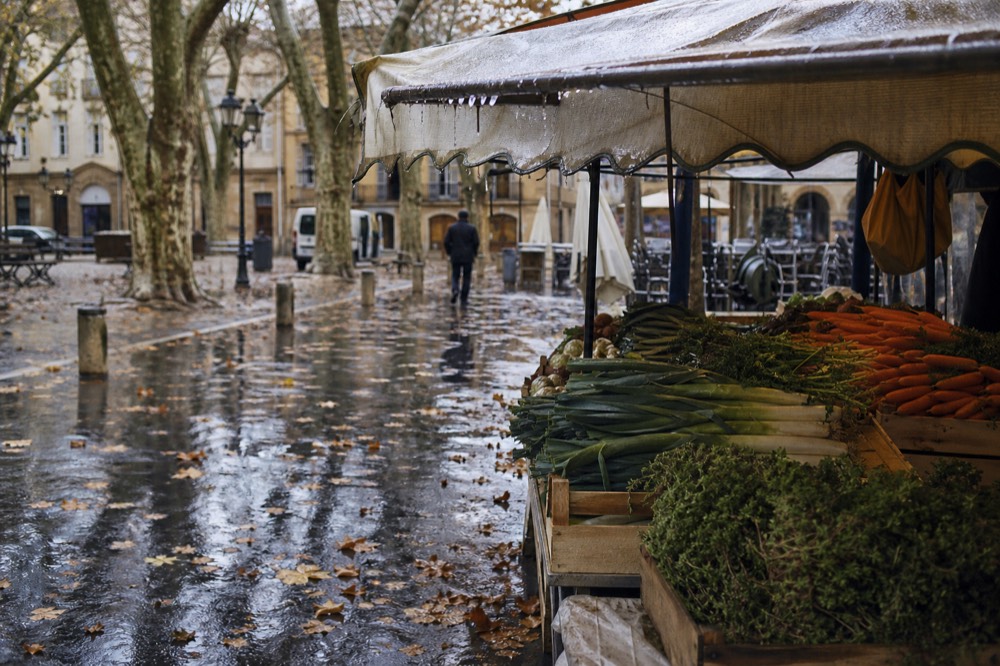
Autumn brings a shift in the market palette. Purple garlic, pumpkins, cèpes, and freshly pressed olive oil take center stage. The grape harvest means many domaines are buzzing, and you may spot winemakers at the market selling bottles alongside their vegetables, an ideal moment to ask about the latest vintage before heading out on a tasting route. The light turns golden and the air smells of woodsmoke and crushed grapes. This is also when truffle markets begin to stir in the Luberon and Ventoux, though the main season peaks in winter. For a market-and-wine day, September and October are hard to beat: you get the harvest energy, still-warm afternoons, and tasting rooms that are lively but not overrun.
Winter markets feel intimate and unhurried. From late November, chalet-style stalls pop up in Aix, Avignon, and smaller villages, selling mulled wine, roasted chestnuts, santons (hand-painted clay figurines), and artisanal gifts. The mistral can rattle the shutters, so dress in thick layers and treat yourself to a hot chocolate or a glass of vin chaud between browsing. January and February are the quietest months, and while some produce stalls thin out, you’ll still find citrus, winter greens, and the first truffles of the year. The low-season calm means you can easily pair a morning market wander with a leisurely lunch and an afternoon wine tour without worrying about reservations or queues, just be sure to check holiday opening hours, as some vendors take a break between Christmas and the New Year.
One timing note worth knowing: most Provence markets run in the morning, typically from around 8 a.m. until about 1 p.m., and vendors start packing up well before the official end, so plan to arrive early rather than late. Market days rotate between towns, which means a nearby village will usually have a market somewhere within a short drive on any given morning. Checking the local market schedule before you set out saves you from arriving at an empty square, and it also lets you time a market stop to a nearby wine route, since many tasting rooms open by appointment in the quieter months.
If you are combining a market and wine day, build the morning around the market and the afternoon around the tasting rooms. Buy your picnic supplies first, bread, cheese, fruit, and olives, then let the vendors’ pace set yours. Bring small bills and a bag, as many stalls do not take cards, and go with cash for small purchases. A little planning around the seasonal rhythms above will get you the best of both worlds: a market at its peak and a cellar door with room to breathe.
Common Questions About Provence Markets
What Is The Best Market In Provence?
The Aix-en-Provence market, especially on Saturdays, is widely considered the best. It fills the Cours Mirabeau and surrounding squares with hundreds of stalls selling produce, antiques, and artisan goods.
What Day Is The Market In Aix-en-Provence?
The market runs every Tuesday, Thursday, and Saturday. Saturday is the largest and most popular day, with the widest variety of stalls.
Is The Aix Market Open Year-Round?
Yes, the market operates all year, though stall numbers are slightly lower in January and February. The summer months see the biggest crowds.
What Is The Most Famous Market In Provence?
Beyond Aix, L’Isle-sur-la-Sorgue’s Sunday antiques market is the most famous. It draws collectors from across Europe with a large number of dealers along the town’s canals.
Can I Combine A Market Visit With A Wine Tour?
Absolutely. A morning at the Aix market followed by an afternoon half-day wine tour is a popular itinerary. Several tours from Aix pick up in town and visit nearby Coteaux d’Aix wineries.
What Should I Buy At A Provence Market?
Lavender products, olive oil, tapenade, honey, herbes de Provence, textiles, and hand-painted ceramics are all excellent local buys. Taste before you buy whenever possible.