What Is The Best Month To Visit Provence?
Harvest in Provence runs from late August into September, a lively window for wine touring. May and June are also great. Plan your trip with our month-by-month guide.
What Is The Best Month To Visit Provence?
September is the single best month to visit Provence for wine touring. The harvest is in full swing across the region, daytime temperatures are warm but not oppressive, and the peak summer crowds have already left. May and June are close runners with long, bright days and vineyards in flower, while July and August bring the biggest tourist numbers and the strongest heat.
Provence’s wine calendar drives much of the seasonal rhythm. The harvest starts in the earliest parcels in the second half of August and runs through September, with later sectors picking into mid‑month. That means a September visitor can watch grapes come in, see cellar work in action, and taste the previous vintage while the new one ferments. Outside of harvest, May and June offer the most comfortable touring weather: mild, sunny days with low rainfall and the mistral wind still gentle enough for a terrace tasting.
The summer months of July and August deliver reliably hot, dry days, ideal for rosé by the pool, but they also pack the roads and the tasting rooms. According to INSEE, 44% of short‑term rental nights in Provence‑Alpes‑Côte d’Azur fall in July and August alone, and the A8 autoroute between Nice and Aix can slow to a crawl on changeover Saturdays. If you want a quieter experience, aim for the shoulder months on either side. For a broader look at the region’s wine landscape, our guide to the Provence wine region covers the appellations in detail.
When Is The Provence Wine Harvest?
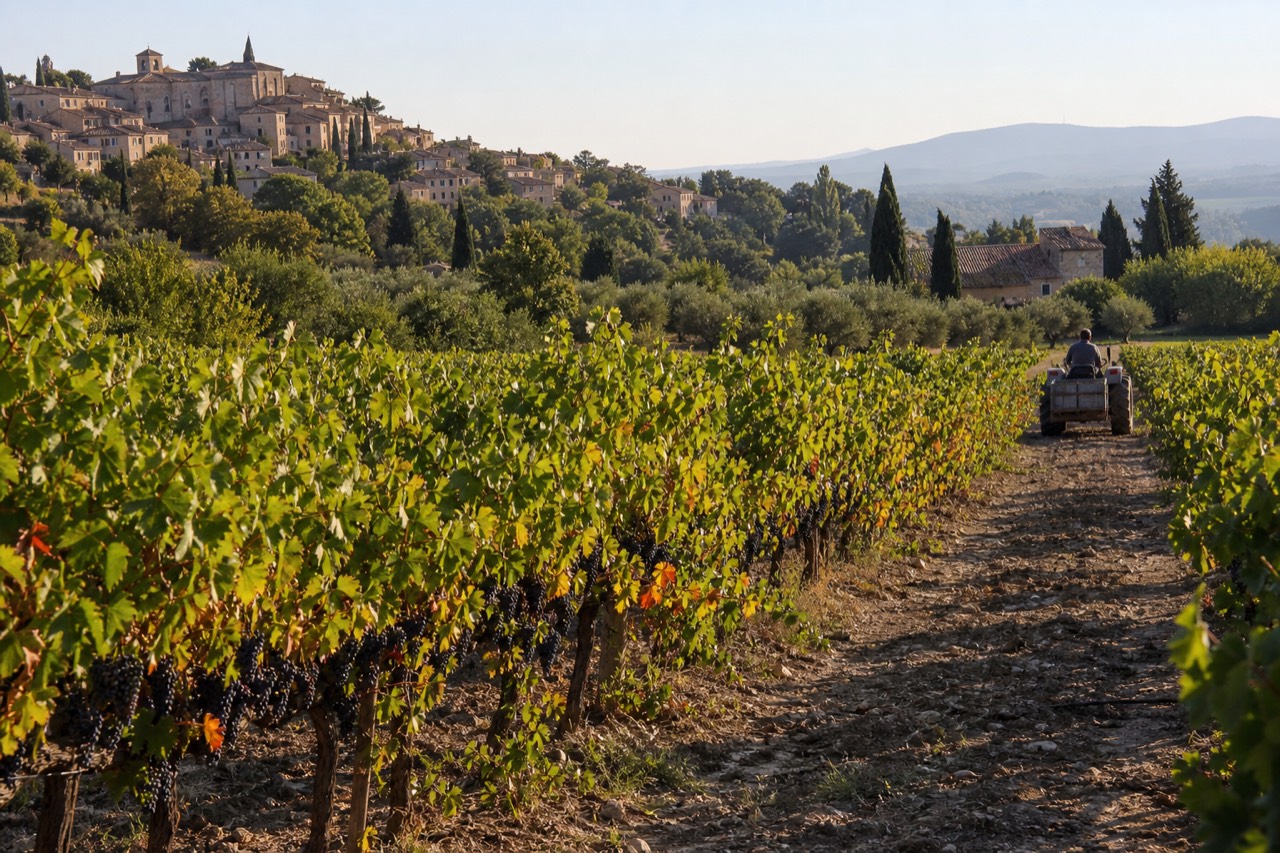
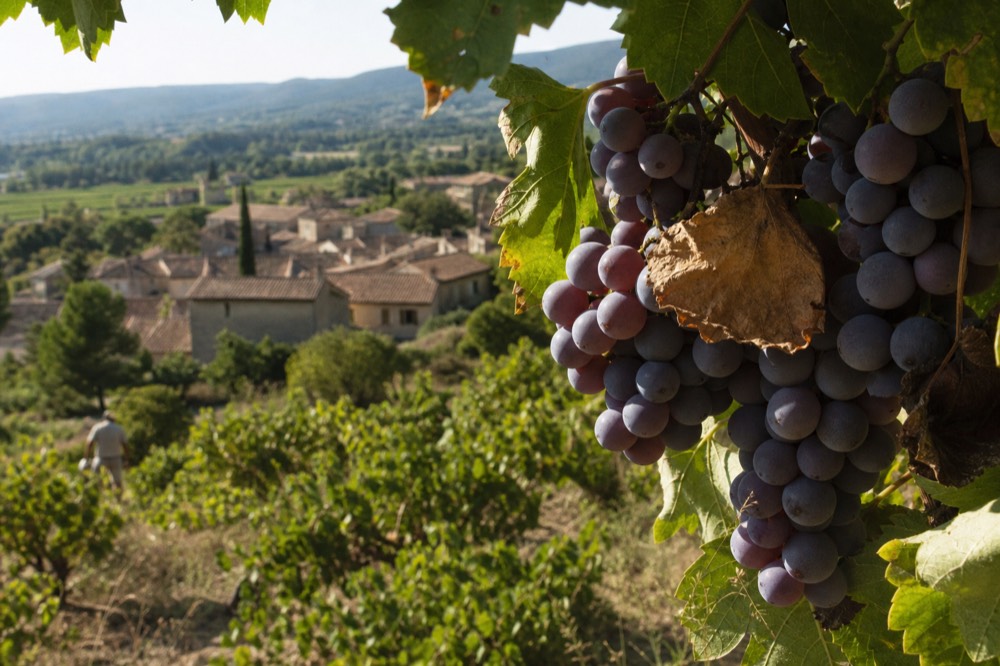
The Provence wine harvest begins in the second half of August in the earliest parcels and continues through September, with later‑ripening sites picking into mid‑month. The exact start date shifts every year depending on the growing season, but the bulk of the fruit is usually in the cellar by the end of September. Visiting during these weeks lets you see the vineyards at their most active.
The Côtes de Provence appellation, which stretches from the Var coast up to the foothills of the Sainte‑Victoire massif, typically sees the first secateur cuts around mid‑August. In 2025 the interprofession reported the earliest parcels being picked “autour du 12 août.” Warmer inland areas like the Coteaux d’Aix‑en‑Provence can start a few days earlier, while higher‑altitude Luberon vineyards and the late‑ripening Mourvèdre plots in Bandol often pick through mid‑September. This staggered schedule means a visitor can chase the harvest across different appellations for nearly six weeks.
A harvest‑time visit is not just about watching picking crews. Many domaines open their doors for special harvest events, and the atmosphere in the villages, with tractors rumbling through the squares and the smell of fermenting must in the air, is unlike any other time of year. Just be aware that some smaller estates may be too busy to receive drop‑in visitors; a Provence Wine Tours day trip with pre‑arranged cellar stops solves that problem neatly. If you are curious about which estates to prioritise, our best wineries in Provence guide lists the standout domaines across the region.
| Month | Harvest activity | Typical touring weather | Crowd level |
|---|---|---|---|
| April | Vines budbreak, no harvest | Mild, some rain | Low |
| May | Flowering, vineyards green | Warm, mostly dry | Moderate |
| June | Berry set, long daylight | Warm to hot, dry | Moderate |
| July | Veraison begins, no harvest | Hot, very dry | High |
| August | Early harvest in warmest sites | Hot, dry | High (peak) |
| September | Main harvest month | Warm, dry | Moderate |
| October | Late harvest in Bandol and higher sites | Mild, some rain | Low |
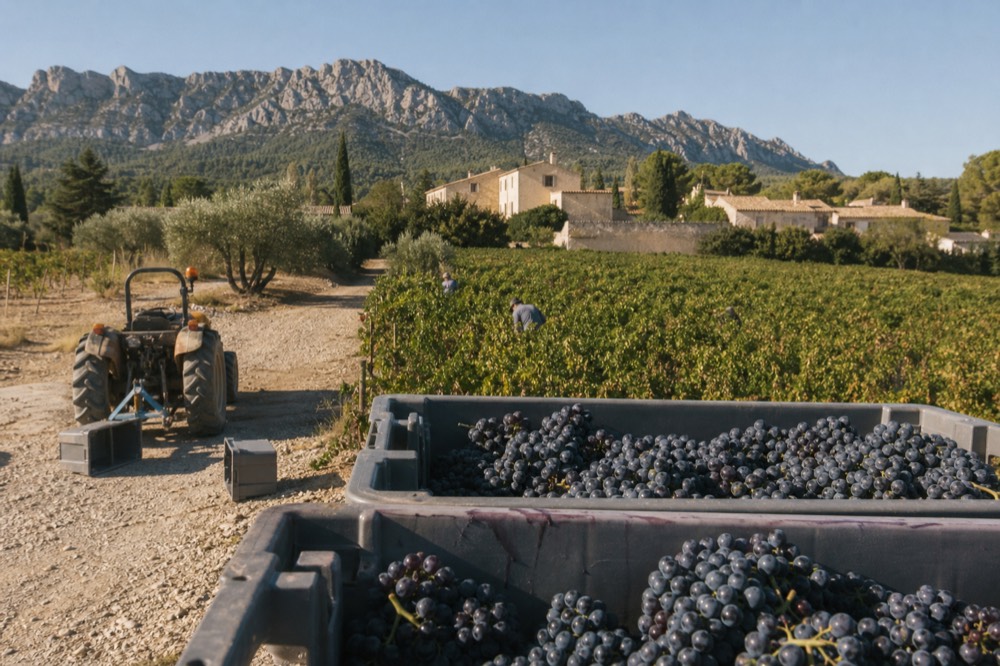
September is the month when the Provençal countryside truly hums with harvest energy. Picking often starts at first light, when the grapes are still cool, and by mid-morning the cellar doors are wide open, receiving crate after crate of fruit. The light is softer than in August, making it a better time for both vineyard walks and photography. If you are hoping to witness the crush, plan your visit for the first half of September, this is when most domaines are processing their white and early red varieties, and the fermentation tanks begin to bubble with the new vintage.
For a deeper dive, look for domaines that host harvest breakfasts or open cellar days. These events let you taste freshly pressed juice, talk to the winemakers while they work, and sometimes even clip a few bunches yourself. Because the exact picking dates shift with the weather, it is wise to check a domaine’s social media or call ahead. The local tourist offices and the Conseil Interprofessionnel des Vins de Provence also publish regular harvest updates, so you can time your visit to catch the peak of activity in your favourite appellation.
How Do Crowds And Prices Change Through The Year?
Crowds in Provence follow a steep bell curve, peaking in July and August and dropping sharply in September. Accommodation and tour prices track the same pattern, with high‑season rates noticeably above shoulder‑season levels. Visiting in May, June or September gives you most of the summer weather at a lower cost and with far less competition for tables and tasting appointments.
The INSEE data for short‑term rental platforms in 2022 shows that 44% of nights in the PACA region fell in July and August, compared with 37% nationally. August is the single busiest month for domestic French travellers, while July draws the largest share of international visitors. The coastal strip from Saint‑Tropez to Nice feels especially pressed, but even inland Aix‑en‑Provence can see its cours Mirabeau packed from mid‑morning until late evening.
Wine tours reflect the same pattern. Operators run more departures in summer, but small‑group tours still fill up, and the midday heat can make outdoor tastings less comfortable. By September, group sizes often shrink, the heat relents, and the harvest energy gives every cellar visit an extra layer of interest. October is even quieter and can be excellent value, and a booked tour still arrives at a cellar the operator has arranged. If you are weighing a trip from the coast, our wine tours from Nice page lays out the best options for each season.
Does The Mistral Wind Affect The Best Time To Visit?
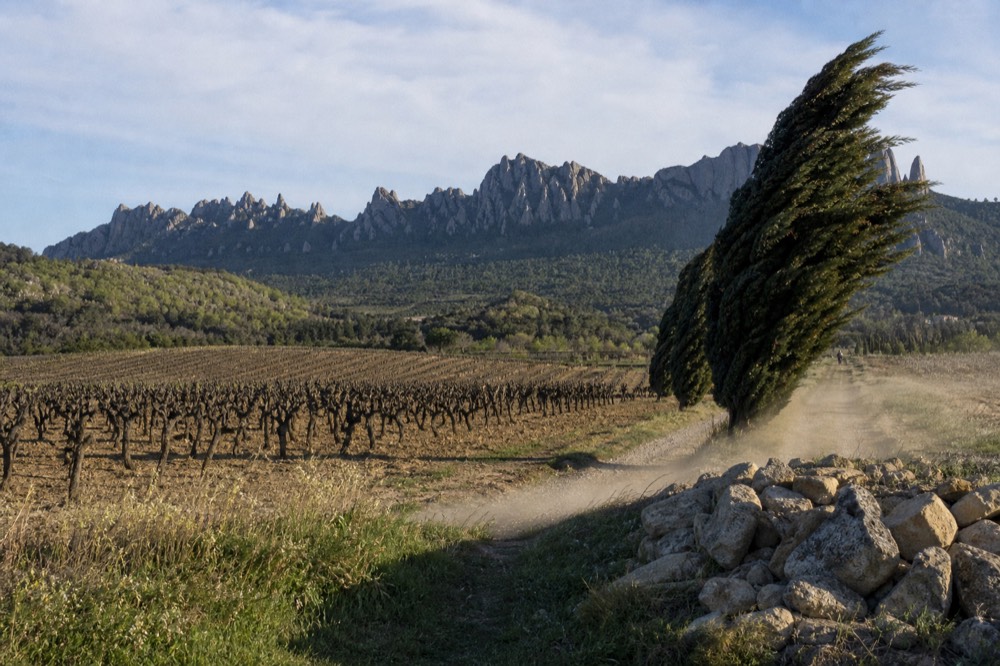
The mistral is a dry, gusty north‑westerly wind that funnels down the Rhône valley and across Provence. It is strongest in winter and spring, when it can blow for several days at a stretch, and it hits the Avignon and Châteauneuf‑du‑Pape side hardest. For a wine tourist, the mistral is a comfort factor rather than a safety concern, but it is worth planning around for an outdoor tasting in March or April.
Météo‑France describes the mistral as a regional wind that averages around 50 km/h and can reach 80 to 100 km/h in gusts. The strongest zone runs between Orange, Avignon, Istres and Arles, where Istres records roughly 10 days a year with gusts above 100 km/h. Because the wind is dry, it often brings clear, sunny skies, so a mistral day can look deceptively beautiful while feeling bitingly cold on a terrace.
For wine touring, the practical takeaway is simple. In May, June and September, the mistral is usually mild enough to ignore, and it can even be a welcome breeze on a hot afternoon. In March and early April, bring a windproof layer if you are heading to a Rhône‑side appellation like Châteauneuf‑du‑Pape, Gigondas or Vacqueyras. Coastal appellations such as Bandol and Cassis are far less exposed and rarely feel the full force of the wind. If you want to know what a rainy month looks like in the region, our post on the rainiest month in Provence breaks down the precipitation patterns.
Which Months Offer The Best Value For A Provence Vineyard Day?
May, June and September deliver the best balance of price, weather and availability for a Provence wine tour. Tour prices are lower than in July and August, the tasting rooms are busy but not overrun, and the daylight stretches long enough for a full‑day itinerary without feeling rushed. October can be an even better bargain, though some cellar doors may close after the harvest.
A full‑day Côtes de Provence tour from Nice, for example, runs year‑round but feels most rewarding in late spring and early autumn. The eight‑hour small‑group format visits three estates, includes all tasting fees, and covers the ground without anyone needing to count glasses against France’s strict drink‑driving limits. For a probationary licence holder, the legal limit is just 0.2 g/L, effectively zero, so a driven tour is the only sensible way to taste across multiple domaines.
Shorter half‑day tours from Aix‑en‑Provence, such as the three‑hour Sainte‑Victoire route, are excellent value in the shoulder months. They let you fit a tasting into a morning or afternoon and still have time to explore Aix itself. In peak summer, the same tour can feel rushed because of traffic and heat; in May or September, the pace is more relaxed and the light on the Sainte‑Victoire mountain is at its most photogenic.
If you are based in Nice or Cannes, the eight‑hour small‑group tour that runs from both cities is a strong mid‑range option. It covers the heart of the Côtes de Provence appellation, stops at three contrasting estates, and includes hotel pickup, a real advantage when you are staying on the coast and do not want to drive the A8 yourself.
What About Visiting Provence In Winter?
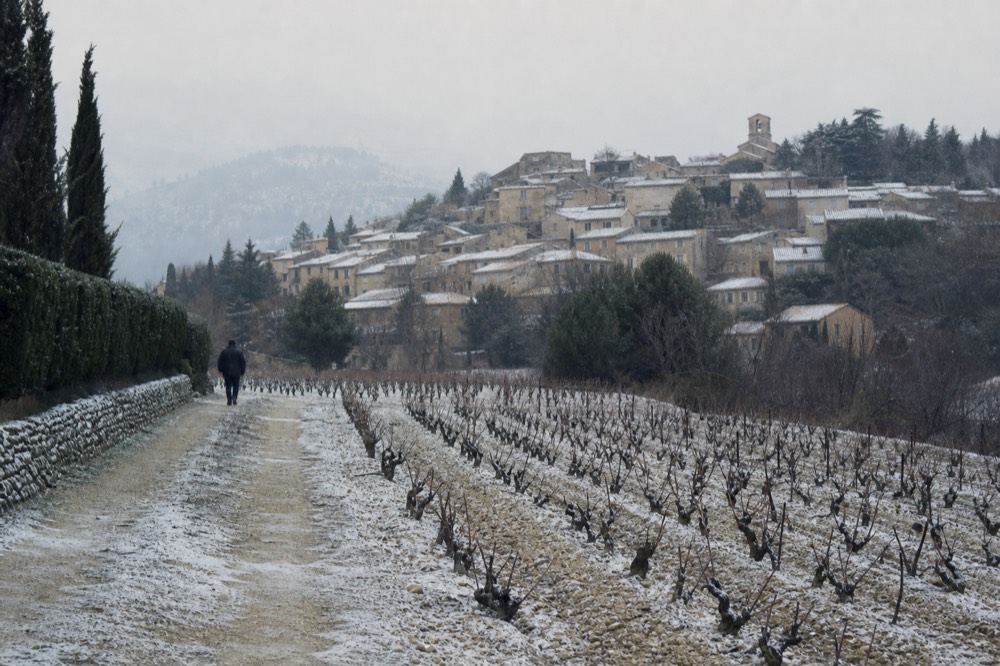
Winter in Provence is quiet, cool and surprisingly bright, with plenty of sunshine between the occasional rainy spells. It is not the season for vineyard picnics, but it can be a fine time for a focused tasting trip if you are happy to trade outdoor lounging for empty roads and lower prices.
The main drawback of a winter wine tour is that opening patterns vary estate by estate, and a booked tour confirms each stop ahead of arrival. There is no region‑wide closing schedule, each estate sets its own, so a self‑guided winter trip requires a lot of phone calls. Booking a tour with a local operator sidesteps that problem because the guide will have confirmed which cellars are receiving visitors that week.
The upside is significant. Accommodation rates in Aix, Avignon and the Luberon villages drop sharply compared with August. Restaurant reservations are easy to get, and the winter light on the Alpilles and the Mont Ventoux is spectacular. If your trip is more about the wines than the sun lounger, a crisp January day in Châteauneuf‑du‑Pape, with the mistral rattling the shutters and a glass of mature red in front of you, has a charm all its own.
What About The Shoulder Months Of April And October?
April and October are the true shoulder months in Provence, offering a quieter, more affordable experience with generally pleasant weather. April brings the first real warmth and the start of the vine growth cycle, while October delivers golden light, the tail end of harvest in some appellations, and a noticeable drop in visitor numbers. Both months require a flexible attitude toward weather, but the rewards are empty roads and a more local pace.
April can be unpredictable. One day might feel like early summer, the next can bring a sharp mistral or a passing shower. The vineyards are waking up, with budbreak underway and the first green shoots appearing. It is a beautiful time for photography, and the famous markets of Provence are fully stocked with spring produce without the summer crush. Many domaines are open by appointment, and a pre‑booked tour means you will not be turned away.
October is, in many ways, a sleeper hit. The harvest is largely finished, but a few late‑ripening parcels in Bandol and the higher Luberon slopes may still be picking. The light is softer, the tourist infrastructure is still running, and the sea is often warm enough for a swim. Tasting rooms are relaxed, and winemakers have more time to talk. The only real downside is that some smaller estates close after the harvest, so again, a tour with confirmed stops is the safest bet.
| Season | Typical months | Touring pros | Touring cons |
|---|---|---|---|
| Spring | April-June | Mild weather, flowering vines, moderate crowds | Mistral can still be strong in April |
| Summer | July-August | Guaranteed sun, long days, lively villages | Peak crowds, high prices, hot afternoons |
| Autumn | September-October | Harvest energy, warm days, lower prices | Some cellars close after harvest |
| Winter | November-March | Empty roads, low prices, bright days | Many domaines closed, short daylight |
Common Questions About The Best Month To Visit Provence
What Is The Best Month To Visit Provence?
September is the best month for wine touring, with harvest activity, comfortable temperatures and fewer crowds. May and June are also excellent for long, sunny days and flowering vineyards.
Is Provence Too Crowded In July And August?
The coast and popular villages are very busy, and 44% of short‑term rental nights in the region fall in these two months. Inland appellations like the Luberon and the Coteaux d’Aix are quieter, but midday heat can be intense.
Can You Visit Provence Wineries In Winter?
Many smaller domaines close between November and March, but a pre‑booked tour can still visit estates that stay open. Winter offers low prices and empty roads, though daylight hours are short.
When Does The Lavender Bloom In Provence?
Lavender typically flowers from mid‑June through early August, with the Valensole plateau peaking around the first two weeks of July. It overlaps with the busiest tourist weeks, so plan accordingly.
Does The Mistral Wind Ruin A Wine Tour?
The mistral is strongest in winter and spring and can make outdoor tastings chilly, especially around Avignon and Châteauneuf‑du‑Pape. In summer and early autumn it is usually a welcome breeze.
What Is The Cheapest Month To Visit Provence?
November and February are typically the least expensive months for accommodation and flights, though many tourist services operate reduced schedules. October offers a better balance of value and availability.