The Best Wineries In Provence: Where To Taste, And How To Reach Them
Provence has more than 550 producers across its three core appellations alone, so 'best winery' depends on where you are staying and what you want in the glass. Here is how the region's appellations actually differ, which estates are reachable from each base, and what a visit realistically involves.
Short answer
The best wineries in Provence cluster by appellation: Côtes de Provence estates around Sainte-Victoire and the Var heartland, Coteaux d'Aix around Aix, Châteauneuf-du-Pape 17 km from Avignon, and Bandol and Cassis near the coast south of Marseille. A small-group tasting tour from Aix runs from $114.97 per person with tastings included.
Provence produces 89% rosé in its three core appellations, and more than 550 producers make those wines, so a search for "the best winery" returns an impossible list unless you first decide which part of Provence you are standing in. The region is not one wine country. It is at least five: the Côtes de Provence heartland in the Var, the Coteaux d'Aix around Aix-en-Provence, the Rhône appellations within reach of Avignon, the coastal pair of Bandol and Cassis, and the Luberon, which is administratively a Rhône valley appellation even though it is sold to visitors as a Provençal day out.
This guide works through them one by one, with the real road distances between each base and its vineyards, and with the tour options that reach them. It is written by Provence Wine Tours as a planning document, not a ranking: no honest source ranks Provençal estates against each other, and the estates worth your time depend on whether you have three hours or a full day, and whether you are driving.
What Actually Makes A Winery Visit In Provence Good?
The best winery visits in Provence combine an appellation you cannot taste at home with a drive short enough to enjoy, and the honest starting point is that France's drink-driving limit is 0.5 g/L blood, or 0.2 g/L on a probationary licence, which makes a driven tour the practical choice for most visitors. That is not a marketing line, it is the statute: Service-Public states the general limit plainly, and anyone who passed their test in the last three years is held to the lower figure, effectively zero glasses. So the question is never just "which estate is best", it is "which estate can I reach, taste at properly, and return from safely".
Three things separate a good visit from a forgettable one. The first is appellation fit: a cellar in the Sainte-Victoire sub-denomination of Côtes de Provence pours a different wine, under different yield rules, than a Coteaux d'Aix estate forty minutes away, and knowing which you prefer matters more than any individual estate's reputation. The second is access. No primary source publishes region-wide cellar opening hours or a standard closing day, because opening patterns are set estate by estate, and that is the real reason a booked tour beats turning up: a tour arrives at a cellar the operator has arranged. The third is the drive itself, which the next section quantifies.
It is also worth being clear about what a visit is not. There is no French statute governing tasting pour sizes or spittoon provision, so any claim about "standard" pours is invention. What is real: 18 is the legal age to be served alcohol anywhere in France, cellar door included, and the person pouring is required by law to ask for proof of age.
Which Appellations Should The Best Wineries Come From?
The five appellations a Provence winery trip realistically covers are Côtes de Provence, Coteaux d'Aix-en-Provence, Châteauneuf-du-Pape, Bandol and Cassis, plus the Luberon as a sixth option from Aix, and each makes a legally distinct wine under INAO rules that go far beyond a label. The differences are concrete. Bandol reds must contain 50% to 95% Mourvèdre and age a minimum of 18 months in barrel or foudre. Cassis is officially white-dominant, about 70% of production, in a region otherwise defined by rosé. Châteauneuf-du-Pape's current spec names 18 grape entries, which collapses to the familiar 13 once you merge the colour mutations of clairette, grenache and piquepoul.
The scope matters here. The CIVP's figures cover only the three "Vins de Provence" AOPs: Côtes de Provence, Coteaux d'Aix-en-Provence and Coteaux Varois en Provence. They do not include Bandol, Cassis or Les Baux. Provence as a whole represents 40% to 45% of French AOP rosé production and about 5% of world rosé, and both numbers should travel together, with the AOP scope stated, because a flat "Provence makes 40% of French rosé" is wrong.
| Appellation | AOC decree | What defines it | Best base |
|---|---|---|---|
| Côtes de Provence | 24 October 1977 | 84 communes, rosé-led, five sub-denominations | Aix, Nice, Cannes |
| Coteaux d'Aix-en-Provence | 24 December 1985 | Vermentino-led whites, cabernet-sauvignon permitted as accessory | Aix, Marseille |
| Châteauneuf-du-Pape | 15 May 1936 | One of France's first six AOCs, 13 (or 18) permitted grapes | Avignon |
| Bandol | 11 November 1941 | Mourvèdre 50-95% in reds, 18-month minimum ageing | Marseille, Aix |
| Cassis | 15 May 1936 | About 70% white wine, marsanne 30-80% of white plantings | Marseille |
| Luberon | 26 February 1988 (as Côtes du Luberon) | Rhône appellation sold as a Provence day out | Aix |
One legend to retire while we are here: Châteauneuf-du-Pape was not "the first AOC, in 1923". What is documented is that in 1923 growers, with Baron Le Roy de Boiseaumarie, founded the first syndicate to defend the origin, and the rules they wrote fed into the recognition decree of 15 May 1936, which created six AOCs at once: Arbois, Cassis, Châteauneuf-du-Pape, Cognac, Monbazillac and Tavel.
If you are staying in or near Aix-en-Provence, three tour formats cover this ground well, from a short tasting circuit to a full private day:
What Are The Best Wineries To Visit Near Aix-en-Provence?
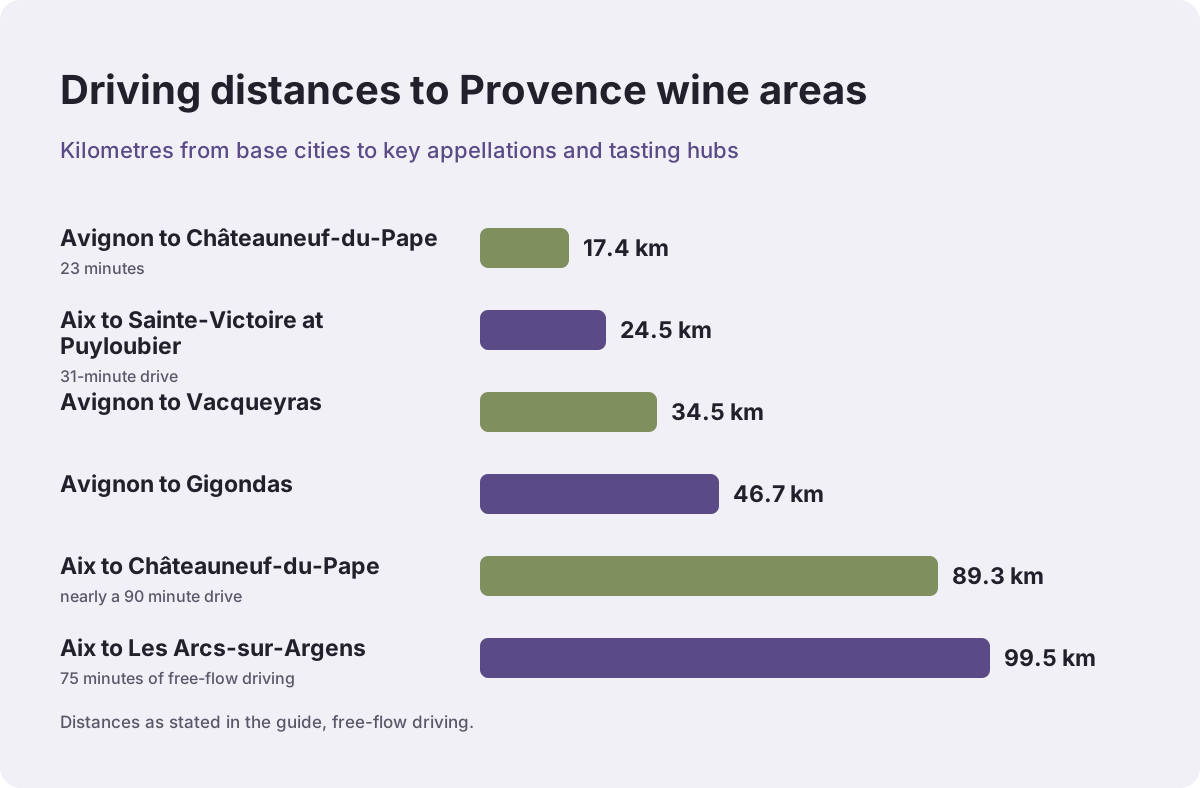
The best winery visits from Aix are in the Coteaux d'Aix-en-Provence appellation immediately around the city and the Côtes de Provence Sainte-Victoire sub-denomination 24.5 km away at Puyloubier, a 31-minute drive, where the red and rosé-specific yield rules are stricter than the regional standard. Sainte-Victoire is one of five Côtes de Provence sub-denominations, approved by the INAO national committee in May 2004, and its communes include Puyloubier, Le Tholonet, Rousset and Trets. A DGC bottle is not just a label variant: the maximum average parcel load is 8,500 kg/ha for all five sub-denominations against 9,500 kg/ha for plain Côtes de Provence.
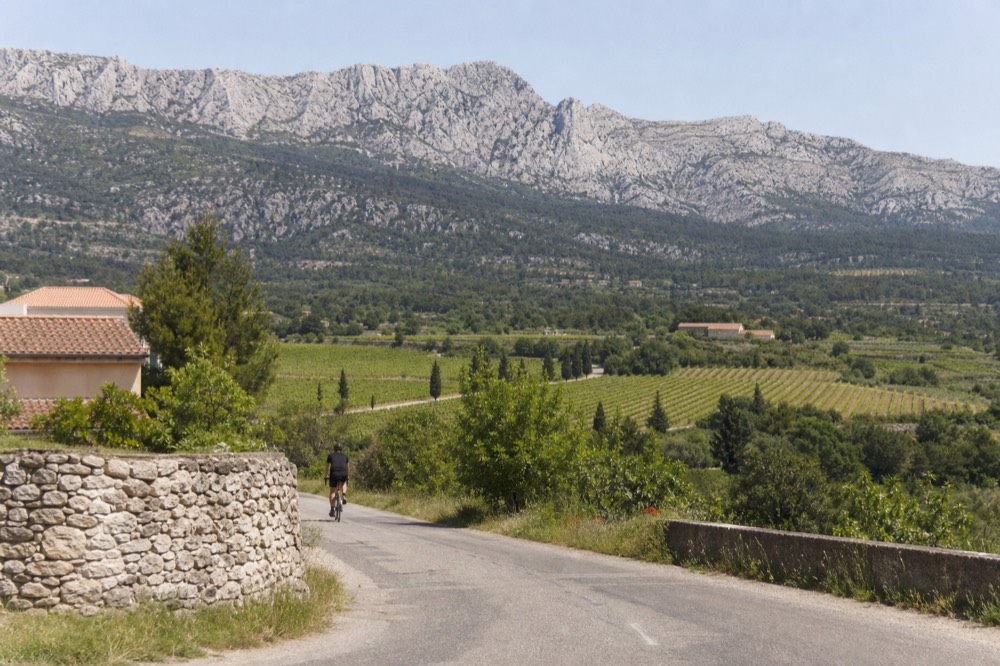
Coteaux d'Aix itself, recognised by the décret of 24 December 1985, has its own character worth tasting for: the whites are built around vermentino, and cabernet-sauvignon is a permitted accessory variety, which is unusual for Provence and real here. The appellation recorded more than 4,100 hectares in 2009 across 12 cooperative cellars and 70 private estates, so the estate choice around Aix is genuinely wide.
The practical way to taste this side of the region without a car is a small-group tour. The Sainte-Victoire Route, Côtes de Provence half-day from Aix runs 3 hours at $114.97 per person, rated 4.8 across 273 reviews, with tastings included in the price and free cancellation. For readers planning a wider Aix trip, our Aix-en-Provence wine tasting guide covers the city's own tasting rooms and bars, and the Coteaux d'Aix-en-Provence appellation guide goes deeper on the wine itself.
Aix also works as a base for the Côtes de Provence heartland further east, though the drive grows: Aix to Les Arcs-sur-Argens, where the Maison des Vins Côtes de Provence sits, is 99.5 km and 75 minutes of free-flow driving. That is why most visitors from Aix stay on the Sainte-Victoire side and save the Var for a dedicated day.
What Are The Best Wineries To Visit From Avignon?
The best winery visits from Avignon are in Châteauneuf-du-Pape, just 17.4 km and 23 minutes from the city, with Vacqueyras at 34.5 km and Gigondas at 46.7 km extending the day into the southern Rhône, all of it dramatically closer than from Aix, which is 89.3 km away. That distance gap is the single most useful planning fact on this page: a Châteauneuf-du-Pape tour from Aix is a real thing, but it is nearly a 90 km drive each way before anyone tastes anything, while from Avignon the village is practically a suburb.
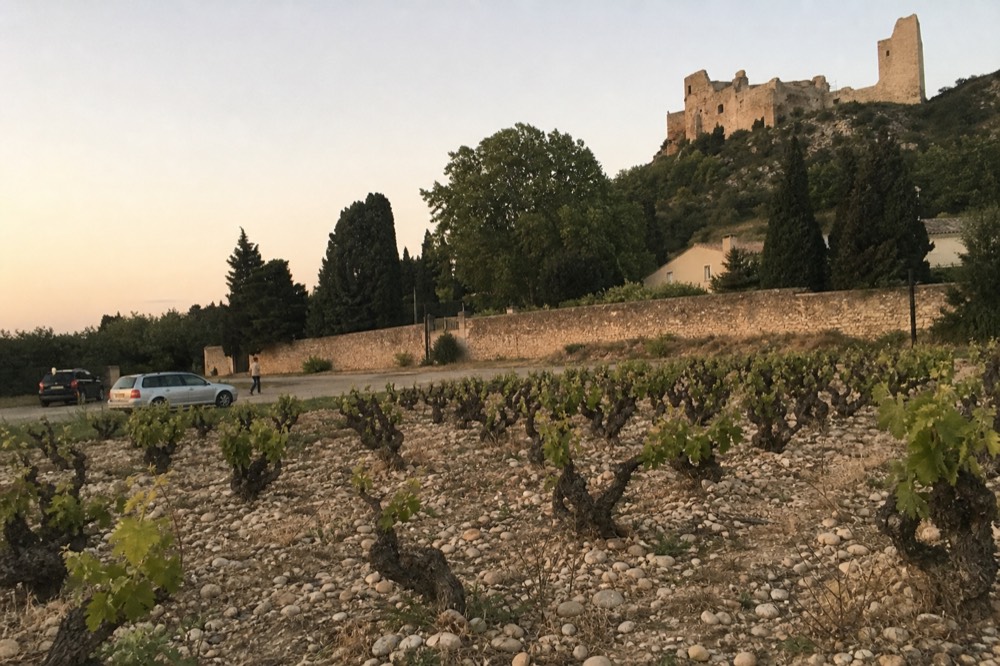
What you are tasting there is unlike anything in the rest of this guide. Châteauneuf-du-Pape is a red-led appellation in a rosé-led region, one of France's first six AOCs from 15 May 1936, and its current spec names 18 grape entries for red and white, from grenache and mourvèdre to muscardin, picardan and terret noir. The appellation recorded about 3,200 hectares in 2010, farmed by 320 holdings. Gigondas, an AOC since 6 January 1971, now covers white, red and rosé, with clairette as the principal white variety.
The strongest small-group option from Avignon is the Three-Estates Châteauneuf-du-Pape day: 7 hours at $207 per person, rated 5 across 553 reviews, tastings included, free cancellation. A shorter 4-hour half-day version exists at $103.36 per person, rated 4.8 across 456 reviews, and a 9-hour full day with lunch included runs $197.43. Our Châteauneuf-du-Pape wine tours guide compares them in full.
One weather note that applies to this side of the region more than any other: the mistral. Météo-France describes it as a turbulent, generally dry regional wind averaging around 50 km/h with gusts of 80 to 100 km/h, strongest in winter and spring, and its strongest zone runs between Orange, Avignon, Istres and Arles. Mistral days are dry and usually very sunny, so it is not a rain risk, but a spring terrace tasting above the Rhône can be genuinely cold. Bring a windproof layer, not an umbrella.
Which Wineries Are Best Around Bandol And Cassis?
The best estates from the coastal side are Bandol, where reds must be 50% to 95% Mourvèdre aged at least 18 months in barrel or foudre, and Cassis, where about 70% of production is white wine, and both sit within an hour of Marseille: Cassis 25.7 km away, Bandol 54.9 km. These two appellations are the answer to anyone who has decided Provençal wine means pale rosé and nothing else. Bandol is one of France's most structured reds; Cassis, whose whites pair with the local bouillabaisse, is officially white-dominant per the INAO spec.
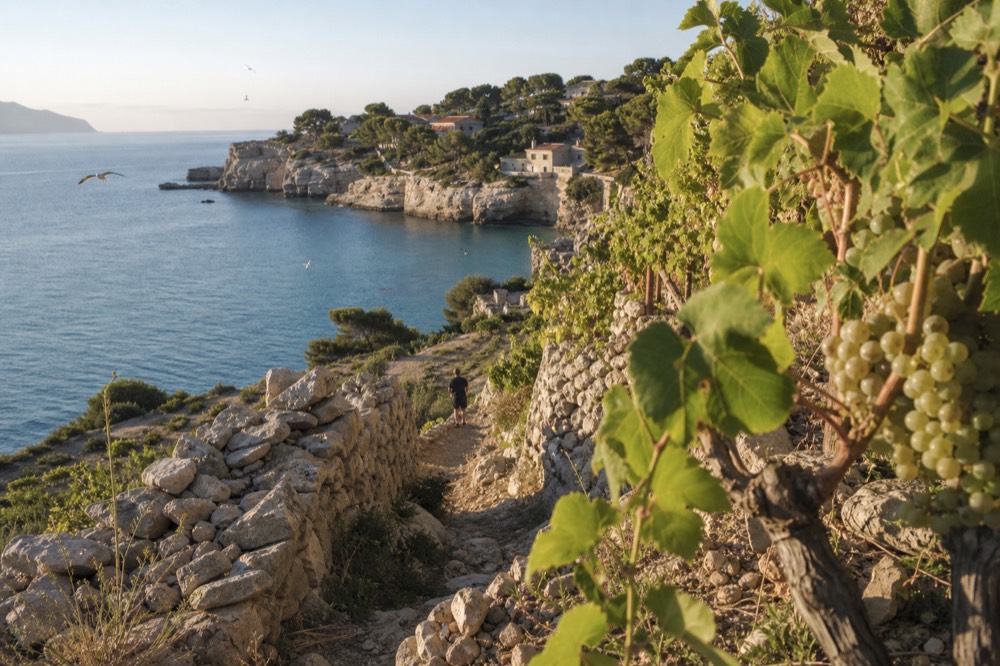
Bandol's eight communes, all in the Var, run from the town itself through Le Castellet, La Cadière-d'Azur and Saint-Cyr-sur-Mer. The appellation recorded 1,580 hectares in 2009 across 3 cooperative cellars and 54 estates. Cassis is far smaller, 204 hectares in 2009, and its white grapes are led by clairette and marsanne, with marsanne required at 30% to 80% of the white plantings. A count of Cassis estates exists only from the local tourist office, not INAO, so treat any number you see with that caveat.
From Aix, a half-day Bandol and Cassis tour runs 5 hours at $121.94 per person, rated 4.9 across 11 reviews, tastings included. From Marseille the drive is short enough that the coast works as a half-day too. Our Bandol and Cassis wine tours guide covers the full-day options, including an 8-hour rosé-focused itinerary from Aix at $191.62 per person.
Is The Luberon Worth It For Wineries?
The Luberon is worth a winery day from Aix, with Lourmarin 40.1 km and 39 minutes away and Bonnieux 50.0 km and 52 minutes, and its appellation, recognised as Côtes du Luberon in 1988 and renamed Luberon in 2009, makes all three colours across roughly 3,300 hectares recorded in 2010. The honest caveat is administrative: Luberon is a Rhône valley appellation, not one of the three CIVP "Vins de Provence" AOPs, so its volumes never appear in the Provençal rosé statistics. As a visitor experience, hilltop villages plus cellars plus lavender country in one loop is hard to beat.
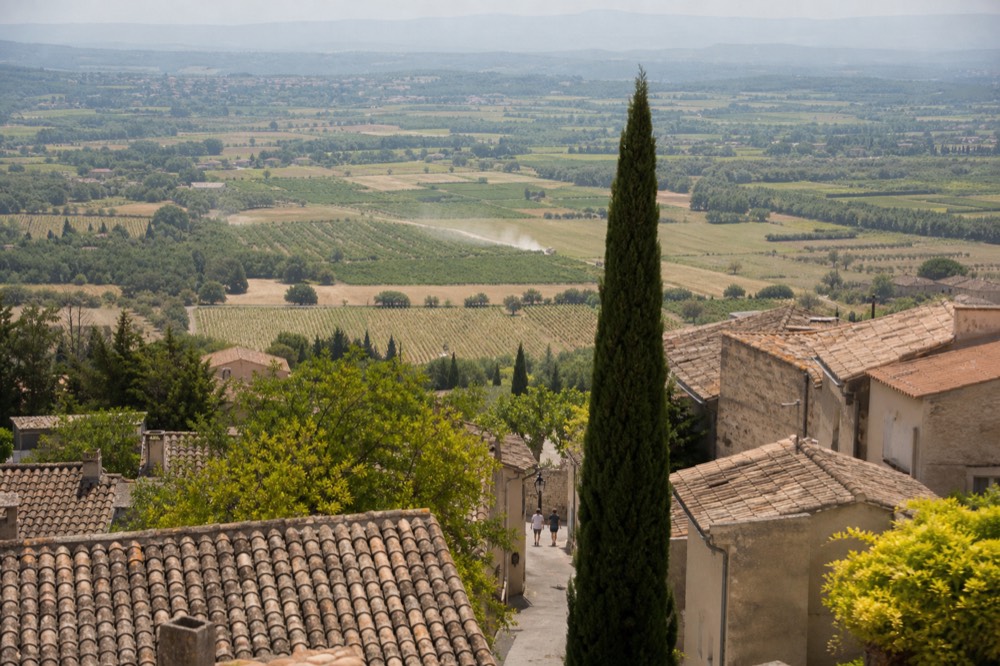
The tour options from Aix are strong. A 7.5-hour Luberon vineyards tasting day runs $180.01 per person, rated 5 across 4 reviews, tastings included. A longer 10-hour Luberon villages and wine itinerary, which trades cellar time for village time, runs $209.04 per person, rated 4.9 across 65 reviews. From Marseille, a 7.5-hour Luberon full day is available at $184.66. Our Luberon wine tours guide breaks down which suits whom.
How Do You Choose Between Winery Tours Without A Car?
Compare tours on four axes: hours, price per person, whether tastings are included, and the review count behind the rating, and on this roster small-group half-days from Aix run $114.97 to $156.78 while full days run $180.01 to $209.04, with every tour offering free cancellation. The review count matters more than most buyers realise. A 5 rating on 4 reviews is a genuinely good tour with a thin record; a 4.8 across 456 reviews is a known quantity. Both are honest numbers, but they answer different questions.
| Tour | Base | Length | Price | Rating |
|---|---|---|---|---|
| Sainte-Victoire Route, Côtes de Provence | Aix | 3 hours | $114.97 | 4.8 across 273 reviews |
| Half-Day Tasting, 3.5 hours | Aix | 3.5 hours | $156.78 | 4.7 across 111 reviews |
| Half-Day Coteaux d'Aix, 4.5 hours | Aix | 4.5 hours | $121.94 | 4.7 across 25 reviews |
| Private Full Day, pickup included | Aix | 6-8 hours | $562.33 | 5 across 33 reviews |
| Full-Day Côtes de Provence, hotel pickup | Nice | 8 hours | $191.62 | 4.9 across 237 reviews |
| Three-Estates Châteauneuf-du-Pape | Avignon | 7 hours | $207 | 5 across 553 reviews |
Two private options sit at the top of the range and behave differently on price. The private full day from Aix at $562.33 per person includes tastings; the private luxury full-day from the Saint-Tropez area at $516.8 per person does not, with tastings paid separately at the cellar door, and the private Gigondas and Châteauneuf day is priced $1,219.42 per group for up to 8. Read the inclusions line before comparing headline numbers.
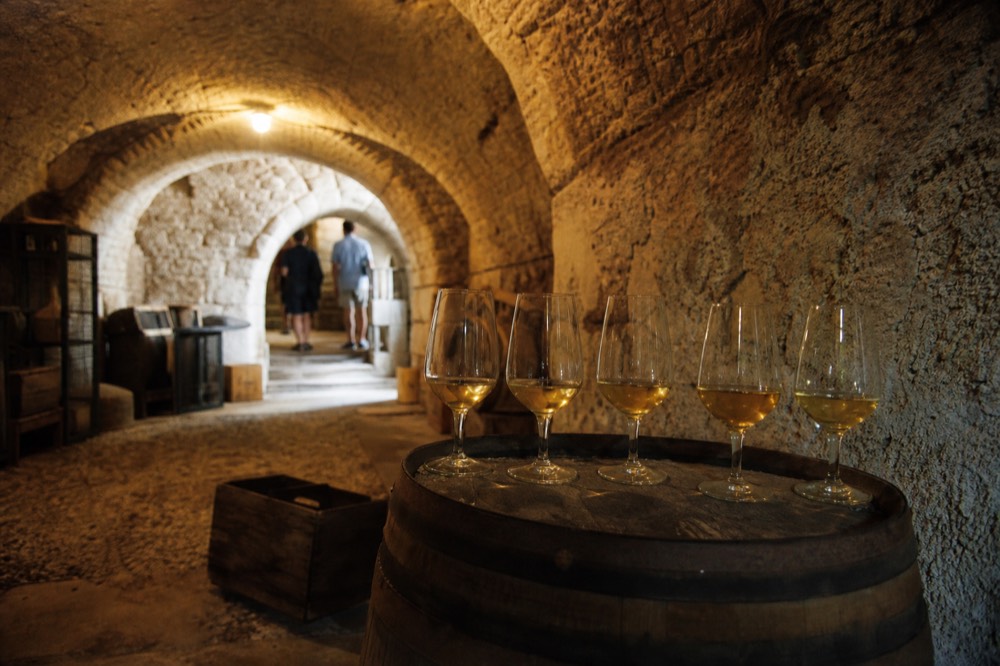
If you are basing yourself on the coast rather than in Aix, the same logic applies from Nice and Cannes, where 8-hour small-group tours run $208.36 and $207.88 respectively, both rated 4.9. Our wine tours from Nice guide covers that side, and the Provence wine region overview explains how the pieces fit together.
When Should You Visit Wineries In Provence?
The best window for winery visits is late spring through early autumn, with the harvest starting in the earliest parcels in the second half of August and running into September, and the busiest visitor pressure falling in July and August when 44% of platform-booked accommodation nights in the region occur. That 44% figure carries a scope you should know: it covers rentals booked through the major booking platforms in 2022, hotels and campsites excluded, and it is a figure for accommodation, not for wine-tour demand. No official body publishes wine-tour seasonality.
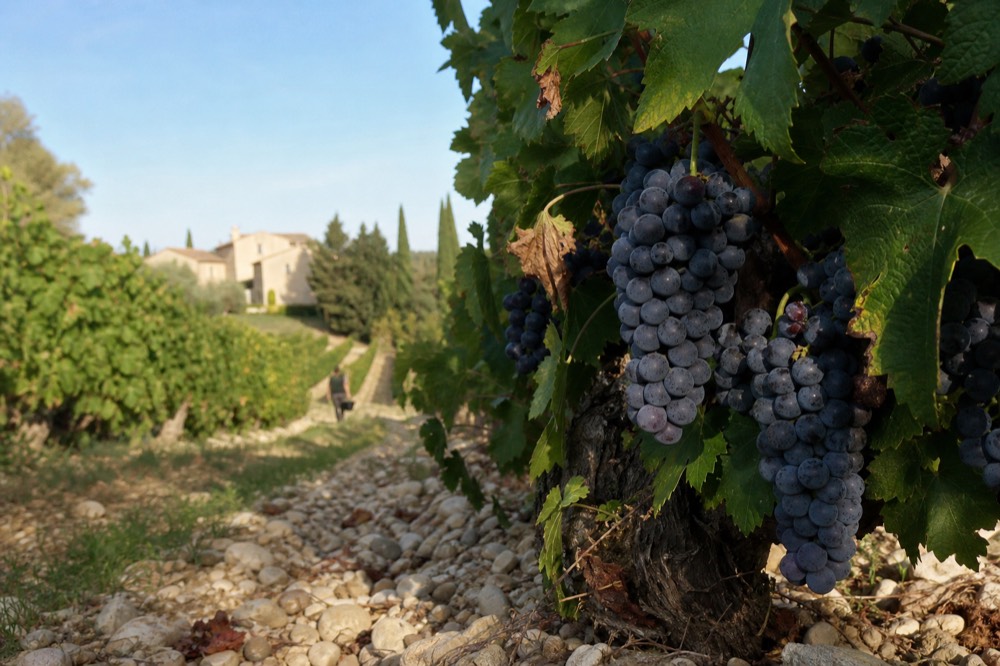
What the calendar gives you, concretely: April to September is the INSEE-defined summer season, in which Provence-Alpes-Côte d'Azur recorded 43.1 million nights in 2025, up 1.9% on 2024. The harvest window means August and September visits can coincide with the busiest weeks in the cellars, which is either a highlight or a distraction depending on the estate. Winter and spring bring the mistral, strongest exactly on the Avignon and Châteauneuf side, where episodes can last several days or more than a week.
| Period | What to expect |
|---|---|
| April to June | Full season underway, fewer crowds than July-August, mistral possible on the Rhône side |
| July and August | Peak visitor pressure, harvest begins in earliest parcels from mid-August |
| September | Harvest in progress, later sectors picking through mid-September, warm days |
| October to March | Mistral strongest in winter and spring; opening varies estate by estate |
On timing within the day, no sourced rule exists for cellar opening hours, so plan around your tour's stated schedule rather than a regional norm. And if you are weighing a whole-region itinerary, our how many days are enough for Provence piece is the honest companion read.
The questions buyers ask most are about cost, driving, and which appellation suits their taste, and the short answers are that small-group half-days from Aix run $114.97 to $156.78 per person, driving after tasting is legally off the table, and Bandol plus Châteauneuf-du-Pape are the red-led picks while Cassis is the white one. Each question below gets the full, sourced answer, with every figure drawn from the tour roster and the verified appellation records rather than from secondhand roundups.
Common Questions About The Best Wineries In Provence
What Is The Best Winery To Visit In Provence?
There is no honest single answer: more than 550 producers make the three core Provence AOPs alone. The best visit depends on your base. From Aix, the Sainte-Victoire sub-denomination of Côtes de Provence is 31 minutes away; from Avignon, Châteauneuf-du-Pape is 23 minutes; from Marseille, Cassis is 33 minutes and Bandol 49.
Can You Visit Provence Wineries Without A Car?
Yes, and it is the safer option. France's drink-driving limit is 0.5 g/L blood generally and 0.2 g/L on a probationary licence, which runs three years, or two after accompanied driving. Small-group tours from Aix, Avignon, Marseille, Nice and Cannes include tastings in the price and offer free cancellation.
How Much Does A Winery Tour In Provence Cost?
On this roster, small-group half-day tours from Aix run $114.97 to $156.78 per person, full days run $180.01 to $209.04, and private full days start at $516.8 per person. Some private tours include tastings in the price; others, like the Saint-Tropez luxury day, have tastings paid separately at the cellar door.
Which Provence Appellation Is Best For Red Wine?
Bandol, for structure: its reds must be 50% to 95% Mourvèdre and age a minimum of 18 months in barrel or foudre, the hardest ageing requirement in the region. Châteauneuf-du-Pape, from Avignon, is the other red-led option, with 13 traditional grape varieties, 18 entries in the current spec.
Is Cassis A Rosé Appellation?
No. Cassis is officially white-dominant, about 70% of total production per the INAO spec, built on clairette and marsanne. It is the documented exception to Provence's rosé identity, alongside Bandol, which is red-led.
When Is The Harvest In Provence?
The harvest starts in the earliest parcels in the second half of August and runs into September, with later sectors picking through mid-September. The exact dates change every year and no region-wide start and end date exists, so do not plan around a fixed date.
If you are still comparing formats, these three cover the spread from a short first tasting to a full private day: