What Is The Prettiest Wine Region In France? Provence's Case For The Crown
Provence's vineyards, hilltop villages, and light have made it a contender for France's prettiest wine region. Here's how it stacks up against Bordeaux, Burgundy, and the rest.
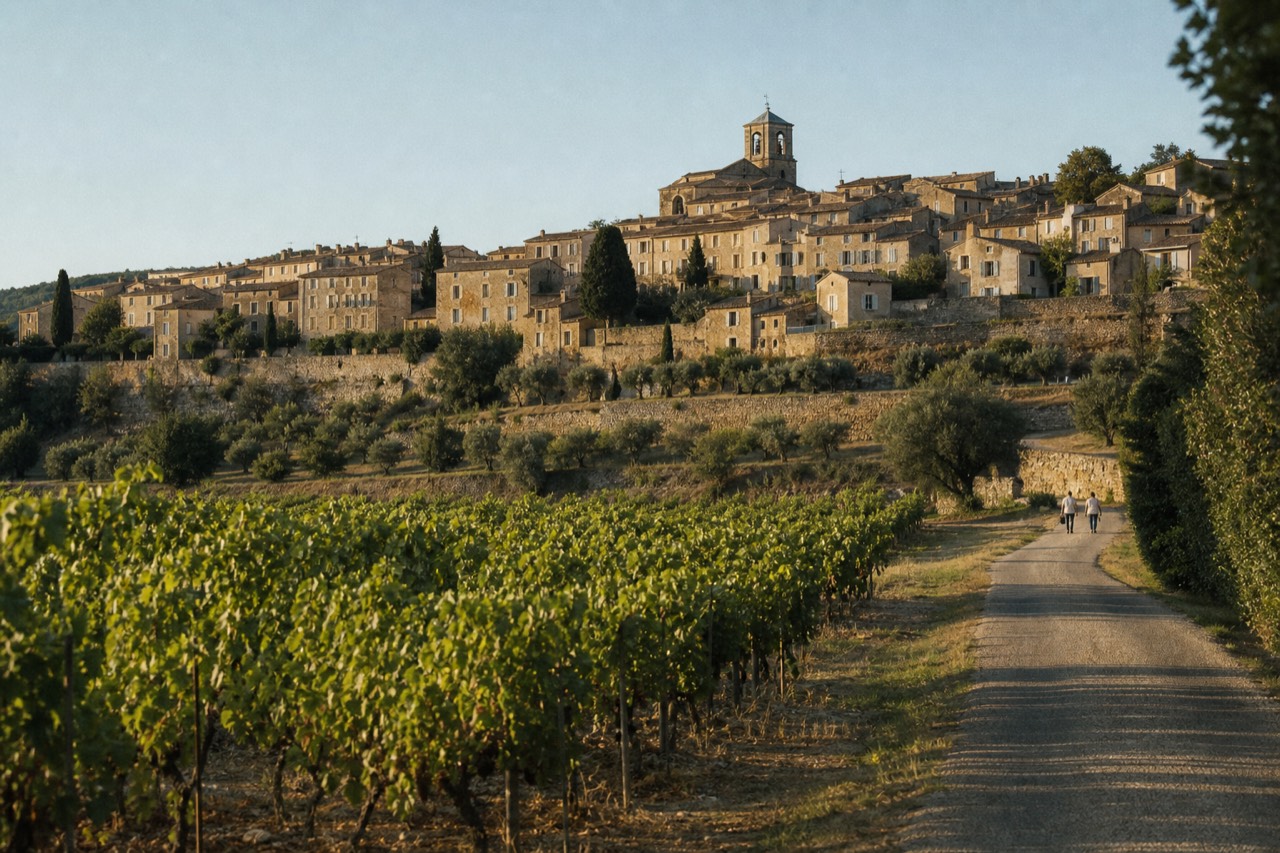
What Is The Prettiest Wine Region In France?
Provence makes the strongest case, and the reason is a combination of geography, light, and a wine culture that feels inseparable from the landscape. No other French wine region packs hilltop villages, the Mediterranean, lavender-streaked valleys, and a rosé tradition into such a compact, visually arresting whole. The scenery is not just a backdrop, it is the subject of the wines themselves.
Ask the question in a room of experienced travellers and you will hear a handful of names. Burgundy gets votes for its patchwork of walled vineyards and the Côte d'Or escarpment. Bordeaux has its châteaux and the mirror-flat Gironde estuary. Alsace runs a tight line of half-timbered villages beneath the Vosges. The Loire has châteaux on the water. Champagne delivers the grand cru slopes and the Avenue de Champagne in Épernay. Each region has a claim, but Provence is the one that routinely stops the car without warning. The light is different, the villages are built into the rock, and the vineyards share the frame with olive groves, cypress rows, and the distant sea.
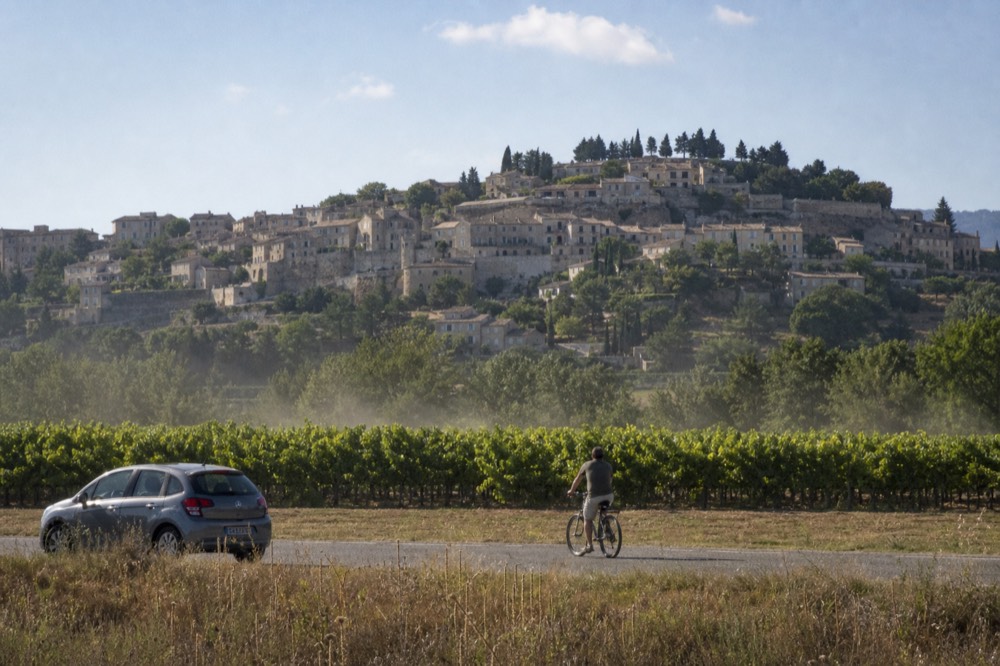
At Provence Wine Tours, the question comes up often when guests see the light hit the vines from a hilltop terrace. The honest answer is that "prettiest" is subjective, but Provence has a rare combination of elements that the other regions cannot all offer at once. It is the only major French wine region where you can taste a Bandol red in the morning, eat lunch in a perched Luberon village, and walk through a Sainte-Victoire vineyard that Cézanne painted, all in a single day. That density of scenic variety inside a single AOC landscape is what tips the scale.
| Region | Key scenic feature | Wine style | Notable landscape landmark |
|---|---|---|---|
| Provence | Hilltop villages, Mediterranean light, lavender | Rosé-dominant, bold reds in Bandol | Montagne Sainte-Victoire, Luberon villages, Calanques |
| Burgundy | Côte d'Or escarpment, walled climats | Pinot Noir, Chardonnay | Clos de Vougeot, Hospices de Beaune roofs |
| Bordeaux | Châteaux, Gironde estuary | Cabernet-Merlot blends, Sauternes | Château Margaux, Saint-Émilion limestone plateau |
| Alsace | Half-timbered villages, Vosges backdrop | Aromatic whites, Crémant | Riquewihr, Eguisheim, Route des Vins |
| Loire Valley | Châteaux on the water, tuffeau cliffs | Chenin Blanc, Cabernet Franc | Château de Chenonceau, Saumur troglodyte cellars |
| Champagne | Grand cru slopes, underground cellars | Sparkling wine | Avenue de Champagne, Reims Cathedral |
Provence’s advantage is that the scenery is not confined to a single postcard view. The region’s three main AOPs, Côtes de Provence, Coteaux d’Aix-en-Provence and Coteaux Varois en Provence, together cover about 27,000 hectares of vines, but those vines are scattered among olive terraces, pine forests, and villages that have barely changed in centuries. The light, famously observed by artists from Cézanne to Matisse, is a real climatic phenomenon: the mistral wind clears the sky of humidity, giving Provence a distinctive clarity that makes the red soil and green vines pop. No other French wine region has that combination of a dry, wind-scrubbed atmosphere and the warm tones of Mediterranean stone.
What Makes Provence's Wine Landscape Different From The Rest Of France?
Provence is the only major French wine region where the Mediterranean, the Alps foothills, and a rosé-first wine culture coexist in one compact area. The landscape is a mosaic of limestone ridges, garrigue, olive groves, and walled villages. The wines reflect that fragmentation: Bandol’s structured reds, Cassis’s white dominance, and the pale rosés of the Côtes de Provence all come from distinct micro-terroirs.
The numbers back up the visual claim. The 2024 harvest across the three Provence AOPs came in at 1,130,139 hectolitres, and 89% of it was rosé. That volume accounts for 40% to 45% of all French AOP rosé production and roughly 5% of the world’s rosé. When you stand on a ridge in the Luberon or above the Bay of Bandol, you are looking at the engine room of a global wine style. The vines are not just pretty, they are working vineyards that supply a category the world cannot get enough of. Learn more about the region’s appellations in our Provence wine region guide.
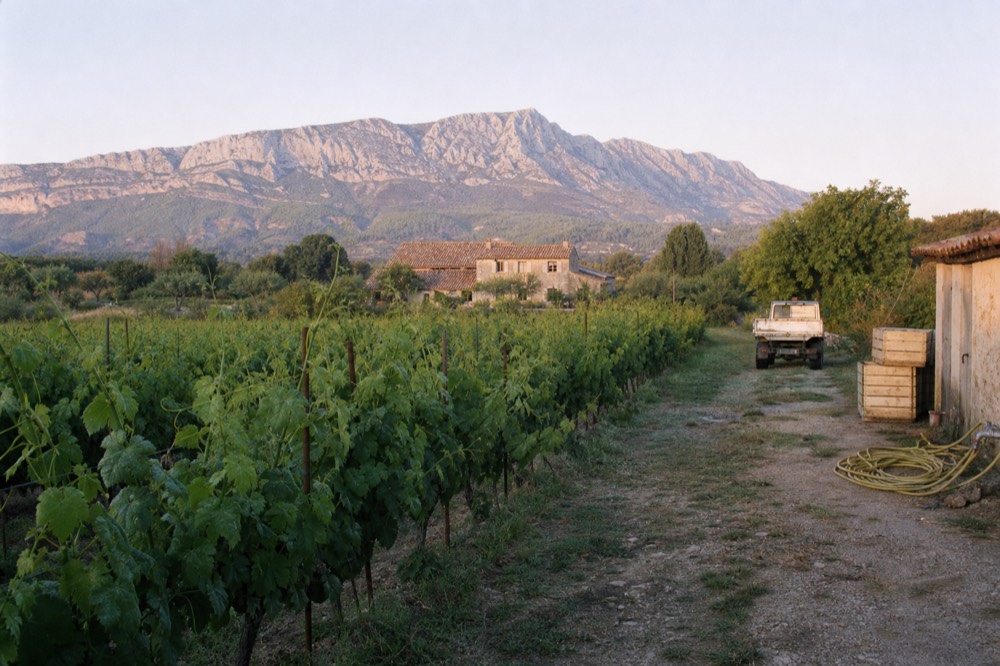
What sets the landscape apart is the vertical dimension. Burgundy’s Côte d’Or is a slope, but it is a slope of vines. Provence’s vineyards climb from sea level in Bandol to higher elevations in the Luberon, with villages like Gordes and Roussillon pinned to the crests. The Sainte-Victoire mountain, a limestone wall behind the Côtes de Provence sub-denomination that bears its name, was painted by Cézanne again and again across his career. The view from the D17 road between Le Tholonet and Puyloubier, 24.5 km and 31 minutes from Aix-en-Provence, is essentially unchanged since his last canvas dried. That is not a claim any other wine region can make about a single mountain and a single painter.
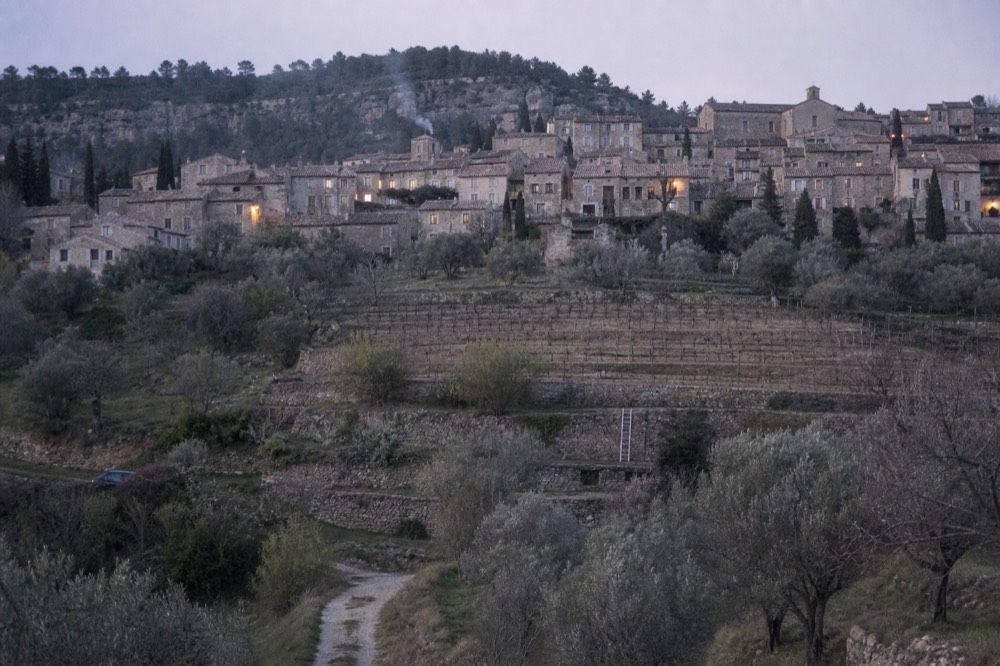
The coastline adds another layer. Bandol’s eight communes, from Saint-Cyr-sur-Mer to Évenos, sit on terraces that drop into the Mediterranean. The Calanques of Cassis, limestone inlets between Marseille and La Ciotat, are a national park and a white-wine appellation in the same frame. Cassis is officially white-dominant, about 70% of production, and it is one of France’s first six AOCs, decreed on 15 May 1936 alongside Châteauneuf-du-Pape. That date makes it a contemporary of the appellation system itself: the first six AOCs. The fact that a tiny seaside appellation of 204 hectares in 2009 shares a founding date with Châteauneuf-du-Pape tells you how deeply the landscape is woven into the wine law.
The Villages And Vineyards That Define The Look
The Luberon, the Alpilles, and the Sainte-Victoire massif are the three scenic anchors of Provence’s wine country, and each offers a distinct visual identity. The Luberon is the hilltop-village capital, the Alpilles is the limestone fortress landscape around Les Baux-de-Provence, and Sainte-Victoire is the painter’s mountain with vineyards at its feet. Together they create a variety that no single-slope region can match.
The Luberon appellation, first recognised in 1988 and renamed in 2009, covered about 3,300 hectares in 2010, made by 51 private cellars and 10 cooperatives. Its villages, Bonnieux, Lacoste, Ménerbes, Gordes, Roussillon, are built from the same ochre and limestone the vines grow in. The road from Lourmarin, 40.1 km and 39 minutes from Aix-en-Provence, to Bonnieux, 50.0 km and 52 minutes, winds through cherry orchards and vineyards with the Grand Luberon ridge as a constant backdrop. This is the landscape that Peter Mayle made famous, and the wine is a genuine Luberon AOP, not a tourist afterthought. For a deeper dive into the Luberon’s wine scene, see our Luberon wine tours guide.
The Alpilles, just south of Saint-Rémy-de-Provence, are a jagged limestone range that shelters the Les Baux-de-Provence AOC, granted in 1995. The village of Les Baux itself is a ruined fortress on a rock spur, and the surrounding vineyards produce reds and rosés from grenache, syrah, and mourvèdre. The light on the white limestone at sunset is one of the most photographed scenes in French wine, and the valley floor below is dotted with olive mills and domaines that have been in the same families for generations.
The Sainte-Victoire route, a sub-denomination of Côtes de Provence reserved for red and rosé, lies east of Aix. The communes of Puyloubier, Rousset, and Le Tholonet sit directly beneath the mountain’s south face. The vineyards here are planted on clay-limestone soils at the base of the massif, and the yields are capped at 8,500 kg/ha, lower than the 9,500 kg/ha for plain Côtes de Provence, a discipline that shows in the concentration of the wines. The view from the terrace of a domaine in Puyloubier, with the mountain filling the northern sky and the vines running south toward the Arc valley, is the single most painterly wine view in France (see South of France Wine Tours).
The Côtes de Provence appellation itself, 20,300 hectares across 84 communes in three departments, includes the coastal sub-denominations of La Londe and Fréjus, where the vineyards run almost to the water. La Londe, unique among the five sub-denominations for also covering white wine, sits on schist soils facing the Îles d’Hyères. The maritime influence and the pale rosés produced here are a direct expression of the landscape: salt, stone, and sun.
Why The Light Matters More Than The Vines Alone
The light in Provence is a measurable climatic effect driven by the mistral, the dry north-westerly wind that clears humidity and dust. The mistral blows at an average of 50 km/h, with gusts reaching 80 to 100 km/h, strongest in winter and spring. On mistral days, the sky is a deep blue and shadows on limestone are razor-sharp.
The mistral’s visual impact is most pronounced in the lower Rhône valley, between Orange, Avignon, and Arles, where Istres records roughly 10 days a year with gusts above 100 km/h. This is precisely the corridor that includes Châteauneuf-du-Pape, Gigondas, and Vacqueyras. The vines here are low and gobelet-trained, shaped to withstand the wind, and the landscape has a sparse, sculptural quality that is entirely different from the lush, enclosed feel of Burgundy or Alsace.
The light also explains why Provence attracted painters before it attracted wine tourists. Cézanne, Van Gogh, and Matisse all worked here, and their palettes were a direct response to the colour temperature they found. The red soil of the Côtes de Provence, the grey-white limestone of the Alpilles, and the deep green of the pines create a contrast that photographs well, but more importantly, it makes the landscape feel larger than it is. A vineyard in the Luberon at higher elevations, with the Alpes-de-Haute-Provence in the distance, has a depth of field that a vineyard on the Côte de Nuits, beautiful as it is, simply does not possess.
How Provence Compares To Burgundy, Bordeaux, And The Loire
Burgundy has the most famous vineyard slopes in the world, Bordeaux has the grandest châteaux, and the Loire has the most châteaux per river kilometre. Provence cannot compete on any of those single metrics. What it does offer is a broader, more varied canvas where the wine is only one element of a richer visual story.
Burgundy’s Côte d’Or is a narrow ribbon of vines running north-south for 50 kilometres. The view from the Route des Grands Crus is a lesson in terroir, but it is a lesson repeated with little variation. The villages, Vosne-Romanée, Gevrey-Chambertin, Puligny-Montrachet, are small and wine-focused. They are beautiful in a quiet, serious way, but they do not have the theatricality of a perched Luberon village or the drama of the Sainte-Victoire massif at sunset.
Bordeaux’s Médoc is a flat, gravelly peninsula lined with châteaux that are often set back from the road behind gates and trees. The architecture is impressive, but the visitor experience is one of arrival at a grand estate, not of driving through a landscape that constantly shifts. Saint-Émilion’s limestone plateau and monolithic church are a notable exception, and the village itself is among the prettiest in French wine, but it is a single highlight. Provence has a dozen villages of comparable beauty, and they are connected by roads that wind through the vines rather than bypass them.
The Loire Valley’s châteaux, Chenonceau, Chambord, Azay-le-Rideau, are world-famous, and the river itself is a scenic asset. But the wine regions are spread along a 1,000-kilometre river, and the visual experience is diluted by distance. You cannot see Chenonceau and taste a Sancerre in the same morning. In Provence, you can stand on the terrace of a Bandol domaine looking at the Mediterranean, drive an hour to the Sainte-Victoire foothills, and finish in a Luberon village for a glass of rosé, all in a day. That compression of scenic variety is what makes Provence the most efficient beautiful wine region in France.
| Scenic factor | Provence | Burgundy | Bordeaux | Loire Valley |
|---|---|---|---|---|
| Hilltop villages | Gordes, Bonnieux, Les Baux | Few, mostly valley-floor | Saint-Émilion only | Scattered, not wine-focused |
| Coastal views | Bandol, Cassis, La Londe | None | Gironde estuary | None |
| Painterly light | Mistral-cleared, distinctive clarity | Soft, continental | Atlantic, often grey | Variable, river mist |
| Vineyard variety in one day | 5 AOCs reachable from Aix | 2-3 villages max | 2-3 appellations | 2-3 châteaux |
| Iconic mountain backdrop | Sainte-Victoire, Luberon | Côte d’Or escarpment | None | None |
The comparison is not about declaring a winner. It is about understanding what kind of beauty each region offers. Burgundy rewards the detail-oriented wine lover who wants to walk the climats. Bordeaux rewards the architecture and history enthusiast. The Loire rewards the château hunter. Provence rewards the traveller who wants the landscape to be the main event, with the wine as the natural, delicious consequence of that landscape.
The Practical Side: Getting To The Prettiest Spots
The prettiest wine region is only as good as your access to its best views. Provence's compact geography works in its favour. From a base in Aix-en-Provence, the Sainte-Victoire vineyards sit 31 minutes away, the Luberon villages under an hour, and Les Baux-de-Provence about an hour of free-flow driving. These distances are measured over the road network, not estimated from a map.
Aix-en-Provence is the logical hub. The city itself is a showpiece, with its cours Mirabeau, its fountains, and its 17th-century hôtels particuliers. From there, Puyloubier and the Sainte-Victoire sub-denomination are 24.5 km east. The Luberon villages of Lourmarin and Bonnieux are 40 to 50 km north. Les Baux-de-Provence is 71.6 km west. Châteauneuf-du-Pape is 89.3 km northwest, a longer drive but still under 70 minutes in free-flow traffic. No other French wine region offers as many distinct scenic AOCs inside a 90-kilometre radius of a single city.
The driving distances also make the case for a guided tour. The French drink-driving limit for a probationary licence is 0.2 g/L of blood, effectively zero glasses. Anyone who passed their test in the last three years is held to that standard. A hired car and a tasting day do not mix for them, and even for experienced drivers, the winding roads and the mistral demand full attention. A small-group tour solves the problem and, more importantly, puts a local guide behind the wheel who knows which domaines have the best views and which villages are quietest in the afternoon.
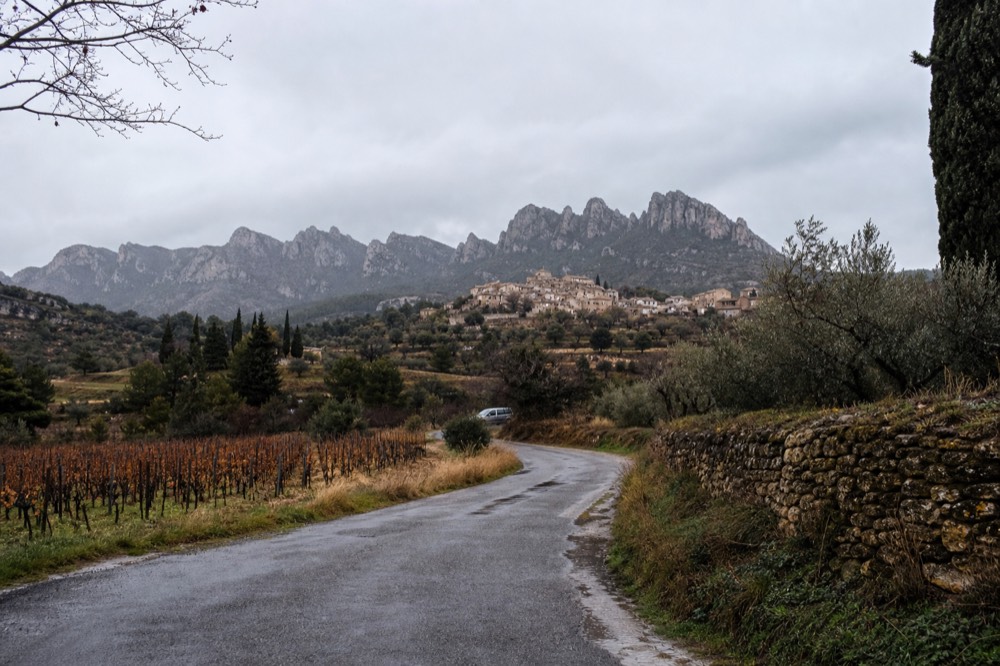
The season matters too. The mistral is strongest in winter and spring, and while it clears the sky, it can make a terrace tasting uncomfortable without a windproof layer. The harvest starts in the earliest parcels in the second half of August and runs into September, a period when the vineyards are at their most photogenic and the villages are still lively. The summer months of July and August bring the crowds, particularly on the coast, but the inland vineyards around the Luberon and Sainte-Victoire are often quieter than the beaches. The best compromise for scenery and comfort is late spring, May and June, when the light is already strong, the vines are green, and the lavender is beginning to colour the lower slopes.
Common Questions About The Prettiest Wine Region In France
What Is The Prettiest Wine Region In France?
Provence is widely considered the prettiest because it combines hilltop villages, the Mediterranean coastline, the Sainte-Victoire mountain, and a rosé-first wine culture in a compact, light-filled landscape. Other regions like Burgundy and the Loire have strong claims, but none match Provence’s variety of scenery inside a single day’s drive.
Which Wine Region In France Has The Most Beautiful Villages?
Provence has the highest concentration of perched, stone-built wine villages, including Gordes, Roussillon, Bonnieux, and Les Baux-de-Provence. The Luberon's wine-growing area includes several villages listed among France's most beautiful.
Is Provence More Scenic Than Burgundy?
Provence offers more visual variety, coastal views, mountain backdrops, and a Mediterranean light that Burgundy does not have. Burgundy’s beauty is more focused on the vineyard slopes and the historic wine towns. Which is prettier depends on whether you prefer a grand, varied landscape or an intimate, terroir-driven one.
What Makes The Light In Provence Special For Wine Scenery?
The mistral wind clears humidity and dust, giving Provence a distinctive clarity that makes the red soil and green vines stand out. This light attracted Cézanne and Van Gogh, and it is the same light that makes vineyard photographs from the region so striking.
Can You Visit Multiple Pretty Wine Regions In Provence In One Day?
Yes. From a base in Aix-en-Provence, you can reach the Sainte-Victoire vineyards in 31 minutes, the Luberon villages in under an hour, and the Bandol coast in 49 minutes. A well-planned day can include three distinct AOCs with completely different scenery.
What Is The Best Time Of Year To See Provence’s Prettiest Wine Landscapes?
Late spring, May and June, offers strong light, green vines, and the start of the lavender bloom without the peak summer crowds. September, during the harvest, is also spectacular, with the vineyards at their fullest and the villages still warm.