Bandol And Cassis Wine Tours: The Complete Guide To Provence's Coastal Appellations
Bandol makes some of the most age-worthy red wine in the south of France and Cassis is the region's white-wine exception, and the two appellations sit close enough to share a single day trip from Aix-en-Provence or Marseille.
Short answer
Bandol and Cassis wine tours run from Aix-en-Provence from $121.94 per person for a 5-hour half-day small-group tour with tastings included. A full-day rosé-focused version costs $191.62 per person. Both appellations sit on the Mediterranean coast between Marseille and Toulon, with Cassis 25.7 km from Marseille and Bandol 54.9 km.
Why Bandol And Cassis Are The Two Appellations Worth A Day Of Your Trip
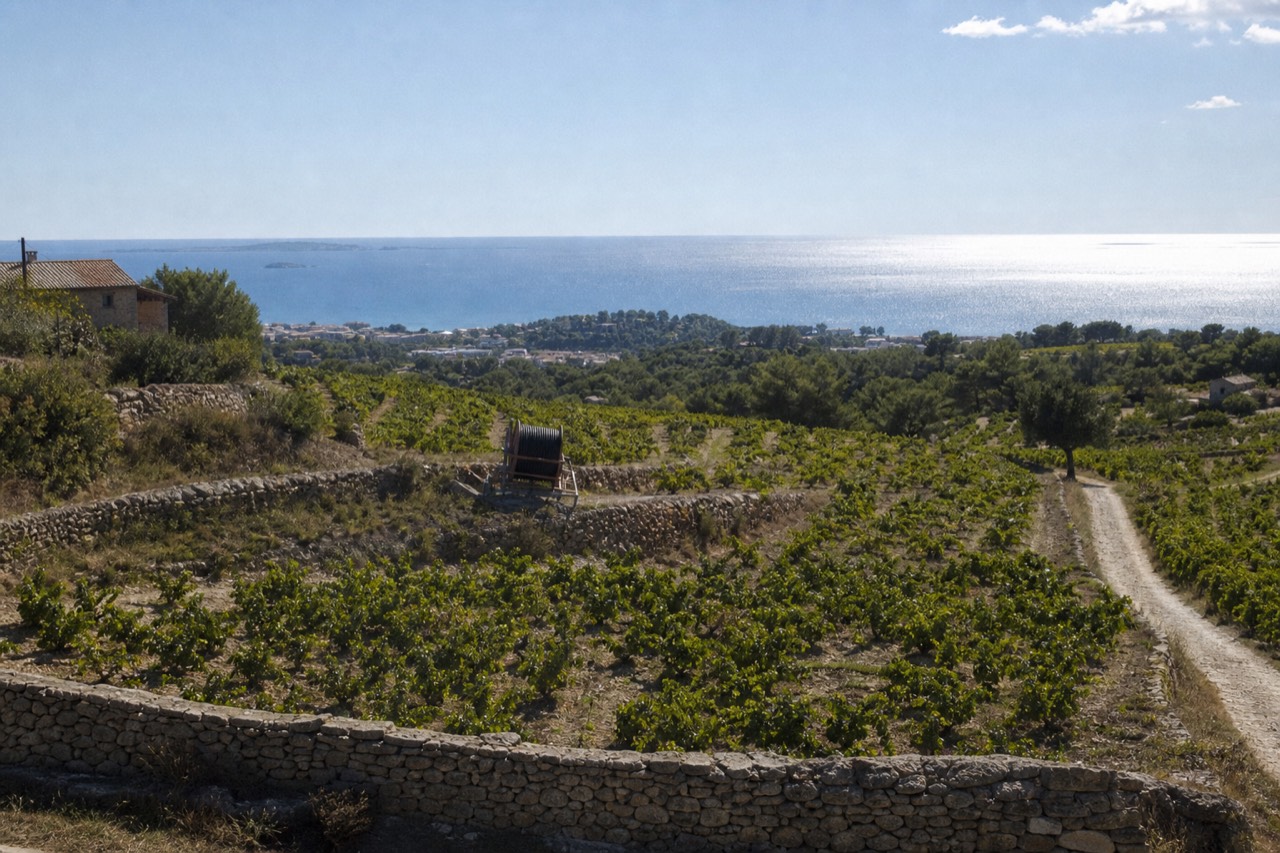
Bandol and Cassis are neighbouring coastal appellations that split Provence's winemaking character between them: Bandol is built on Mourvèdre, with reds that must age 18 months in barrel before release, while Cassis is officially white-dominant, about 70% of its production, in a region that is otherwise 89% rosé. Both are reached from Aix-en-Provence or Marseille in well under two hours, and both reward a driven tour because the terrain, terraces and calanques coastline are as much a part of the visit as the glass in your hand.
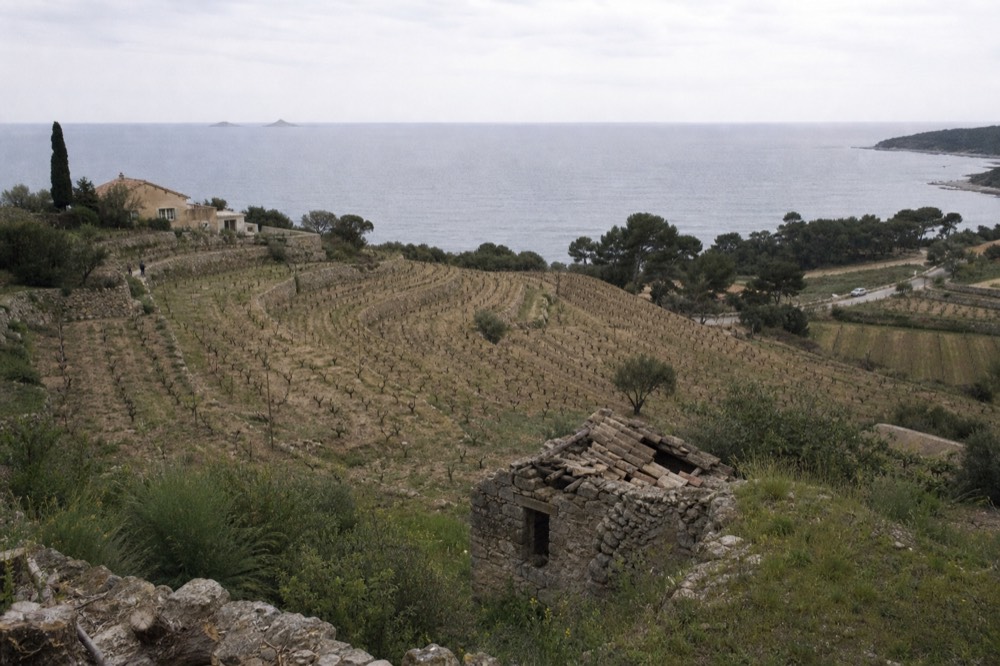
Most first-time visitors to Provence taste their way through Côtes de Provence rosé and never get further south than that. The two appellations covered here are different in kind, not just in name. Bandol received its AOC by décret of 11 November 1941, and its reds are governed by rules that exist nowhere else in Provence: Mourvèdre must make up between 50% and 95% of the plantings, and the finished red must spend a minimum of 18 months in barrel or foudre before it can be sold. Cassis is older still, recognised by the décret of 15 May 1936, making it one of France's first six wine AOCs alongside Châteauneuf-du-Pape, Arbois, Cognac, Monbazillac and Tavel.
The pairing works geographically. Cassis sits 25.7 km from Marseille by road, about a 33-minute drive, and Bandol is 54.9 km from Marseille, about 49 minutes. From Aix-en-Provence both are a comfortable half-day or full-day loop, which is exactly what the tour operators in the region have built their itineraries around. If you are still mapping the wider region, our Provence wine region overview puts every appellation in place, and the Provence rosé wine guide explains the colour the coast is famous for.
One scope note. The CIVP, the official Provence interprofession, publishes its rosé statistics for the three "Vins de Provence" AOPs only: Côtes de Provence, Coteaux d'Aix-en-Provence and Coteaux Varois en Provence. Bandol and Cassis are not in that set. Provence as counted by the CIVP produces 40% to 45% of French AOP rosé and about 5% of world rosé, but Bandol and Cassis stand outside those numbers, and any tour or article that folds them in is miscounting.
What Makes Bandol Wine Different From Every Other Provence Red
Bandol reds must contain between 50% and 95% Mourvèdre in the vineyard and must age at least 18 months in barrel or foudre before release, two rules no other Provence appellation imposes, and the result is a powerful, tannic, long-lived wine closer in character to structured Rhône reds than to pale coastal rosé. The appellation covers eight communes, all in the Var: Bandol, Le Beausset, La Cadière-d'Azur, Le Castellet, Évenos, Ollioules, Sanary-sur-Mer and Saint-Cyr-sur-Mer.
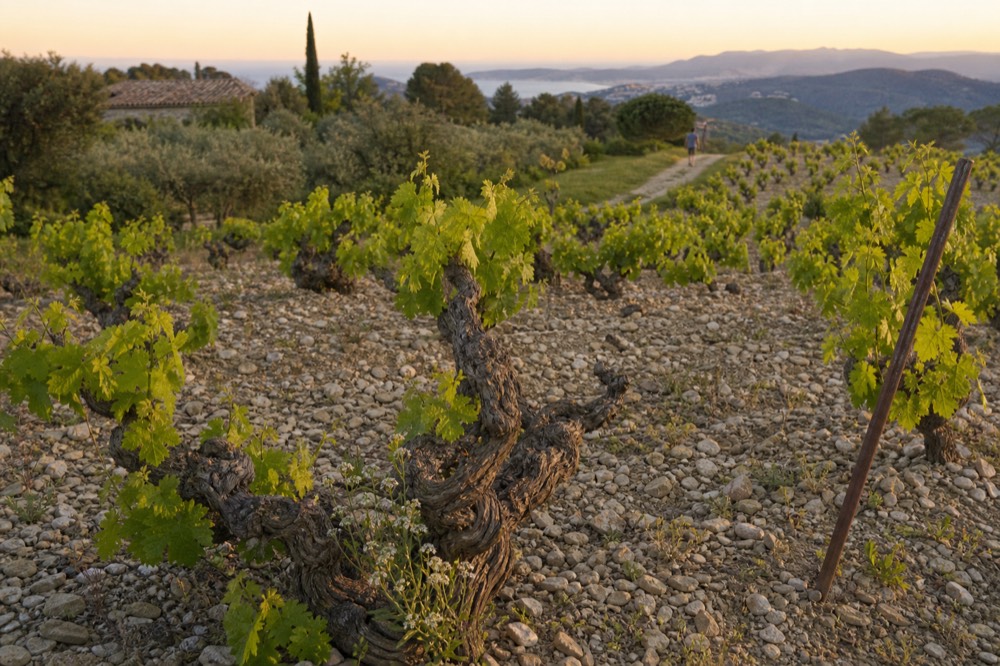
The Mourvèdre grape is the whole story. It ripens late and needs the warm, sheltered terraces above the sea that this stretch of coast provides, which is why it thrives here and struggles almost everywhere else in France. The official INAO spec puts it plainly: Mourvèdre gives the reds their power, structure, tannin and capacity for long keeping. In the rosés, Mourvèdre must be present at a minimum of 20% of the blend, and the spec notes it often runs 30% to 40%, which is why a Bandol rosé has more grip and colour than the pale bottles further east.
The appellation is small. The INAO cahier des charges records 1,580 hectares in 2009, shared between 3 cooperative cellars and 54 estates, with average annual production around 50,000 hectolitres. For comparison, Côtes de Provence alone runs to 20,300 hectares. What that means for a visitor is simple: the estates you visit on a Bandol wine tour are small, family-run places where the person pouring often made the wine, not visitor centres attached to industrial volumes.
The three numbers that matter when you are standing at a Bandol cellar door, and that separate this appellation from everything else you will taste in Provence:
| Rule | Bandol requirement | Source |
|---|---|---|
| Mourvèdre in red plantings | 50% to 95% | INAO cahier des charges |
| Red ageing before release | Minimum 18 months in barrel or foudre | INAO cahier des charges |
| Mourvèdre in rosé blends | Minimum 20%, often 30% to 40% | INAO cahier des charges |
| AOC recognition | Décret of 11 November 1941 | INAO cahier des charges |
| Planted area | 1,580 hectares in 2009 | INAO cahier des charges |
Half-Day Or Full-Day: Which Bandol And Cassis Tour Format Fits
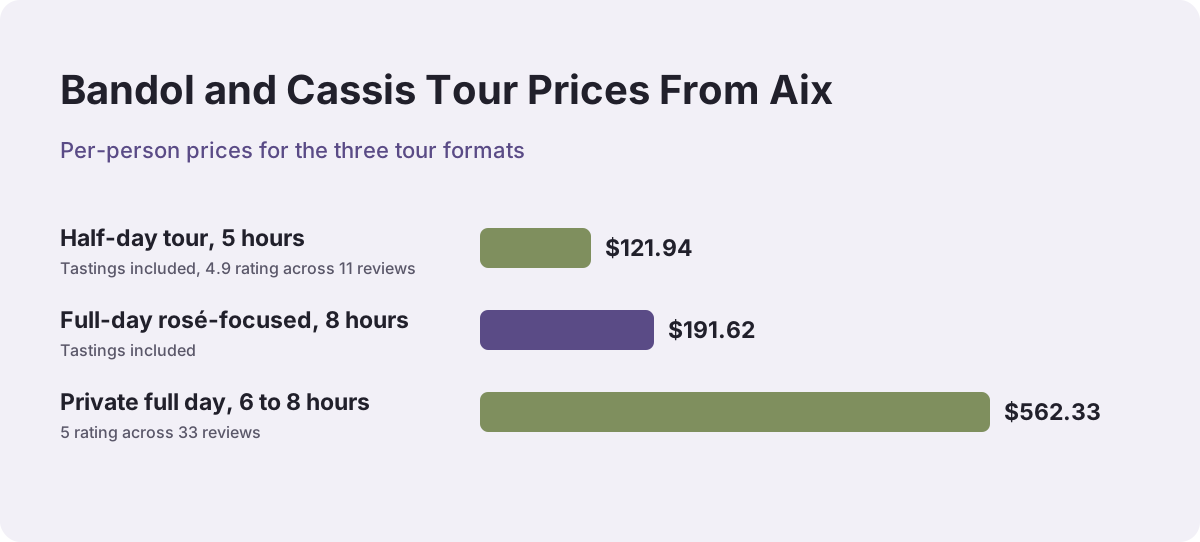
The half-day Bandol and Cassis tour from Aix costs $121.94 per person for 5 hours with tastings included and a 4.9 rating across 11 reviews, the full-day rosé-focused version costs $191.62 per person for 8 hours, and a private full day from Aix runs $562.33 per person with a 5 rating across 33 reviews. The choice comes down to how many estates you want and whether you want the coast at leisure. All three formats include tastings and free cancellation.
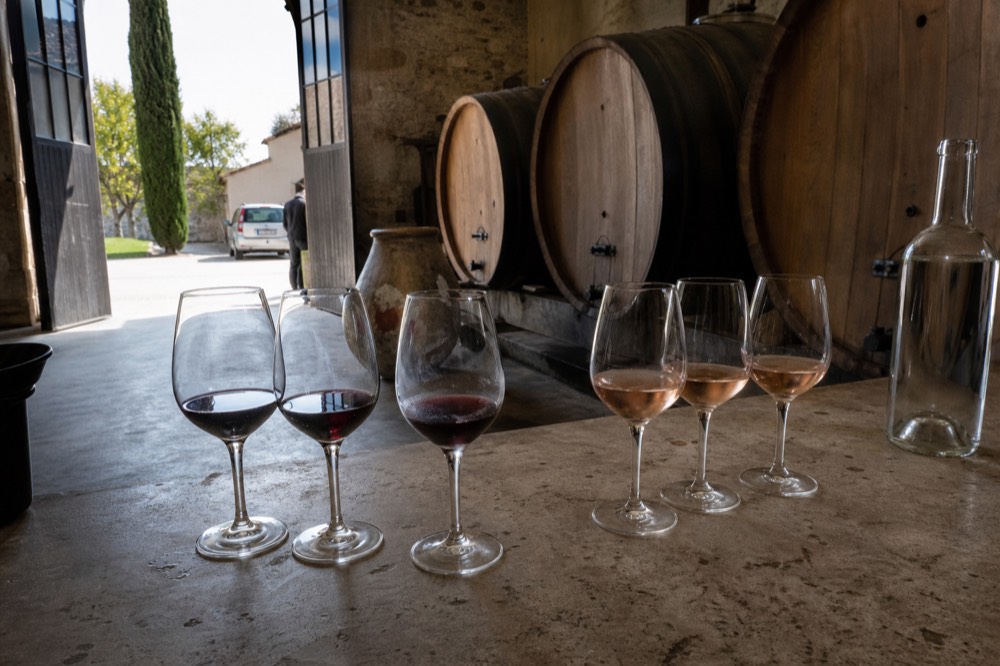
The half-day format is the pragmatic pick for most travellers. Five hours is enough to reach the coast from Aix, taste at estates in both appellations, and still be back for a late afternoon in town. Tastings are included in the price, which matters because paying cellar-door fees separately adds up quickly on a two-appellation day. The trade-off is pace: you are tasting, not lingering, and there is little time for the calanques or a long lunch in Cassis village.
The full-day rosé-focused tour is the format for people whose trip is about the wine rather than around it. Eight hours lets an operator take in more estates, usually including a cooperative or a larger producer alongside family cellars, and to build the day around the rosé style that the Mourvèdre-driven blends here produce. At $191.62 per person with tastings included, it is the mid-priced option of the three and the one that suits a dedicated rosé drinker.
The private full day covers Provence broadly, not a fixed Bandol and Cassis route. At $562.33 per person it is priced for groups and special occasions, but it buys flexibility: pickup at your accommodation in Aix, a route shaped around what you want to taste, and a guide's full attention across 6 to 8 hours. Its 5 rating across 33 reviews is the most reviewed perfect score among the Aix private options, and the review count is what makes that figure mean something.
What A Bandol And Cassis Tour Day Actually Looks Like
A typical day leaves Aix-en-Provence in the morning, drives south past Aubagne and the Sainte-Baume massif to the Bandol terraces for the first tastings, then continues along the coast to Cassis for white wine and the calanques, returning to Aix by late afternoon on a half-day or early evening on a full-day, with all tastings arranged in advance at estates the operator works with regularly. The booked-arrival point matters more than most visitors realise: a tour turns up at a cellar that is expecting it, which is the honest reason booking beats turning up and hoping.
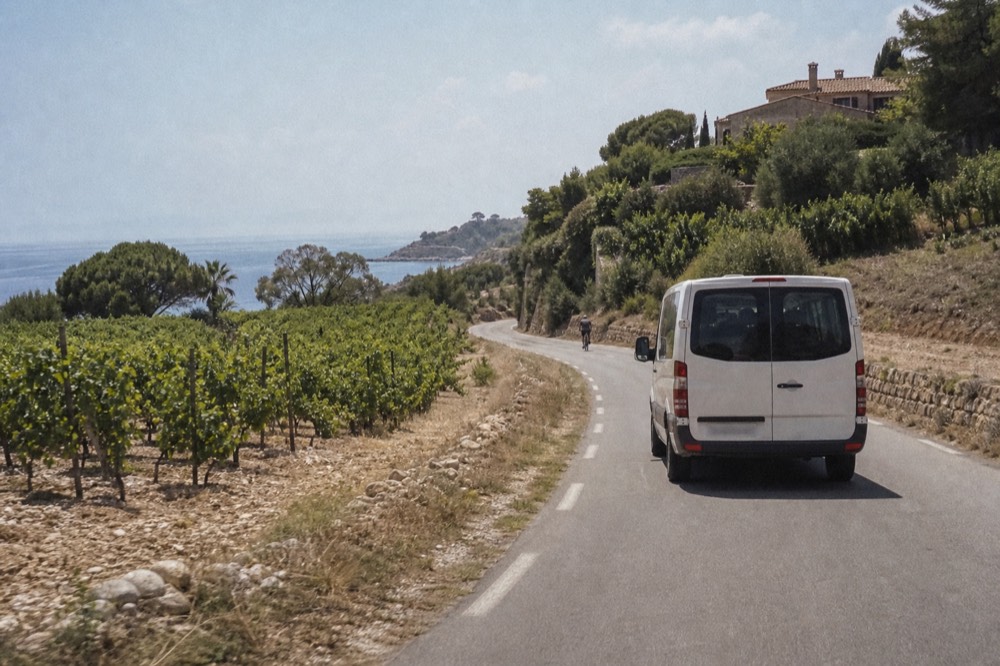
The drive itself is part of the value. From Aix the route drops out of the Coteaux d'Aix plateau and into the Garlaban and Sainte-Baume landscapes that Marcel Pagnol wrote about, then opens onto the coast. Toulon sits just 18.7 km from Bandol, about 19 minutes, so some itineraries approach through the west side of the appellation, taking in Le Castellet or La Cadière-d'Azur, two of the eight Bandol communes, where the hilltop villages sit directly above the vineyards.
Tasting structure usually follows the appellation split. In Bandol you taste reds built on Mourvèdre and rosés with real structure, often at two stops. In Cassis the pour shifts to white: clairette and marsanne are the principal varieties, and marsanne must run between 30% and 80% of the white plantings. The contrast across a single day is the pedagogical point, and a good guide will make it explicitly: same coastline, same sun, two completely different wines.
The half-day tour that anchors this itinerary is the one to look at first if you are planning around a base in Aix.
Lunch on a full-day format is usually in Cassis village or by the port, and the harbour restaurants there pair the local white with the catch of the day, which is the appellation working as intended. Cassis blanc is a fish wine by tradition and by chemistry, and tasting it a kilometre from where the boats land is a different experience from tasting it at a wine shop at home.
Cassis: The White-Wine Appellation On The Mediterranean
Cassis is officially white-dominant, with white wine at about 70% of total production, an inversion of the rest of Provence that is written into the INAO spec itself, and its whites are built on clairette and marsanne, with marsanne required at 30% to 80% of the white plantings. The appellation was recognised by the décret of 15 May 1936, one of France's first six wine AOCs, and it is tiny: the spec records 204 hectares in 2009, of which 10 hectares were young vines.
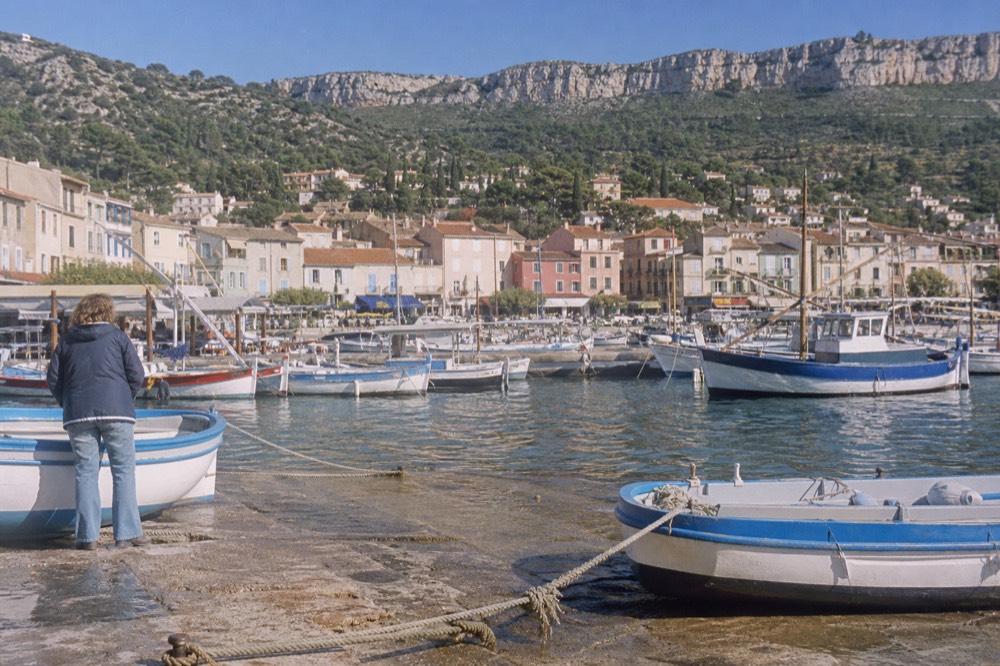
The white-dominant figure deserves its emphasis because it is the documented answer to the question every visitor asks: why is Cassis the white one in a region of rosé? The INAO cahier des charges states it directly, that white production represents about 70% of the total. All three colours are permitted, red and rosé included, but the identity of the appellation is the blanc, and the estates you visit will pour it first.
The appellation's history is also a near-death story told honestly by the spec's own records: 240 hectares in 1959, falling to 200 hectares in 1978, as the town and the coast pressed in on the vineyards. The recovery since is real but modest, which is why Cassis wine is scarce and rarely cheap outside the region, and why tasting it at the cellar door is the practical way to encounter it. If you want the fuller story of the town itself, our piece on what Cassis is famous for covers the calanques and the harbour beyond the wine.
A useful comparison, because the two appellations get sold together on every tour and they are genuinely different products:
| Bandol | Cassis | |
|---|---|---|
| AOC décret | 11 November 1941 | 15 May 1936 |
| Signature wine | Mourvèdre-driven red | White-dominant blend |
| Key rule | Reds 50-95% Mourvèdre, 18 months ageing | Whites about 70% of production |
| Principal white grapes | Bourboulenc, clairette, ugni blanc permitted | Clairette and marsanne |
| Planted area | 1,580 ha in 2009 | 204 ha in 2009 |
| Communes | 8, all in the Var | Cassis and surrounds |
How Much A Bandol Wine Tour Costs, And What The Price Includes
A small-group Bandol and Cassis half-day from Aix costs $121.94 per person with tastings included, the 8-hour rosé-focused full day costs $191.62 per person, and private full days from Aix run $562.33 per person, so the planning range for this pair of appellations runs from the half-day small-group price to the private full-day price depending on format. Every option on this route includes tastings in the listed price and offers free cancellation.
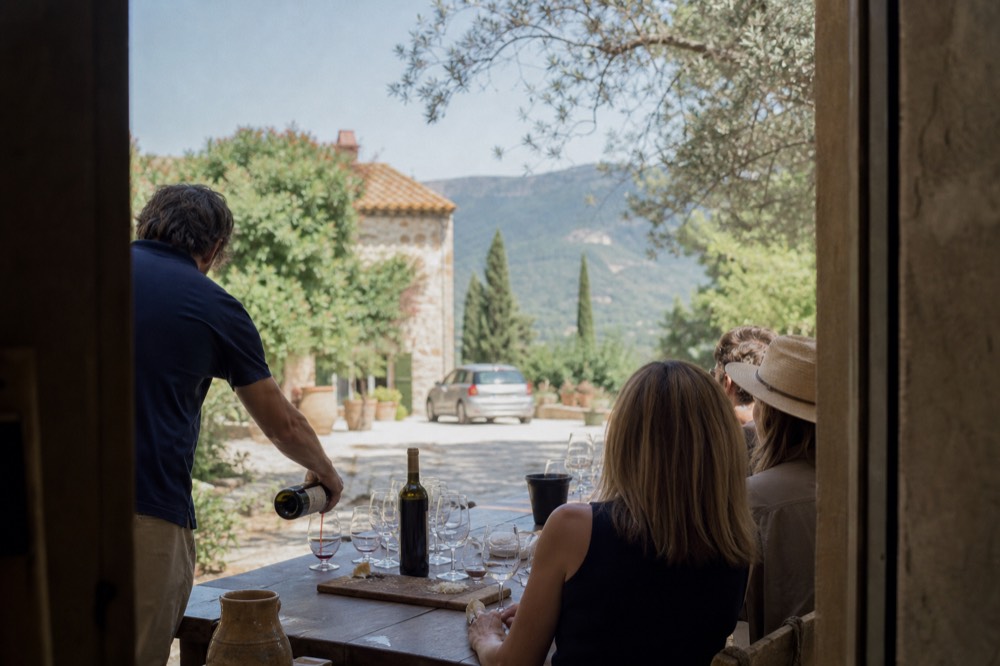
The tastings-included detail is worth a sentence of its own. On some private and luxury formats elsewhere on the coast, tastings are paid separately at the cellar door, which means the sticker price understates the day. On the Bandol and Cassis tours from Aix, the listed price is the whole price for the tasting side, which makes comparison between formats honest and simple. Check the live listing for whichever format you choose to confirm current inclusions before you book.
What the price does not include, on any format, is lunch on full-day itineraries and any bottles you decide to ship home, which is the honest caveat every wine tour carries. Estate bottles in Bandol and Cassis are not cheap, and the shipping question is best settled before you fall in love with a red that needs five more years in bottle.
| Tour format | Duration | Price | Rating | Tastings |
|---|---|---|---|---|
| Half-day Bandol and Cassis, small group | 5 hours | $121.94 per person | 4.9 across 11 reviews | Included |
| Full-day Bandol and Cassis, rosé focus | 8 hours | $191.62 per person | 5 across 2 reviews | Included |
| Private full day from Aix | 6 to 8 hours | $562.33 per person | 5 across 33 reviews | Included |
The full-day rosé-focused option is the one that goes deepest on the style this coast does differently, and it is the natural upgrade if the half-day leaves you wanting more.
Getting There: Distances, Driving And Why A Driven Tour Exists At All
Marseille to Cassis is 25.7 km or about 33 minutes of free-flow driving, Marseille to Bandol is 54.9 km or about 49 minutes, and Toulon to Bandol is just 18.7 km, but the honest reason a driven tour exists is French drink-driving law: the general limit is 0.5 g/L of blood, and on a probationary licence it is 0.2 g/L, effectively zero glasses. A hired car and a tasting day do not mix.
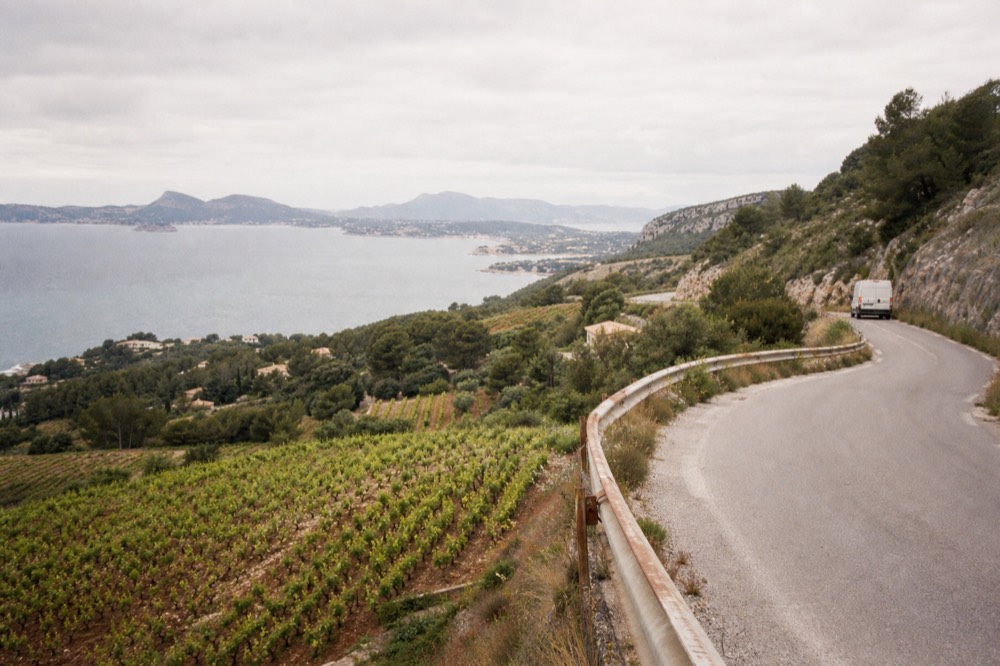
Those road figures come from real routing over the OpenStreetMap network, city centre to village centre, and they are free-flow times. They do not include summer coastal traffic, which on this stretch between Marseille, Toulon and the beaches is a genuine factor in July and August. Treat them as planning distances, not as a promise of what your day will take.
The legal point is not a scare line, it is the statute. The French state's public-service portal states the general prohibition at 0.5 g/L of blood, equivalent to 0.25 mg per litre of breath, and for probationary licence holders the threshold drops to 0.2 g/L, or 0.10 mg/L of breath. The probationary period runs three years, or two after accompanied driving, which is why a driven tour is not a luxury for younger travellers in the group, it is the only lawful way to do the day. The penalties scale sharply above the limit, from a 135 euro fixed fine and licence points at the lower band to criminal offence territory at 0.8 g/L and above.
For travellers basing themselves elsewhere, the departure logic is straightforward. From Marseille, Cassis is the near appellation and Bandol the far one, and our wine tours from Marseille guide covers the coastal options from that base. From Aix, both appellations sit at the end of the same southern run, which is why the Aix roster carries the deepest selection of Bandol and Cassis itineraries. Whatever your base, Provence Wine Tours exists to make that choice a researched one rather than a guess.
When To Go: The Mistral, The Harvest And The Season
The Provence harvest begins in the earliest parcels in the second half of August and runs into September, with later sectors picking through mid-September, the mistral is strongest in winter and spring rather than summer, and the official summer tourist season runs April to September, so the sweet spot for a Bandol and Cassis wine tour is late May to June or September to October. No official body publishes a wine-tour season, so those anchors are the honest ones.
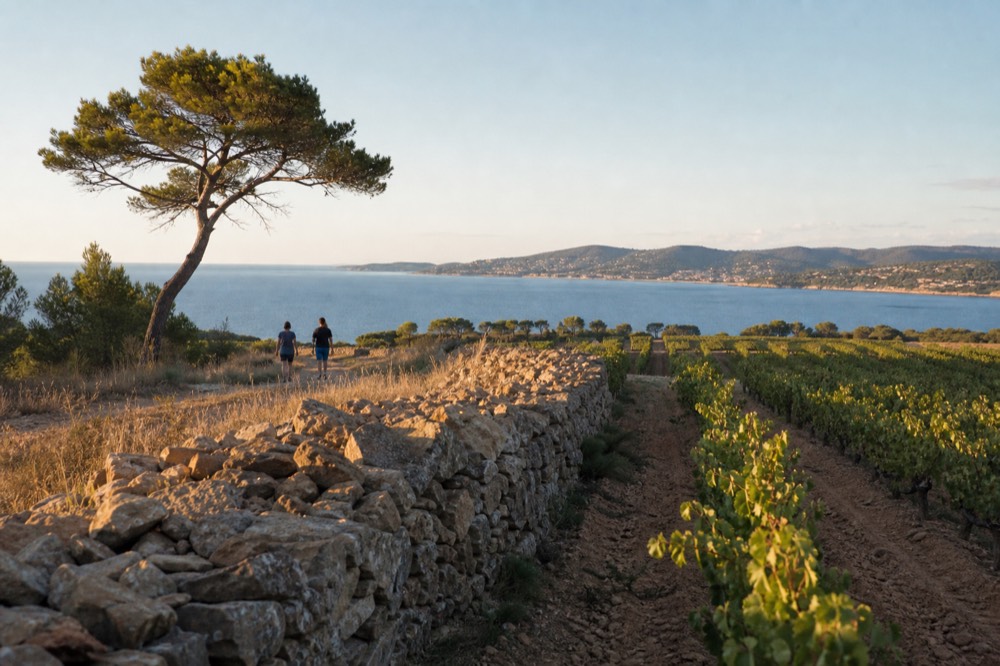
The mistral deserves a practical note. Météo-France describes it as a turbulent, generally dry regional wind averaging around 50 km/h with gusts of 80 to 100 km/h, running down the Rhône valley and across Provence to the coast, often stronger in winter and spring, with episodes that can last several days or more than a week. The visitor consequence is not rain, mistral days are dry and usually very sunny, it is cold and comfort, and it matters most where outdoor-terrace tastings are the norm. A windproof layer is a better packing decision than a cancelled booking.
The harvest window cuts the other way. Seeing the vendanges is the most atmospheric time to be in a coastal vineyard, and the CIVP reported first cuts around 12 August in the earliest parcels in a recent year, with the later sectors through mid-September. A September tour lands you in that window with a real chance of watching Mourvèdre come in, which is the grape that waits longest of all.
Cellar opening patterns are set estate by estate, and no region-wide rule exists for hours or closing days. That is the final argument for the booked formats over independent visits: a tour arrives at a cellar that has arranged to receive it, in a season and on a day the estate has confirmed, and you are not standing at a gate reading a notice. If your dates are flexible, our best month to visit Provence piece weighs the whole calendar, wine and otherwise.
The private full-day format from Aix is the one that absorbs seasonal variation best, since the route and the estates adapt to you rather than the reverse.
Choosing Between The Formats, Briefly
Choose the half-day if you want both appellations in one efficient outing from Aix at $121.94 per person, the full-day rosé focus if the wine is the point of your trip at $191.62 per person, and the private full day at $562.33 per person if you want the route shaped around you with hotel pickup included. All three include tastings in the price and all three carry free cancellation, so the decision is about depth and pace, not risk.
This coastal pair rewards a little planning more than most Provence destinations, because the appellations are small, the estates are family operations, and the distances, while manageable, are real. A day that pairs a Mourvèdre red on a terrace above the sea with a clairette-and-marsanne white by the harbour in Cassis is the fullest expression of what this stretch of coast produces, and it is a day that a well-chosen tour format delivers reliably.
Bandol and Cassis wine tours from Aix cost between $121.94 and $562.33 per person depending on format, cover two of France's most distinctive coastal appellations, and run from 5 to 8 hours with tastings included and free cancellation on every option. The questions below cover the distances, the grapes, the prices and the timing that come up most often when travellers plan this specific day trip.
Common Questions About Bandol And Cassis Wine Tours
How Far Is Bandol From Aix-en-Provence?
Bandol sits on the Mediterranean coast between Marseille and Toulon. Marseille to Bandol is 54.9 km by road, about 49 minutes of free-flow driving, and Marseille to Aix-en-Provence is 31.8 km, about 34 minutes, so the total run from Aix to the Bandol terraces is a comfortable drive that fits easily inside a 5-hour half-day tour format.
What Grape Is Bandol Wine Made From?
Bandol reds must be planted with between 50% and 95% Mourvèdre under the INAO rules, with syrah and cinsaut typically filling the rest. The rosés must include at least 20% Mourvèdre, often 30% to 40%. Mourvèdre ripens late and needs the warm coastal terraces, which is why Bandol is its French stronghold.
Why Is Cassis Wine White When Provence Is Famous For Rosé?
The INAO appellation spec states that white wine represents about 70% of Cassis production, an inversion of the regional pattern. The whites are built on clairette and marsanne, with marsanne required at 30% to 80% of the white plantings. Red and rosé are permitted, but the appellation's identity is its blanc, traditionally paired with the local catch.
How Much Does A Bandol And Cassis Wine Tour Cost?
From Aix-en-Provence, the 5-hour half-day small-group tour costs $121.94 per person with tastings included, the 8-hour rosé-focused full day costs $191.62 per person, and a private full day runs $562.33 per person. All three formats include the tastings in the listed price and offer free cancellation.
Can I Drive Myself To Bandol And Cassis Wineries?
You can, but the drink-driving law is the honest constraint: the general French limit is 0.5 g/L of blood, and on a probationary licence, which covers most drivers who passed their test within the last three years, it is 0.2 g/L, effectively zero. A driven tour exists so that everyone in your party can taste, and a booked tour also guarantees an estate is expecting you.
When Is The Best Time Of Year For A Bandol Wine Tour?
The harvest starts in the earliest parcels in the second half of August and runs into September, so late August to October is the most atmospheric window. The mistral wind is strongest in winter and spring, so bring a windproof layer outside summer. No official wine-tour season exists, so these anchors, harvest timing and wind pattern, are the reliable planning guides.