Les Baux De Provence Wine: The Appellation Explained
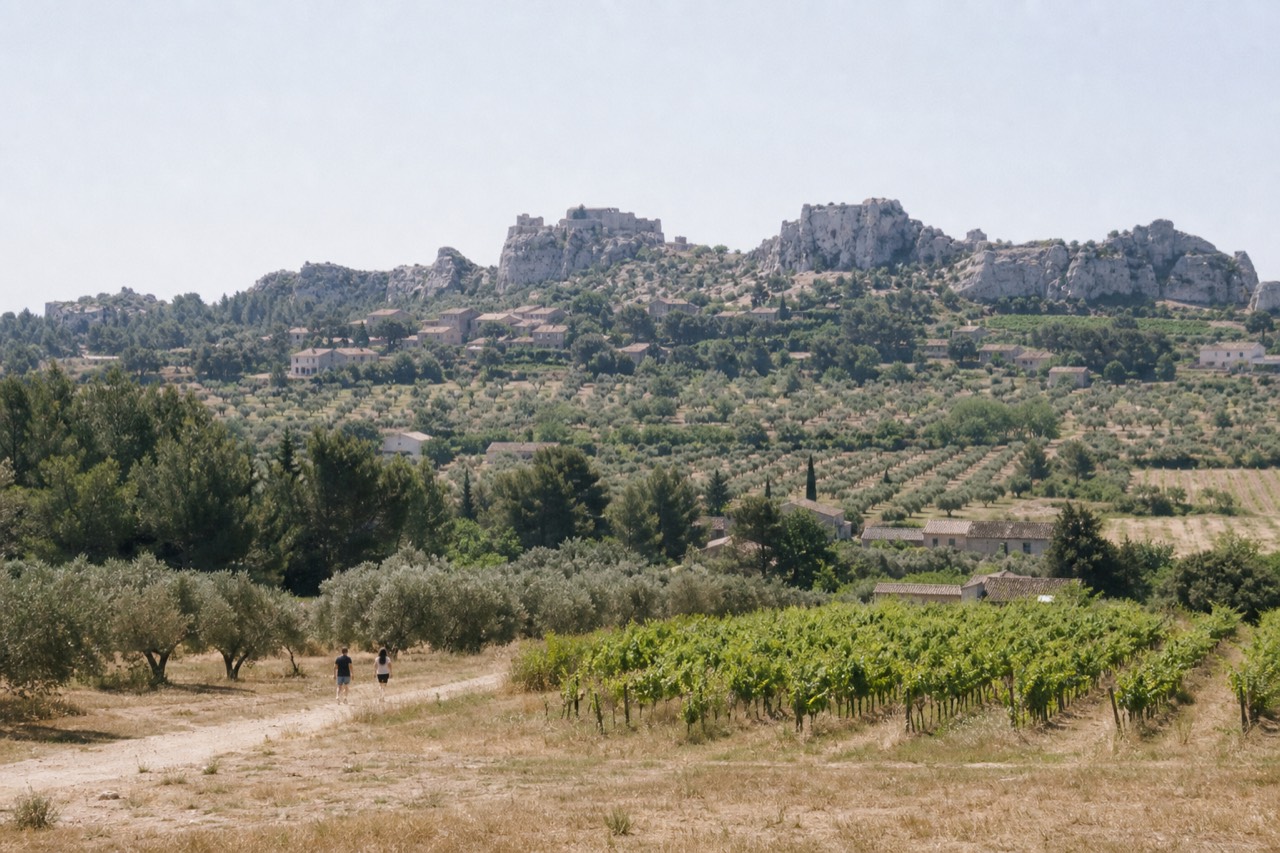
Les Baux de Provence is the youngest of the standalone Provence appellations, recognised in 1995, a red-focused AOC carved out of Coteaux d'Aix in 1995, wrapped around one of the most photographed villages in France.
Short answer
Les Baux de Provence is a French AOC granted by decree on 20 April 1995, covering red, rosé and white wines grown around the village of Les Baux. Reds are led by grenache, mourvèdre and syrah, yields are capped at 50 hl/ha, and it sits 30.7 km from Avignon by road.
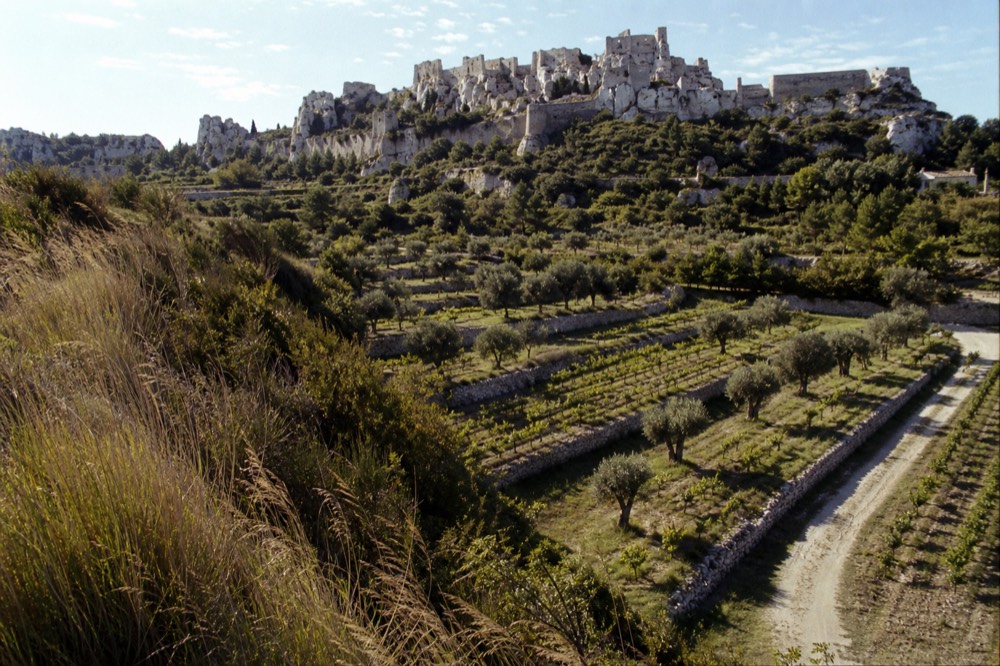
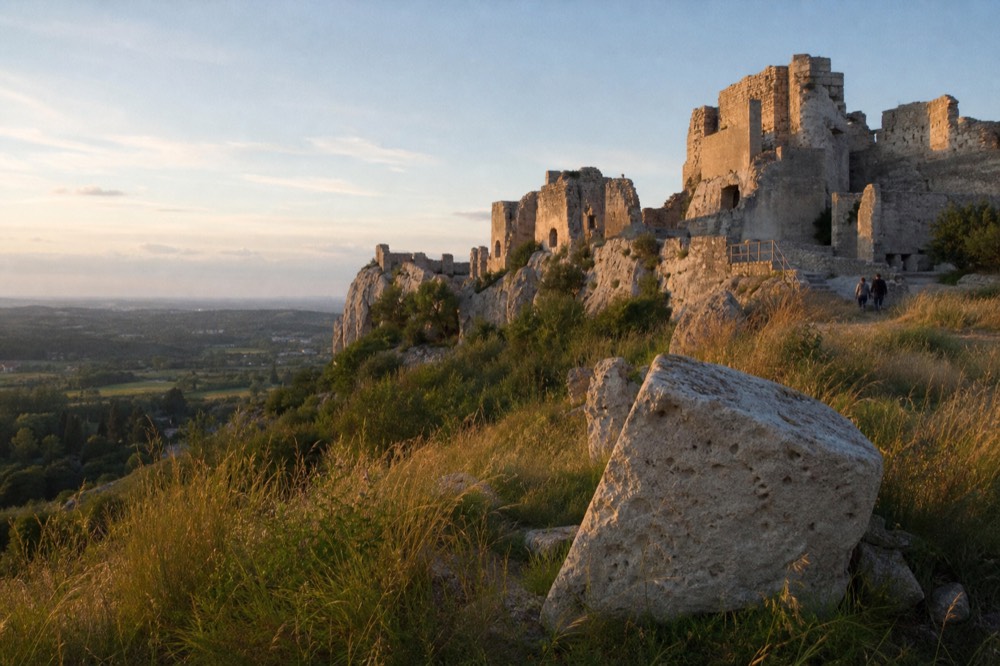
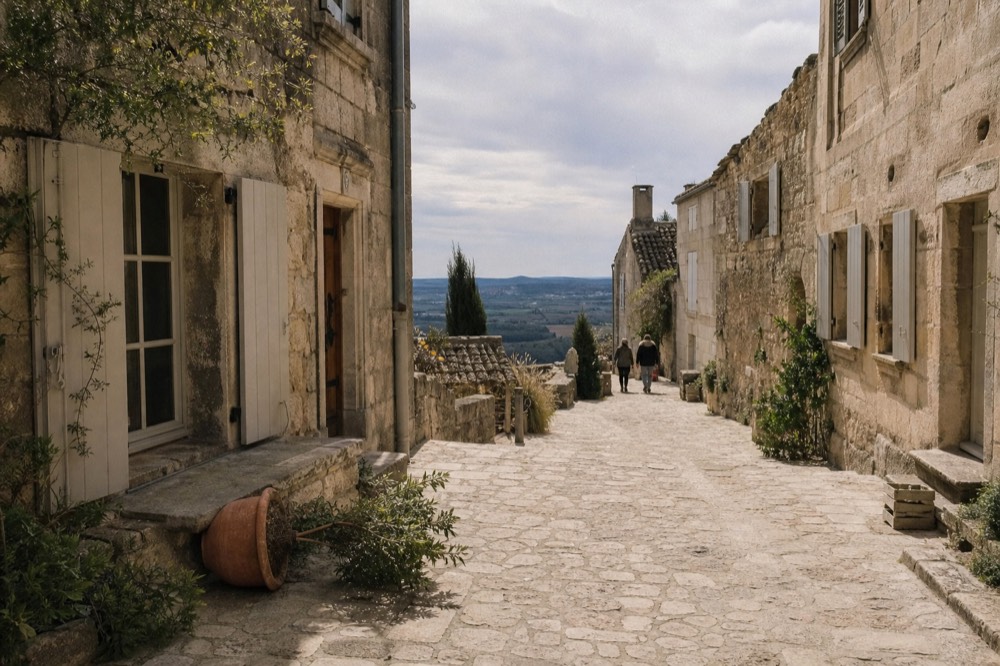
Les Baux de Provence holds an odd position in the Provençal wine map. A limestone plateau crowned with ruined castle walls above the Alpilles, the village gives its name to the region's youngest standalone AOC, granted by the decree of 20 April 1995 after starting out as a sub-denomination of Coteaux d'Aix-en-Provence. It was only separated from Coteaux d'Aix-en-Provence by the decree of 20 April 1995, and it remains a place where red wine, not rosé, is the headline act. This guide sets out what the appellation actually is, what its rules say, and what a visitor can realistically do there.
What Is Les Baux De Provence Wine?
Les Baux de Provence is a controlled appellation, an AOC, covering still red, rosé and white wines grown around the village of Les Baux in the Alpilles hills of the Bouches-du-Rhône. It was recognised by the decree of 20 April 1995, having previously existed as a sub-denomination of the larger Coteaux d'Aix-en-Provence appellation, and its rules are stricter than its parent's.
The appellation's official specification, the cahier des charges held by INAO, the French national institute that polices appellations, sets the frame. Reds must be built on grenache, mourvèdre and syrah as principal varieties. Rosés lead with cinsaut, grenache and syrah. Whites are permitted too, which surprises visitors who arrive expecting only rosé. The full grape picture is worth a table, and we come to it below.
What makes the appellation distinct in hard numbers is the discipline in the rules. Maximum yield is 50 hectolitres per hectare, the maximum average parcel load is 8,500 kg of fruit per hectare, and vines must be planted at a minimum density of 4,000 plants per hectare. Those three limits, taken together, are tighter than the plain Côtes de Provence rules, which allow an average parcel load of 9,500 kg/ha. Tighter limits mean fewer grapes per vine, which is the mechanical basis for the concentration the appellation's winemakers claim.
One honest gap: there is no verified planted-hectare figure for Les Baux. The 2010 cahier des charges carries no area number, and no primary source supplies one. Any specific hectare count you read elsewhere should be treated with caution.
Where Is The Appellation, And How Far Is It From Avignon Or Aix?
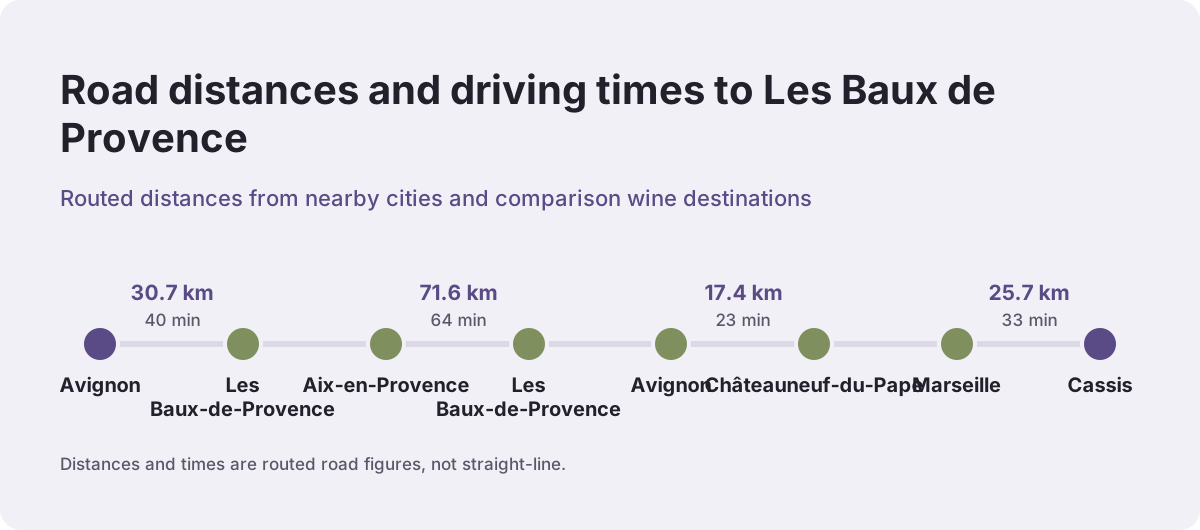
By road, Les Baux de Provence sits 30.7 km from Avignon, about 40 minutes of free-flow driving, and 71.6 km from Aix-en-Provence, about 64 minutes. Those are real routed distances over the road network, not straight-line figures, and they explain why almost every practical visit to the appellation starts from the Avignon side.
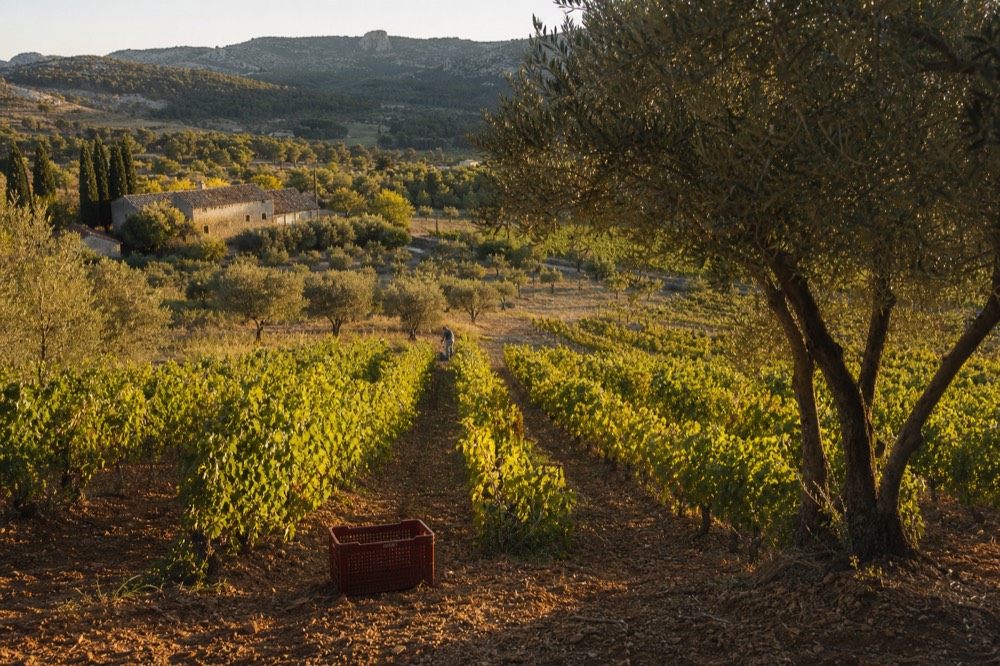
The Alpilles are a small limestone ridge running east-west between the Rhône valley and the Crau plain. The vineyards sit on the slopes and valleys around the village, alongside the olive groves the area is equally famous for. For wine travellers basing themselves in the region, the drive times frame the day.
| Route | Road distance | Free-flow driving time |
|---|---|---|
| Avignon to Les Baux-de-Provence | 30.7 km | 40 min |
| Aix-en-Provence to Les Baux-de-Provence | 71.6 km | 64 min |
| Avignon to Châteauneuf-du-Pape | 17.4 km | 23 min |
| Marseille to Cassis | 25.7 km | 33 min |
Those times are free-flow. They do not include summer traffic on the approach roads, or the walk up into the village itself, which is car-free at the top. Plan on the drive taking longer in July and August.
The geography points to a practical pairing: Les Baux is close to Avignon, and so is Châteauneuf-du-Pape, at 17.4 km. A visitor staying in Avignon can reasonably see the Alpilles in the morning and taste in the Rhône in the afternoon, or split the two across separate days. There is no tour on our roster dedicated to Les Baux alone; the driven tasting days from Avignon head into Châteauneuf-du-Pape and the southern Rhône, and Les Baux works best as scenery and a village visit bolted onto that side of the region.
Which Grapes Go Into Les Baux De Provence Wine?
Reds and rosés dominate the appellation. For reds the principal varieties are grenache, mourvèdre and syrah, with cabernet-sauvignon, carignan, cinsaut and counoise permitted as accessories. For rosés the principals are cinsaut, grenache and syrah, with the same accessory list plus mourvèdre. Whites are allowed, from the same specification.
The grape list matters because it is unusual for Provence. Cabernet-sauvignon appears as a permitted accessory variety for the reds, which is a Bordeaux grape in a region otherwise built on grenache and mourvèdre. The Coteaux d'Aix-en-Provence specification, the appellation Les Baux grew out of, permits it too, so the two share that quirk. Most of Provence's coastal appellations do not.
| Wine | Principal varieties | Accessory varieties |
|---|---|---|
| Red | grenache, mourvèdre, syrah | cabernet-sauvignon, carignan, cinsaut, counoise |
| Rosé | cinsaut, grenache, syrah | cabernet-sauvignon, carignan, counoise, mourvèdre |
| White | permitted by the specification | permitted by the specification |
The specification does not name separate principal white varieties in the same structured way it does for the reds and rosés, so the table above reflects that honestly rather than inventing a list. What the structure does show is the appellation's centre of gravity: this is red-wine country first, rosé second, white a distant third. That inverts the regional pattern, where the 2024 harvest across the three main Provence AOPs was 89% rosé, 6% white and 5% red.
What Does Les Baux Wine Taste Like?
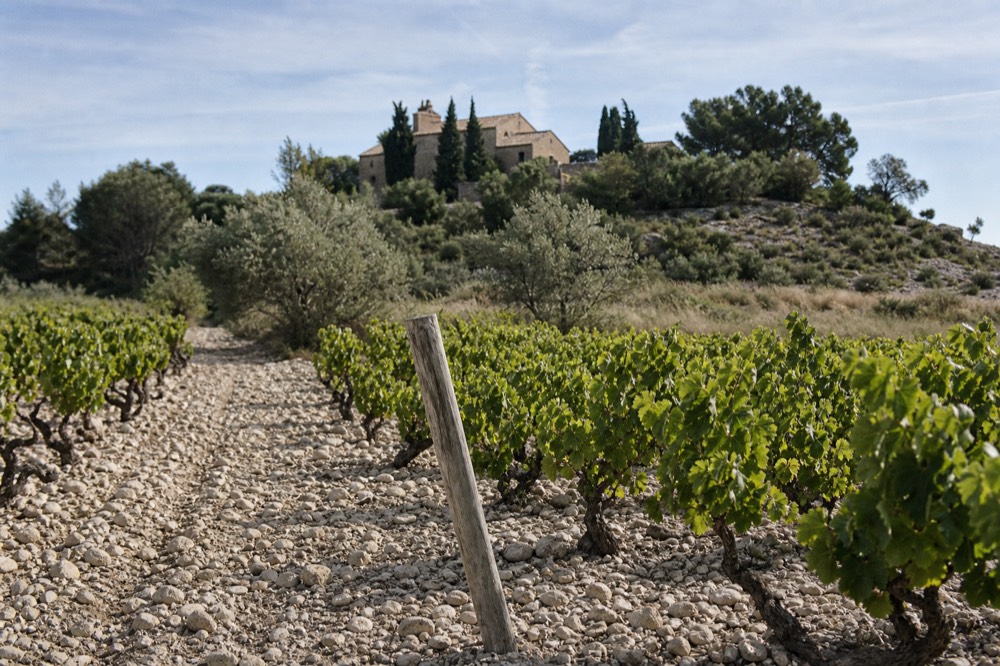
Expect structured reds rather than pale rosé. The appellation's rules push producers toward grenache, mourvèdre and syrah on limestone soils at low yields, which gives reds with grip and spice, rosés with more weight than the coastal norm, and a small amount of white. The style is closer to the Rhône than to the coast.
The limestone of the Alpilles is the physical driver. It drains fast and holds heat, and the mistral, the cold dry wind that funnels down the Rhône valley, blows hard across this corner of Provence. Météo-France describes the mistral as averaging around 50 km/h with gusts of 80 to 100 km/h, strongest in winter and spring, and its most intense zone lies between Orange, Avignon, Istres and Arles. Les Baux sits inside that footprint. The wind's silver lining for the vineyard is dryness: mistral days are usually very sunny, and the wind suppresses the damp that causes vine disease, which is one reason growers here find organic and low-intervention farming workable.
For the taster, the practical summary is this: a red from Les Baux will typically read as darker-fruited and more tannic than a Provençal rosé, with the garrigue herbs of the hillsides in the glass. The rosés, where made, carry more colour and body than the pale salmon style the coast is famous for. If your mental image of Provence wine is a bottle of pale rosé by the sea, Les Baux is the corrective.
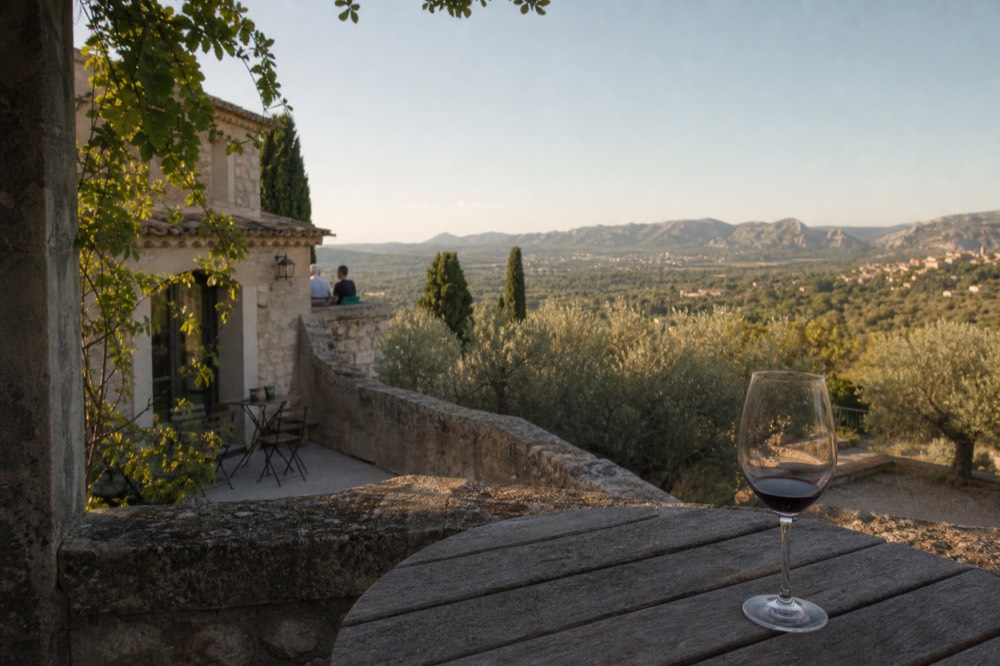
The appellation's reputation also rests on a cluster of well-known estates in the valley below the village, several of which welcome visitors by appointment. We come to the visiting practicalities further down. And since most travellers reach Les Baux from the Avignon side, the obvious question is whether to bolt a proper tasting onto the same day.
Is Les Baux An Organic Appellation?
There is no verified appellation-level organic figure for Les Baux. The claim that "most of Les Baux is organic" circulates widely, but no primary source, including the INAO specification, states a percentage for the appellation. What is documented is that the wind and dryness of the Alpilles make low-spray farming easier here than in damper regions.
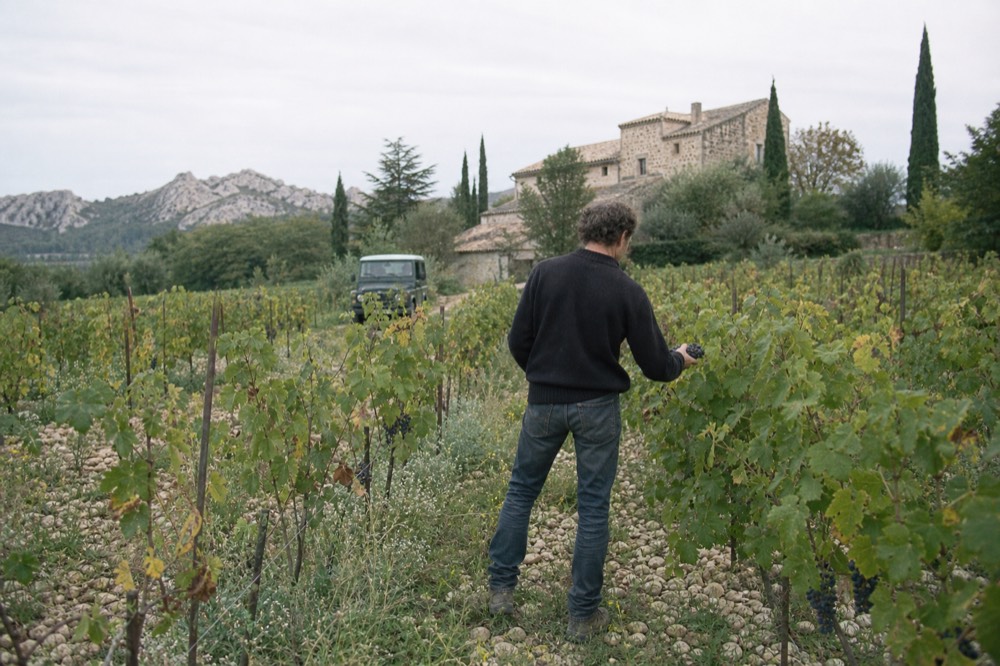
This is a point where honesty matters, because the organic story is part of how Les Baux markets itself. Individual estates publish their own certifications, and several are organic or biodynamic, but a region-wide number does not exist in any primary source. For context, the only verified certification figures in Provence cover the three main AOPs: across Côtes de Provence, Coteaux d'Aix and Coteaux Varois, the CIVP counted 53 cooperative cellars of which 31 are organic, and 456 private estates of which 243 are organic, in its 2024 key figures. Les Baux is not inside that statistical scope at all.
So the honest framing for a visitor: ask the estate you visit about its own certification, and expect a high proportion of organic and biodynamic farming among the well-known names, but do not repeat a percentage as fact, because nobody has verified one.
How Did Les Baux Become Its Own AOC?
Les Baux was promoted from a sub-denomination of Coteaux d'Aix-en-Provence to a standalone AOC by the decree of 20 April 1995. Before that, wines from the area were sold under the Coteaux d'Aix name with a Les Baux geographic mention; after it, the appellation wrote its own stricter rulebook, including the 50 hl/ha yield cap.
The split is a story about ambition. The Coteaux d'Aix appellation, recognised by the decree of 24 December 1985, covers a large arc of country north and west of Aix, and its specification allows heavier yields than Les Baux's growers wanted. The 1995 decree let the Alpilles producers draw a tight boundary and impose the discipline described above: lower yield caps, higher planting density, and a red-first grape hierarchy. The full context of the parent appellation is covered in our Coteaux d'Aix-en-Provence wine guide.
In the wider timeline of Provençal appellations, 1995 is very late. Cassis and Châteauneuf-du-Pape were among the first six wine AOCs in France, all decreed on 15 May 1936. Bandol followed in 1941, Côtes de Provence in 1977, Luberon in 1988, Vacqueyras in 1990. Les Baux arriving in 1995 makes it the youngest of the region's standalone appellations, which is worth knowing when a cellar-door host tells you the vineyards are ancient. The vines and the village are; the legal appellation is not.
Can You Visit Les Baux Wineries, And Are There Tours?
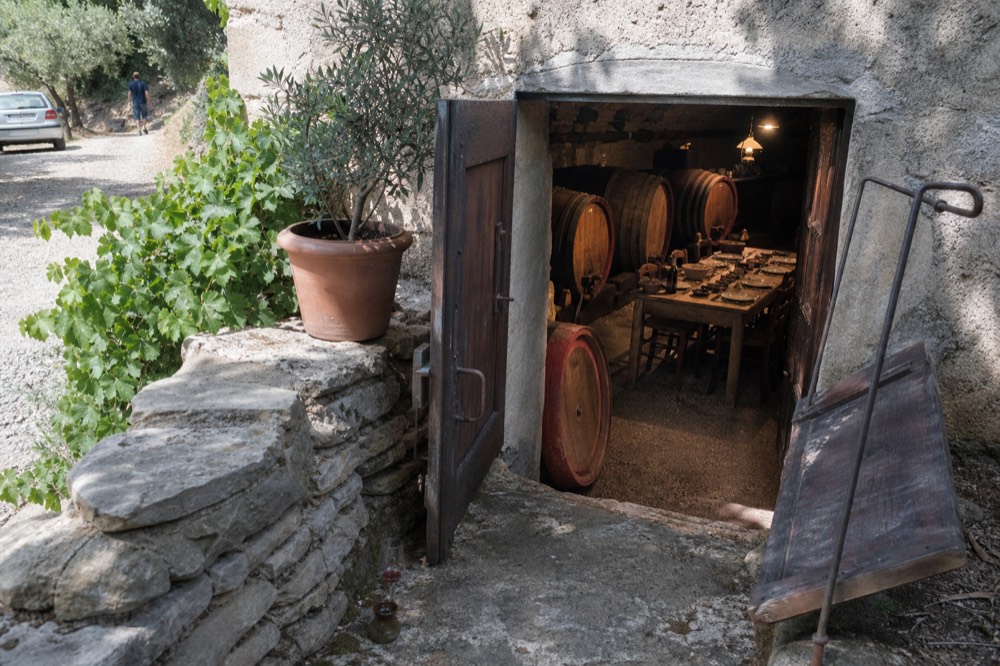
Yes, estates around Les Baux receive visitors, typically by appointment, and there is no verified region-wide opening schedule: hours are set estate by estate. No tour in our current roster is dedicated to Les Baux alone; the practical route is a self-arranged estate visit combined with a driven tasting tour from Avignon, which is 30.7 km away.
The visiting reality of this appellation is that it is small and appointment-driven. Because no primary source publishes cellar-door hours or a standard closing day for Provence estates, the honest advice is to book ahead rather than turn up, and a booked tour has the same advantage: you arrive at a cellar the operator has already arranged.
For the driven-tasting half of the day, the options from Avignon are strong. The 4-hour half-day Châteauneuf-du-Pape tour runs $103.36 per person, rated 4.8 across 456 reviews, with tastings included in the price and free cancellation. It is the natural companion to a morning in Les Baux: village and vineyard scenery in the Alpilles, then a seated tasting in the Rhône, all within a 40-minute drive of your base.
If you want more depth in the glass, the Three-Estates Châteauneuf-du-Pape day from Avignon runs 7 hours at $207 per person, rated 5 across 553 reviews, tastings included, small group, free cancellation. Three separate estates gives you a spread of house styles that one cellar cannot.
And for a group that wants the whole thing to themselves, there is a private option: the Gigondas and Châteauneuf-du-Pape private day runs 8 hours at $1,219.42 per group for up to 8 people, rated 5 across 1 review, with tastings paid separately at the cellar door. One review is a thin evidence base, but the format itself, a private guide and a two-appellation itinerary, is the point.
How Does Les Baux Compare With Its Neighbours?
Les Baux is the red-focused, low-yield, youngest AOC of the Provençal core, sitting between the rosé engine of Côtes de Provence, the white-dominant seaside appellation of Cassis, and the Mourvèdre-led, barrel-aged reds of Bandol. Its rules are tighter than Côtes de Provence's and its style leans Rhône-ward rather than coastal.
The comparison table makes the differences concrete, using only figures verified against the INAO specifications.
| Appellation | AOC decree | Headline style | Signature rule |
|---|---|---|---|
| Les Baux de Provence | 20 April 1995 | Structured reds | 50 hl/ha max yield, 4,000 vines/ha minimum |
| Côtes de Provence | 24 October 1977 | Rosé (89% of the 2024 harvest) | 9,500 kg/ha average parcel load |
| Coteaux d'Aix-en-Provence | 24 December 1985 | Rosé and red | Les Baux's parent appellation |
| Cassis | 15 May 1936 | White (about 70% of production) | Marsanne 30-80% of white plantings |
| Bandol | 11 November 1941 | Mourvèdre reds | Reds 50-95% mourvèdre, 18 months minimum in barrel or foudre |
Each neighbour answers a different question. Cassis, covered in our Bandol and Cassis wine tours guide, is the appellation to visit if you want white wine by a harbour. Bandol is the one for age-worthy reds from the coast. Côtes de Provence, the volume engine described in our Provence wine region overview, is where the pale rosé in every supermarket comes from. Les Baux is the inland, red-leaning, boutique option, and its youth as an appellation is precisely what lets it run tighter rules than the big three.
Is Les Baux De Provence Wine Worth Seeking Out?
For a visitor already in the Avignon or Arles area, yes: the appellation offers structured reds and a distinctive limestone landscape within a 40-minute drive, and the village is one of the region's landmarks. For a visitor based in Aix or on the coast, the 71.6 km drive and the appointment-only cellar culture make it a half-day commitment rather than a casual stop.
The honest cost-benefit depends on what you want from a wine day. If your reference point for Provence is rosé, Les Baux will show you the other Provence, the one that grows closer to the Rhône in style and structure. If you are touring with companions who care more for scenery than wine, the village and the Alpilles carry the day regardless of what is in the glass. And if you are combining the visit with a tasting tour, the Avignon side is where the driven options are, as our Châteauneuf-du-Pape wine tours guide lays out in detail.
One practical note on timing: the mistral is strongest in winter and spring across exactly this corner of Provence, and it is a cold-wind problem rather than a rain problem, since mistral days are usually sunny. Bring a windproof layer for a spring terrace tasting, and do not read the wind as a sign the day is off.
For anyone planning a wider trip through the region's appellations, Provence Wine Tours collects the driven tasting options from every base city, Avignon, Aix, Marseille, Nice and Cannes, in one place.
Les Baux de Provence is a red-focused AOC from the Alpilles, decreed on 20 April 1995, with grenache, mourvèdre and syrah at the core of its reds, a 50 hl/ha yield cap, and cellar doors that mostly work by appointment. The questions below cover the essentials a visitor asks before planning a tasting day around the village.
Common Questions About Les Baux De Provence Wine
What Is Les Baux De Provence Wine?
It is a French AOC covering still red, rosé and white wines grown around the village of Les Baux in the Alpilles, recognised by the decree of 20 April 1995 after splitting from Coteaux d'Aix-en-Provence. Reds, built on grenache, mourvèdre and syrah, are the appellation's focus.
When Did Les Baux Become An AOC?
On 20 April 1995, by decree. Before that the area was a sub-denomination of Coteaux d'Aix-en-Provence, which itself dates from the decree of 24 December 1985.
Is Les Baux Wine Organic?
There is no verified appellation-level organic percentage. Several well-known estates in the valley are certified organic or biodynamic, but no primary source states a figure for the appellation as a whole, so any specific percentage you see should be treated as unverified.
How Far Is Les Baux De Provence From Avignon?
30.7 km by road, about 40 minutes of free-flow driving. From Aix-en-Provence it is 71.6 km, about 64 minutes. Summer traffic will add time.
Can You Visit Les Baux Wineries Without A Booking?
It is risky. Opening hours are set estate by estate, and no region-wide schedule exists in any primary source. Booking ahead, either directly with the estate or through an arranged tour, is the reliable route.
What Grapes Are Used In Les Baux Reds?
Grenache, mourvèdre and syrah are the principal varieties, with cabernet-sauvignon, carignan, cinsaut and counoise permitted as accessories. The appearance of cabernet-sauvignon is unusual for Provence and shared with the parent Coteaux d'Aix appellation.