Which Is Nicer, Avignon Or Aix-en-Provence?
A straight comparison of Avignon and Aix-en-Provence: atmosphere, wine access, day-trip potential and the honest answer to which feels nicer for a short stay.
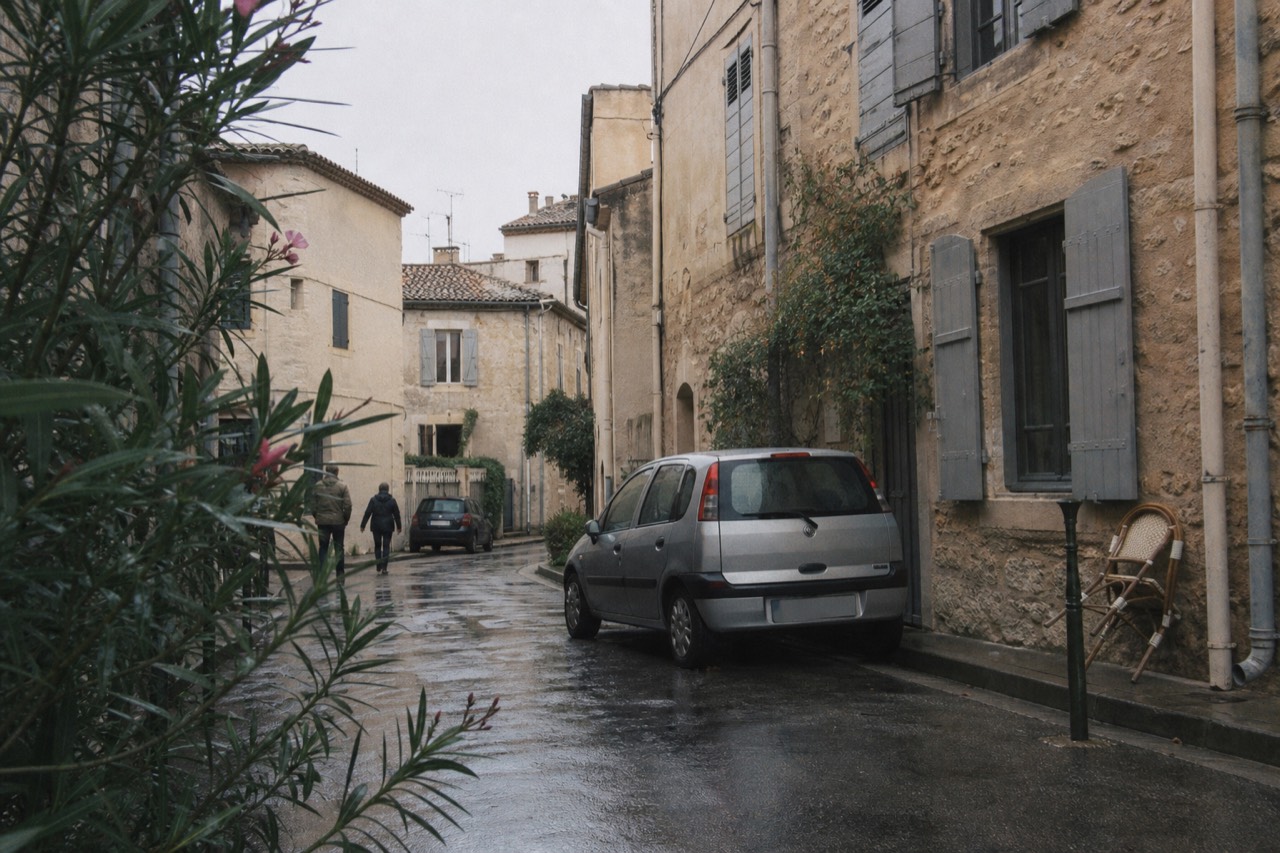
Which Is Nicer, Avignon Or Aix-en-Provence?
For most first-time visitors, Aix-en-Provence is nicer: it's larger, livelier, and more elegant with a year-round student buzz, an ideal base for Côtes de Provence and Luberon wine tours. Avignon, a compact medieval city with a UNESCO palace and direct access to Rhône wine villages like Châteauneuf-du-Pape, feels nicer if your trip revolves around history and those specific wines.
The two cities sit roughly 90 km apart, yet the road from one to the other crosses from the Rhône valley into the limestone ridges of the Bouches-du-Rhône. That shift in landscape mirrors a shift in personality. Avignon is a city of stone ramparts and papal history, compact enough to cross on foot in twenty minutes. Aix-en-Provence is a former capital of Provence, with wide plane-tree-shaded boulevards, dozens of fountains and a large student population that keeps its cafés and squares humming well into the evening. Both have direct TGV rail links to Paris, and both work as a base for wine touring, but the kind of wine country that sits on the doorstep is not the same at all.
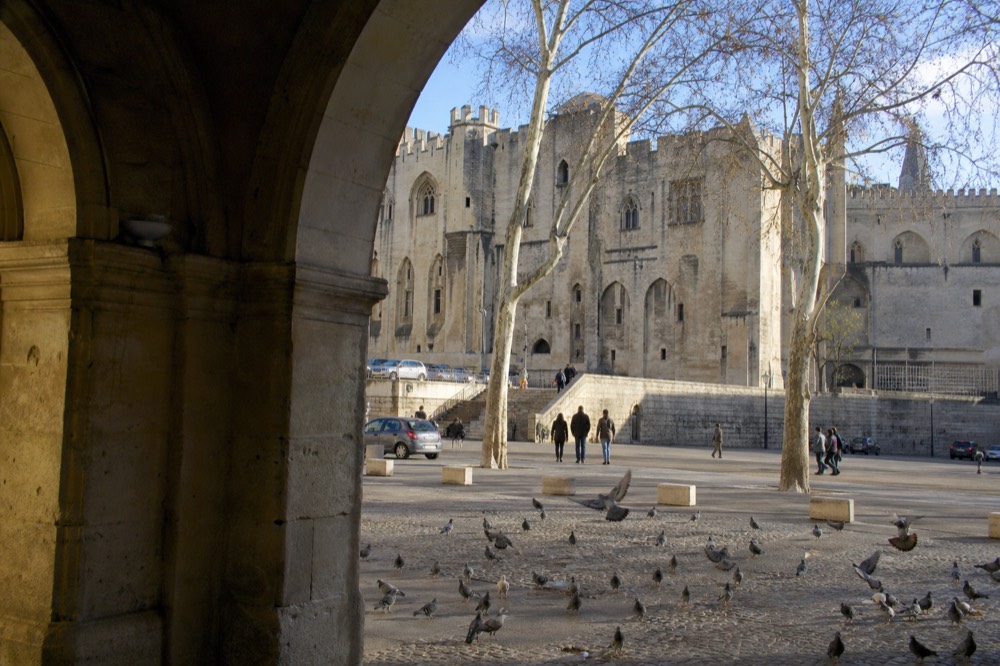
The honest-broker difference is the Rhône. Avignon sits on its left bank, and the southern Côtes du Rhône villages such as Châteauneuf-du-Pape, Gigondas and Vacqueyras lie within a short drive. Châteauneuf-du-Pape is only 17.4 km away, a 23-minute free-flow drive. From Aix-en-Provence the same village is 89.3 km, close to 70 minutes on the road. That single fact shapes the wine-tour menus in both cities. From Avignon you can be in a cellar in the famous galet-strewn vineyards before a morning coffee has worn off. From Aix, the Rhône is a day trip, not a half-day one, and the tours that leave from Aix tend to focus on the Côtes de Provence, the Coteaux d’Aix, the Luberon or the Sainte-Victoire sub-denomination instead.
A Provence Wine Tours reader who plans to taste seriously should also plan not to drive. The French drink-driving limit is 0.5 g/L of blood for a full licence, but for anyone on a probationary licence (which runs three years after passing the test, or two after accompanied driving) the limit is 0.2 g/L. That is effectively zero glasses. A rented car and a tasting day do not mix for a large slice of visitors, which is the practical reason a small-group driven tour exists. Both cities offer tours with included tastings and free cancellation, so you can compare the wines without watching the breathalyser.
| Comparison point | Avignon | Aix-en-Provence |
|---|---|---|
| Best-known wine access | Châteauneuf-du-Pape (17.4 km, 23 min), Gigondas, Vacqueyras | Côtes de Provence, Coteaux d’Aix, Luberon, Sainte-Victoire |
| Distance to Châteauneuf-du-Pape | 17.4 km | 89.3 km |
| Atmosphere | Walled medieval city, papal history, quieter after dark | Elegant university town, fountains, lively café culture |
| Day-trip reach | Pont du Gard, Les Baux-de-Provence, Arles | Cassis, Luberon villages, Marseille |
| Mistral exposure | Strongest in the lower Rhône corridor; gusts above 100 km/h about 10 days a year at Istres | Less exposed; the Sainte-Victoire ridge offers some shelter |
| Best for | A short, Rhône-focused wine break | A longer, more varied Provence stay |
If your trip is three or four days and you want to eat well, walk a walled city and taste some of the most famous reds in France, Avignon is hard to beat. If you have a week and you want a mix of rosé tastings, hilltop villages, markets and a city that feels alive every night, Aix is the nicer choice.
Because the two cities sit only about 90 km apart and both have direct TGV links to Paris, splitting a longer trip between them is a realistic option: start in Avignon for the walled streets and the Rhône reds, then move on to Aix for the rosé country, the Luberon villages and the evening café life. The drive between them takes you across the landscape shift described above, so the transfer itself doubles as sightseeing.
Two practical points are worth weighing before you book. The mistral blows hardest in the lower Rhône corridor around Avignon, with gusts above 100 km/h recorded about 10 days a year at Istres, so pack a windproof layer if you plan to walk the ramparts or wander the galet-strewn vineyards of Châteauneuf-du-Pape. Aix, partly sheltered by the Sainte-Victoire ridge, is the calmer base in windy weather. And if you are choosing by day trips rather than wine, Avignon opens the way to the Pont du Gard, Les Baux-de-Provence and Arles, while Aix puts Cassis, the Luberon villages and Marseille within reach.
What Makes Avignon Feel So Different?
Avignon feels different because it's a perfectly preserved papal time capsule, where the colossal Palais des Papes looms over intact medieval walls and the broken Pont d’Avignon. This compact UNESCO city can be crossed on foot in an afternoon, then takes on a quiet, village-like calm once day-trippers leave, all while sitting at the doorstep of the Rhône’s most celebrated wine villages.
That compactness is both Avignon’s strength and its limitation. On a summer evening the Place de l’Horloge fills with café tables, but the city does not have the year-round student population that keeps Aix buzzing. The mistral, too, is a factor the tourist brochures rarely mention. Météo-France records that the lower Rhône corridor between Orange, Avignon and Istres is the strongest mistral zone in Provence, with gusts above 100 km/h on roughly ten days a year at Istres. The wind is strongest in winter and spring, and it can turn a sunny terrace tasting into a dash indoors. A windproof layer belongs in any Avignon suitcase between October and April.
What Avignon does brilliantly is put you at the centre of the southern Rhône wine map. The Châteauneuf-du-Pape appellation was one of France’s first six AOCs, decreed on 15 May 1936. The growers’ syndicate that wrote the original production rules was founded in 1923 under Baron Le Roy de Boiseaumarie, and the rules they set, including the delimited area, permitted grapes and minimum alcohol, fed directly into the 1936 decree. Today the appellation lists 18 grape varieties, which collapse to the familiar 13 when you group the colour mutations of clairette, grenache and piquepoul. For a deeper look at the appellation, see our guide to Châteauneuf-du-Pape wine tours.
The half-day Châteauneuf-du-Pape tour from Avignon is a 4-hour small-group option that covers the key villages and includes tastings at the cellar door. It carries a 4.8 rating across 456 reviews on the live listing, and free cancellation is standard.
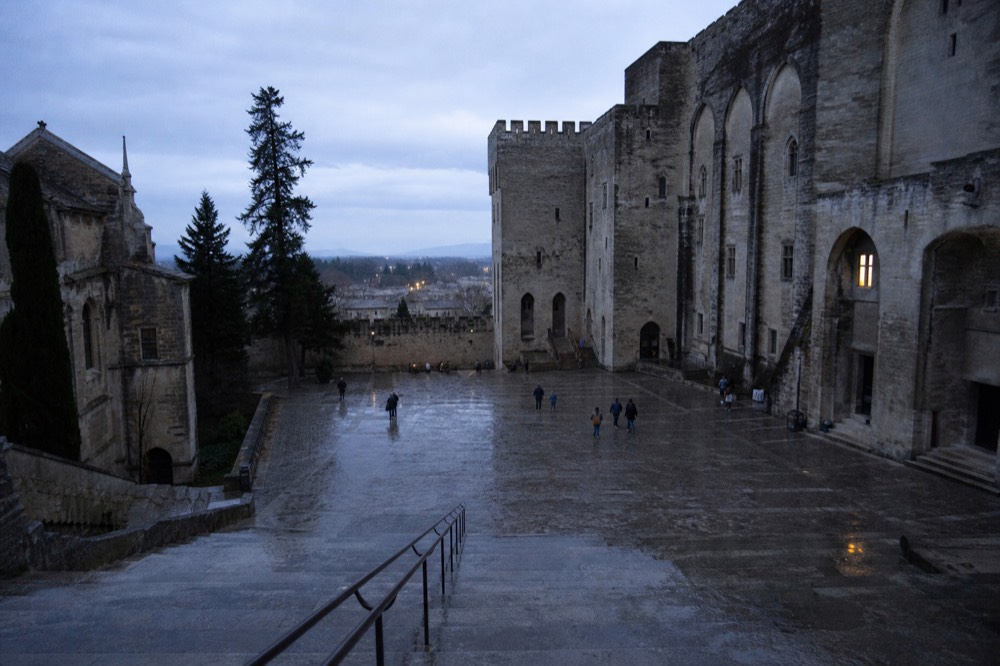
Avignon also works as a base for day trips that have nothing to do with wine. The Pont du Gard Roman aqueduct is a short drive west. Les Baux-de-Provence, the hilltop village and its AOC, sits 30.7 km away. Arles, with its Roman arena and Van Gogh connections, is a 20-minute train ride. But the city itself is not a destination you linger in for a week. Two or three nights is usually enough to see the palace, walk the ramparts, eat a meal on the Place des Châtaignes and head into the vineyards.
What Is It About Aix-en-Provence That Draws People Back?
Aix-en-Provence feels like Provence bottled. The Cours Mirabeau, lined with plane trees and 17th- and 18th-century hôtels particuliers, is one of France’s most beautiful main streets. Fountains bubble on nearly every square, markets spill over with lavender and calissons, and a large student population keeps the city’s bars and squares alive all year. Aix is not a museum piece; it is a working, beautiful town.
The wine country around Aix is different in character from the Rhône. The Coteaux d’Aix-en-Provence AOC, recognised by decree on 24 December 1985, covers more than 4,100 hectares (2009 figure) and produces reds, rosés and whites. Cabernet-sauvignon is permitted as an accessory variety here, which is unusual for Provence and gives some reds a structure you do not find further east. The Côtes de Provence appellation, with its five sub-denominations including Sainte-Victoire and La Londe, is also within easy reach. Read more about the region in our Côtes de Provence wine guide. The Sainte-Victoire ridge, painted repeatedly by Cézanne, sits just 24.5 km east of Aix, a 31-minute drive to the village of Puyloubier.
Aix is also the natural launch pad for Luberon wine tours. The Luberon AOC, first recognised as Côtes du Luberon in 1988 and renamed in 2009, is administratively a Rhône valley appellation, but it is sold to visitors as a Provence day out from Aix. The villages of Lourmarin and Bonnieux are 40 and 50 km away respectively, and the scenery of perched stone villages and vineyards is exactly what most people picture when they book a Provence trip.
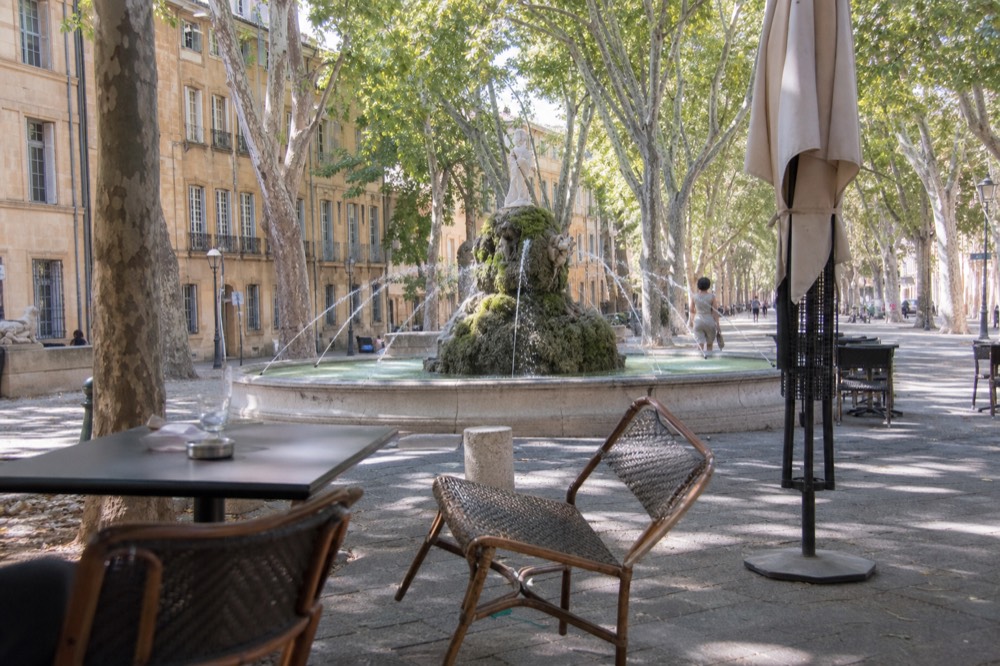
Aix also has the advantage of being a genuine food city. The Saturday market on the Place des Prêcheurs and the daily market on the Place Richelme are among the best in Provence (see Best Market in Provence). The café terraces on the Cours Mirabeau stay busy from morning coffee until past midnight. For a traveller who wants to spend a morning tasting wine, an afternoon by a fountain with a book and an evening over a long dinner, Aix delivers all three without needing a car.
The 3-hour Sainte-Victoire Route, Côtes de Provence tasting from Aix is a small-group tour that visits two estates under the mountain, with tastings included and free cancellation. It carries a 4.8 rating across 273 reviews on the live listing.
Which City Makes A Better Base For Wine Tours?
Aix-en-Provence is the stronger all-round wine base for a trip of five days or more. It sits at the centre of Provence’s three main AOPs, Côtes de Provence, Coteaux d’Aix and Coteaux Varois, which together produced 1,130,139 hectolitres in 2024, 89% of it rosé. Avignon is the better base if your wine interest is squarely on the southern Rhône reds and you have only a long weekend.
The numbers tell the story. The three Vins de Provence AOPs cover about 27,000 hectares across more than 550 producers and 53 cooperative cellars. Provence is 40 to 45% of French AOP rosé production and about 5% of world rosé. Aix sits in the middle of that landscape. From the city you can reach the Sainte-Victoire sub-denomination in half an hour, the Luberon in under an hour and the Bandol coast in about 50 minutes from Marseille. You can also day-trip to Cassis, where white wine is roughly 70% of production and marsanne must make up 30 to 80% of the white blend.
Avignon’s wine radius is narrower but deeper. Châteauneuf-du-Pape, Gigondas, Vacqueyras and the Côtes du Rhône Villages are all within a 45-minute drive. The Gigondas AOC, decreed in 1971, now covers white, red and rosé under a 2023 specification, with white yields capped at 40 hl/ha. Vacqueyras, recognised in 1990, covers about 1,462 hectares (2009 figure). These are appellations built on grenache, syrah and mourvèdre, producing wines that age, and the tasting rooms are often run by the winemaker. If your trip is built around a deep dive into the Rhône, Avignon is the obvious choice.
| Wine region | Distance from Avignon | Distance from Aix-en-Provence |
|---|---|---|
| Châteauneuf-du-Pape | 17.4 km (23 min) | 89.3 km (67 min) |
| Les Baux-de-Provence | 30.7 km (40 min) | 71.6 km (64 min) |
The driving times are free-flow estimates; August coastal traffic on the A8 or a Saturday on the A7 can add significant time. That is another reason a small-group tour with a local driver makes sense: the guide knows which roads to take and when.
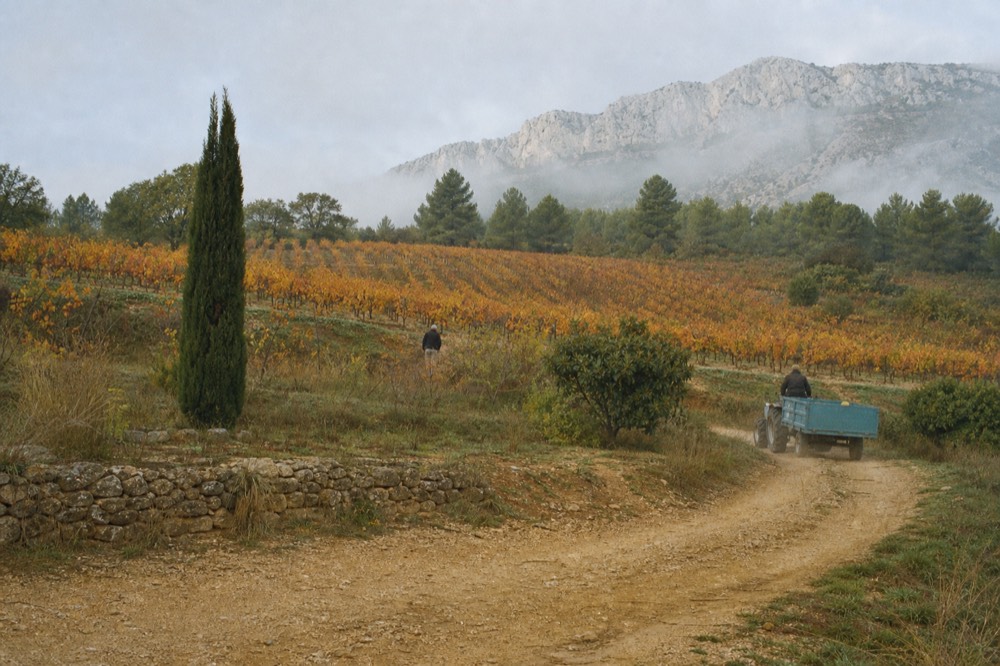
The Sainte-Victoire Route tour from Aix is a practical way to taste the Côtes de Provence without spending half the day in a car. It is a 3-hour small-group outing, rated 4.8 across 273 reviews on the live listing, with tastings included and free cancellation. For a traveller who wants a morning of wine and an afternoon of Aix, it is the right length.
The half-day Sainte-Victoire tour is a solid choice for a morning of tasting without committing a full day. For a longer exploration, consider a full-day Luberon or Bandol tour from Aix.
Common Questions About Avignon And Aix-en-Provence
Which Is Nicer, Avignon Or Aix-en-Provence?
For most first-time visitors, Aix-en-Provence feels nicer as a base. It is larger, livelier and more elegant, with a year-round student buzz and a central location for Côtes de Provence and Luberon wine tours. Avignon wins if your trip is short and built around the southern Rhône wine villages, especially Châteauneuf-du-Pape.
Is Avignon Or Aix Better For Wine Tasting?
Avignon is better for Rhône-focused tasting: Châteauneuf-du-Pape, Gigondas and Vacqueyras are all within a 45-minute drive. Aix-en-Provence is better for Provence rosé, Coteaux d’Aix, Luberon and Sainte-Victoire wines. Both cities have small-group tours with included tastings and free cancellation.
How Far Apart Are Avignon And Aix-en-Provence?
The road distance is roughly 90 km, with a free-flow driving time of about 70 minutes. The two cities are also connected by direct TER trains and TGV services, though the Aix TGV station is 15 km outside the city centre.
Which City Has Better Day Trips?
Aix-en-Provence offers more varied day trips: the Luberon villages, Cassis and the Calanques, the Bandol coast and the Côtes de Provence wine route. Avignon’s day-trip strengths are the Pont du Gard, Les Baux-de-Provence, Arles and the southern Rhône wine villages.
Is Avignon Worth Visiting If I Stay In Aix?
Yes, Avignon makes an excellent day trip from Aix. The Palais des Papes, the ramparts and the Pont d’Avignon can be seen in a single afternoon. The train from Aix centre to Avignon Centre takes about 90 minutes with a change, or you can drive in around 70 minutes.
Does The Mistral Affect Avignon More Than Aix?
Yes. The lower Rhône corridor around Avignon and Orange is the strongest mistral zone in Provence. Météo-France records that Istres, just south of Avignon, sees gusts above 100 km/h on roughly ten days a year. Aix-en-Provence is less exposed and the Sainte-Victoire ridge offers some shelter.